
Catalogue Search | MBRL


Are you sure you want to remove the book from the shelf?

{{itemTitle}}
204,976
result(s) for
"American century"
Sort by:


Cutting Along the Color Line
Today, black-owned barber shops play a central role in African American public life. The intimacy of commercial grooming encourages both confidentiality and camaraderie, which make the barber shop an important gathering place for African American men to talk freely. But for many years preceding and even after the Civil War, black barbers endured a measure of social stigma for perpetuating inequality: though the profession offered economic mobility to black entrepreneurs, black barbers were obliged by custom to serve an exclusively white clientele. Quincy T. Mills traces the lineage from these nineteenth-century barbers to the bustling enterprises of today, demonstrating that the livelihood offered by the service economy was crucial to the development of a black commercial sphere and the barber shop as a democratic social space.Cutting Along the Color Linechronicles the cultural history of black barber shops as businesses and civic institutions. Through several generations of barbers, Mills examines the transition from slavery to freedom in the nineteenth century, the early twentieth-century expansion of black consumerism, and the challenges of professionalization, licensing laws, and competition from white barbers. He finds that the profession played a significant though complicated role in twentieth-century racial politics: while the services of shaving and grooming were instrumental in the creation of socially acceptable black masculinity, barbering permitted the financial independence to maintain public spaces that fostered civil rights politics. This sweeping, engaging history of an iconic cultural establishment shows that black entrepreneurship was intimately linked to the struggle for equality.
eBook

Collected novels & poems
\"Albert Murray (1916-2013) was one of the most provocative and original American thinkers of the twentieth century, writing with equal grace and power as an essayist and novelist\"--Page 4 of cover.
Book

To March for Others
In 1966, members of the Student Nonviolent Coordinating Committee, an African American civil rights group with Southern roots, joined Cesar Chavez and the United Farm Workers union on its 250-mile march from Delano to Sacramento, California, to protest the exploitation of agricultural workers. SNCC was not the only black organization to support the UFW: later on, the NAACP, the National Urban League, the Southern Christian Leadership Conference, and the Black Panther Party backed UFW strikes and boycotts against California agribusiness throughout the late 1960s and early 1970s.
To March for Othersexplores the reasons why black activists, who were committed to their own fight for equality during this period, crossed racial, socioeconomic, geographic, and ideological divides to align themselves with a union of predominantly Mexican American farm workers in rural California. Lauren Araiza considers the history, ideology, and political engagement of these five civil rights organizations, representing a broad spectrum of African American activism, and compares their attitudes and approaches to multiracial coalitions. Through their various relationships with the UFW, Araiza examines the dynamics of race, class, labor, and politics in twentieth-century freedom movements. The lessons in this eloquent and provocative study apply to a broader understanding of political and ethnic coalition building in the contemporary United States.
eBook

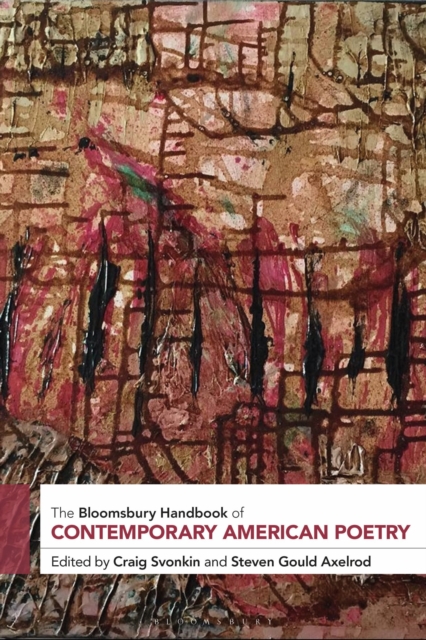
Bloomsbury Handbook of Contemporary American Poetry
With chapters written by leading scholars such as Steven Gould Axelrod, Cary Nelson, and Marjorie Perloff, this comprehensive Handbook explores the full range and diversity of poetry and criticism in 21st-century America. The Bloomsbury Handbook of Contemporary American Poetrycovers such topics as: · Major histories and genealogies of post-war poetry – from the language poets and the Black Arts Movement to New York school and the Beats · Poetry, identity and community – from African American, Chicana/o and Native American poetry to Queer verse and the poetics of disability · Key genres and forms – including digital, visual, documentary and children’s poetry · Central critical themes – economics, publishing, popular culture, ecopoetics, translation and biography The book also includes an interview section in which major contemporary poets such as Rae Armantrout, and Claudia Rankine reflect on the craft and value of poetry today.
eBook


Ghost-Watching American Modernity:Haunting, Landscape, and the Hemispheric Imagination
In Ghost-Watching American Modernity, Maria del Pilar Blanco revisits nineteenth- and twentieth-century texts from Spanish America and the United States to ask how different landscapes are represented as haunted sites. Moving from foundational fictions to Westerns, Blanco explores the diverse ways in which ghosts and haunting emerge across the American hemisphere for authors who are preoccupied with evoking the experience of geographical transformations during a period of unprecedented development. The book offers an innovative approach that seeks to understand ghosts in their local specificity, rather than as products of generic conventions or as allegories of hidden desires. Its chapters pursue formally attentive readings of texts by Domingo Sarmiento, Henry James, Jose Marti, W. E. B. Du Bois, Juan Rulfo, Felisberto Hernandez, and Clint Eastwood. In an intervention that will reconfigure the critical uses of spectrality for scholars in U.S./Latin American Studies, narrative theory, and comparative literature, Blanco advances ghost-watching as a method for rediscovering haunting on its own terms.
eBook

Last kiss
Brings together some of the most interesting and idiosyncratic of F. Scott Fitzgerald's writings from throughout his career. Included here are Fitzgerald's Thoughtbook, an adolescent diary; a self-interview, written in the early days of his initial fame; \"The Vegetable,\" his only published play; the five poems that he published after becoming a full-time author; twelve early book reviews published between 1921 and 1923; seven short stories from the last decade of his career; seventeen public letters; six items of journalism, four of which attempt to explain the \"flapper\" phenomenon; and unusual miscellaneous pieces.
Book

Fighting Their Own Battles
Between 1940 and 1975, Mexican Americans and African Americans in Texas fought a number of battles in court, at the ballot box, in schools, and on the streets to eliminate segregation and state-imposed racism. Although both groups engaged in civil rights struggles as victims of similar forms of racism and discrimination, they were rarely unified. InFighting Their Own Battles, Brian Behnken explores the cultural dissimilarities, geographical distance, class tensions, and organizational differences that all worked to separate Mexican Americans and blacks.Behnken further demonstrates that prejudices on both sides undermined the potential for a united civil rights campaign. Coalition building and cooperative civil rights efforts foundered on the rocks of perceived difference, competition, distrust, and, oftentimes, outright racism. Behnken's in-depth study reveals the major issues of contention for the two groups, their different strategies to win rights, and significant thematic developments within the two civil rights struggles. By comparing the histories of these movements in one of the few states in the nation to witness two civil rights movements, Behnken bridges the fields of Mexican American and African American history, revealing the myriad causes that ultimately led these groups to \"fight their own battles.\"
eBook