
Catalogue Search | MBRL


Are you sure you want to remove the book from the shelf?

{{itemTitle}}
331
result(s) for
"American fiction -- Film adaptations"
Sort by:

Screening the Novel
Some of the most memorable movies of Hollywood's Golden Age were based on novels that never received the acclaim they deserved.No-one who saw Rod Steiger in The Pawnbroker could forget the actor's wrenching performance but does anyone remember the author of the book on which the film was based?.
eBook

Women adapting : bringing three serials of the roaring twenties to stage and screen
\"In Women Adapting, Bethany Wood examines how the developing preference for adaptations in early twentieth century entertainment promoted interrelationships among fiction, theatre, and film. Weaving together a broad range of archival sources, including personal correspondence, rejected rough drafts, advertisements, films, periodical illustrations, contracts, 'lost' songs, and film stills, Wood deftly explores how early-twentieth-century processes of adaptation forged connections across industries in entertainment. By centering her cross-disciplinary study on issues of gender, Wood considers how inter-industrial systems of adaptation affect both women writers and the female characters they create\"-- Provided by publisher.
Book

Edna Ferber's Hollywood : American fictions of gender, race, and history
Edna Ferber's Hollywood reveals one of the most influential artistic relationships of the twentieth century—the four-decade partnership between historical novelist Edna Ferber and the Hollywood studios. Ferber was one of America's most controversial popular historians, a writer whose uniquely feminist, multiracial view of the national past deliberately clashed with traditional narratives of white masculine power. Hollywood paid premium sums to adapt her novels, creating some of the most memorable films of the studio era—among them Show Boat, Cimarron, and Giant. Her historical fiction resonated with Hollywood's interest in prestigious historical filmmaking aimed principally, but not exclusively, at female audiences. In Edna Ferber's Hollywood, J. E. Smyth explores the research, writing, marketing, reception, and production histories of Hollywood's Ferber franchise. Smyth tracks Ferber's working relationships with Samuel Goldwyn, Leland Hayward, George Stevens, and James Dean; her landmark contract negotiations with Warner Bros.; and the controversies surrounding Giant's critique of Jim-Crow Texas. But Edna Ferber's Hollywood is also the study of the historical vision of an American outsider—a woman, a Jew, a novelist with few literary pretensions, an unashamed middlebrow who challenged the prescribed boundaries among gender, race, history, and fiction. In a masterful film and literary history, Smyth explores how Ferber's work helped shape Hollywood's attitude toward the American past.
eBook


American literature on stage and screen : 525 works and their adaptations
The 525 notable works of 19th and 20th century American fiction in this reference book have many stage, movie, television, and video adaptations.Each literary work is described and then every adaptation is examined with a discussion of how accurate the version is and how well it succeeds in conveying the spirit of the original in a different.
eBook


Edith Wharton on film
Edith Wharton (1862– 1937), who lived nearly half of her life during the cinema age when she published many of her well-known works, acknowledged that she disliked the movies, characterizing them as an enemy of the imagination. Yet her fiction often referenced film and popular Hollywood culture, and she even sold the rights to several of her novels to Hollywood studios.
Edith Wharton on Film explores these seeming contradictions and examines the relationships among Wharton’ s writings, the popular culture in which she published them, and the subsequent film adaptations of her work (three from the 1930s and four from the 1990s). Author Parley Ann Boswell examines the texts in which Wharton referenced film and Hollywood culture and evaluates the extant films adapted from Wharton’ s fiction.
The volume introduces Wharton’ s use of cinema culture in her fiction through the 1917 novella Summer , written during the nation’ s first wave of feminism, in which the heroine Charity Royall is moviegoer and new American woman, consumer and consumable. Boswell considers the source of this conformity and entrapment, especially for women. She discloses how Wharton struggled to write popular stories and then how she revealed her antipathy toward popular movie culture in two late novels.
Boswell describes Wharton’ s financial dependence on the American movie industry, which fueled her antagonism toward Hollywood culture, her well-documented disdain for popular culture, and her struggles to publish in women’ s magazines.
This first full-length study that examines the film adaptations of Wharton’ s fiction covers seven films adapted from Wharton’ s works between 1930 and 2000 and the fifty-year gap in Wharton film adaptations. The study also analyzes Sophy Viner in The Reef as pre-Hollywood ingé nue, characters in Twilight Sleep and The Children and the real Hollywood figures who might have inspired them, and The Sheik and racial stereotypes.
Boswell traces the complicated relationship of fiction and narrative film, the adaptations and cinematic metaphors of Wharton’ s work in the 1990s, and Wharton’ s persona as an outsider. Wharton’ s fiction on film corresponds in striking ways to American noir cinema, says Boswell, because contemporary filmmakers recognize and celebrate the subversive qualities of Wharton’ s work.
Edith Wharton on Film, which includes eleven illustrations, enhances Wharton’ s stature as a major American author and provides persuasive evidence that her fiction should be read as American noir literature.
eBook

Faulkner and Film
Considering that he worked a stint as a screen writer, it will come as little surprise that Faulkner has often been called the most cinematic of novelists. Faulkner's novels were produced in the same high period as the films of classical Hollywood, a reason itself for considering his work alongside this dominant form. Beyond their era, though, Faulkner's novels--or the ways in which they ask readers to see as well as feel his world--have much in common with film. That Faulkner was aware of film and that his novels' own \"thinking\" betrays his profound sense of the medium and its effects broadens the contexts in which he can be considered.
In a range of approaches, the contributors consider Faulkner's career as a scenarist and collaborator in Hollywood, the ways his screenplay work and the adaptations of his fiction informed his literary writing, and how Faulkner's craft anticipates, intersects with, or reflects upon changes in cultural history across the lifespan of cinema.
Drawing on film history, critical theory, archival studies of Faulkner's screenplays and scholarship about his work in Hollywood, the nine essays show a keen awareness of literary modernism and its relation to film.
eBook
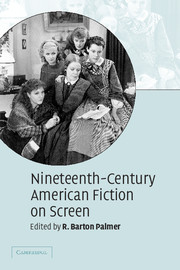
Nineteenth-Century American Fiction on Screen
The process of translating works of literature to the silver screen is a rich field of study for both students and scholars of literature and cinema. The fourteen essays collected in this 2007 volume provide a survey of the important films based on, or inspired by, nineteenth-century American fiction, from James Fenimore Cooper's The Last of the Mohicans to Owen Wister's The Virginian. Many of the major works of the American canon are included, including The Scarlet Letter, Moby Dick and Sister Carrie. The starting point of each essay is the literary text itself, moving on to describe specific aspects of the adaptation process, including details of production and reception. Written in a lively and accessible style, the book includes production stills and full filmographies. Together with its companion volume on twentieth-century fiction, the volume offers a comprehensive account of the rich tradition of American literature on screen.
eBook