
Catalogue Search | MBRL


Are you sure you want to remove the book from the shelf?

{{itemTitle}}
569
result(s) for
"American fiction 21st century"
Sort by:
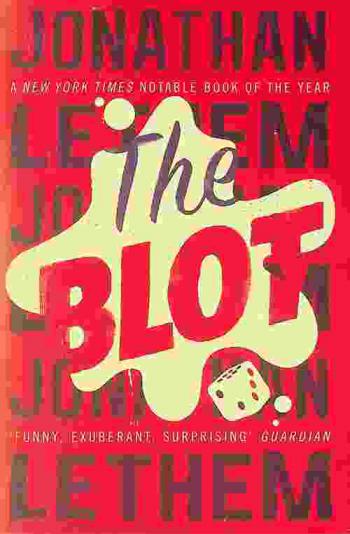
The blot
Alexander Bruno is a man with expensive problems. Sporting a tuxedo and trotting the globe, he has spent his adult life as a professional gambler. His particular line of work : backgammon, at which he extracts large sums of money.

Plotting Justice
Have the terrorist attacks of September 11 shifted the moral coordinates of contemporary fiction? And how might such a shift, reflected in narrative strategies and forms, relate to other themes and trends emerging with the globalization of literature? This book pursues these questions through works written in the wake of 9/11 and examines the complex intersection of ethics and narrative that has defined a significant portion of British and American fiction over the past decade.
Don DeLillo, Pat Barker, Aleksandar Hemon, Lorraine Adams, Michael Cunningham, and Patrick McGrath are among the authors Georgiana Banita considers. Their work illustrates how post-9/11 literature expresses an ethics of equivocation-in formal elements of narrative, in a complex scrutiny of justice, and in tense dialogues linking this fiction with the larger political landscape of the era. Through a broad historical and cultural lens,Plotting Justicereveals links between the narrative ethics of post-9/11 fiction and events preceding and following the terrorist attacks-events that defined the last half of the twentieth century, from the Holocaust to the Balkan War, and those that 9/11 precipitated, from war in Afghanistan to the Abu Ghraib scandal. Challenging the rhetoric of the war on terror, the book honors the capacity of literature to articulate ambiguous forms of resistance in ways that reconfigure the imperatives and responsibilities of narrative for the twenty-first century.
eBook

Writing at the Limit
While some cultural critics are pronouncing the death of the novel, a whole generation of novelists have turned to other media with curiosity rather than fear. These novelists are not simply incorporating references to other media into their work for the sake of verisimilitude, they are also engaging precisely such media as a way of talking about what it means to write and read narrative in a society filled with stories told outside the print medium.
By examining how some of our best fiction writers have taken up the challenge of film, television, video games, and hypertext, Daniel Punday offers an enlightening look into the current status of such fundamental narrative concepts as character, plot, and setting. He considers well-known postmodernists like Thomas Pynchon and Robert Coover, more-accessible authors like Maxine Hong Kingston and Oscar Hijuelos, and unjustly overlooked writers like Susan Daitch and Kenneth Gangemi, and asks how their works investigate the nature and limits of print as a medium for storytelling.
Writing at the Limitexplores how novelists locate print writing within the contemporary media ecology, and what it really means to be writing at print's media limit.
eBook

The Jim Baen Memorial Award : the first decade
\"Since 2007, Baen Books and The National Space Society have sponsored The Jim Baen Memorial Short Story Award, to honor the legacy of Jim Baen and to promote the ideals of forward-thinking, positive science fiction. Here gathered together for the first time are the best of the best of the first decade of the Jim Baen Memorial Award. Winners and runners-up whose stories dared imagine a bright future in which humankind has shaken off the shackles of gravity and moved into that limitless realm known as \"outer space.\" Each tale is set in a plausible, near-future setting, and yet the variations are as limitless as the imaginations of the array of authors represented. Stories that ask, \"What if?\" Stories that dare to say, \"Why not?\" Stories that continue the grand science fiction tradition, looking to the future with a positive outlook on humanity's place in the universe.\"--Provided by publisher.
Book

Partial Faiths
Spiritual conversions figure heavily in such novels as Thomas Pynchon's Vineland, Toni Morrison's Paradise, and Louise Erdrich's Love Medicine. What connects such varied works is that their convert-characters are disenchanted with secularism yet apprehensive of dogmatic religiosity. Partial Faiths is the first study to identify a body of contemporary fiction in such terms, take the measure of its structures and strategies, and evaluate its contribution to public discourse on religion's place in postmodern life. Postsecularism is most often associated with philosophers and theorists such as Jacques Derrida, Richard Rorty, Charles Taylor, William Connolly, Jürgen Habermas, and Gianni Vattimo. But it is also being explored and invented, says John A. McClure, by many novelists: Leslie Marmon Silko, Don DeLillo, Michael Ondaatje, and N. Scott Momaday among others. These novelists, who are often regarded as belonging to different domains of contemporary fiction, are fleshing out the postsecular issues that scholars treat more abstractly. But the modes of belief elaborated in these novels and the new narrative forms synchronized with these modes are dramatically partial and open-ended. Postsecular fiction does not aspire to any full \"mapping\" of the reenchanted cosmos or any formal moral code, nor does it promise anything like full redemption. It is partial in another sense as well: it is emphatically dedicated to progressive ideals of social transformation and well-being, in repudiation of resurgent fundamentalist prescriptions for the same.
eBook

The best American short stories 2018
Presents a selection of the best works of short fiction of the past year from a variety of acclaimed sources.
Book

Positive Pollutions and Cultural Toxins
In this innovative study,Positive Pollutions and Cultural Toxins, John Blair Gamber examines urbanity and the results of urban living-traffic, garbage, sewage, waste, and pollution-arguing for a new recognition of all forms of human detritus as part of the natural world and thus for a broadening of our understanding of environmental literature.
While much of the discourse surrounding the United States' idealistic and nostalgic views of itself privileges \"clean\" living (primarily in rural, small-town, and suburban settings), representations of rurality and urbanity by Chicanas/Chicanos, African Americans, Asian Americans, and Native Americans, on the other hand, complicate such generalization. Gamber widens our understanding of current ecocritical debates by examining texts by such authors as Octavia Butler, Louise Erdrich, Alejandro Morales, Gerald Vizenor, and Karen Tei Yamashita that draw on the physical signs of human corporeality to refigure cities and urbanity as natural. He demonstrates how ethnic American literature reclaims waste objects and waste spaces-likening pollution to miscegenation-as a method to revalue cast-off and marginalized individuals and communities.Positive Pollutions and Cultural Toxinsexplores the conjunction of, and the frictions between, twentieth-century U.S. postcolonial studies, race studies, urban studies, and ecocriticism, and works to refigure this portrayal of urban spaces.
eBook

Ex-communication
St George, Stealth and Zzzap continue to fight for survival in the ex-human infested L.A. But life at The Mount will never be easy, and when a potential ally the superheroes had thought long dead returns, it might just turn out to be the greatest threat they've ever faced. The thrilling follow-up to Ex-Heroes and Ex-Patriots - with even more adventure and zombie vs. superhero action.
Book

Reading Like a Girl
By examining the novels of critically and commercially
successful authors such as Sarah Dessen (Someone Like
You), Stephenie Meyer (the Twilight series), and
Laurie Halse Anderson (Speak), Reading Like a Girl:
Narrative Intimacy in Contemporary American Young Adult
Literature explores the use of narrative intimacy as a means
of reflecting and reinforcing larger, often contradictory, cultural
expectations regarding adolescent women, interpersonal
relationships, and intimacy. Reading Like a Girl explains the
construction of narrator-reader relationships in recent American
novels written about adolescent women and marketed to adolescent
women.
eBook