
Catalogue Search | MBRL


Are you sure you want to remove the book from the shelf?

{{itemTitle}}
191
result(s) for
"American fiction 21st century History and criticism."
Sort by:


Plotting Justice
Have the terrorist attacks of September 11 shifted the moral coordinates of contemporary fiction? And how might such a shift, reflected in narrative strategies and forms, relate to other themes and trends emerging with the globalization of literature? This book pursues these questions through works written in the wake of 9/11 and examines the complex intersection of ethics and narrative that has defined a significant portion of British and American fiction over the past decade.
Don DeLillo, Pat Barker, Aleksandar Hemon, Lorraine Adams, Michael Cunningham, and Patrick McGrath are among the authors Georgiana Banita considers. Their work illustrates how post-9/11 literature expresses an ethics of equivocation-in formal elements of narrative, in a complex scrutiny of justice, and in tense dialogues linking this fiction with the larger political landscape of the era. Through a broad historical and cultural lens,Plotting Justicereveals links between the narrative ethics of post-9/11 fiction and events preceding and following the terrorist attacks-events that defined the last half of the twentieth century, from the Holocaust to the Balkan War, and those that 9/11 precipitated, from war in Afghanistan to the Abu Ghraib scandal. Challenging the rhetoric of the war on terror, the book honors the capacity of literature to articulate ambiguous forms of resistance in ways that reconfigure the imperatives and responsibilities of narrative for the twenty-first century.
eBook


Reading Like a Girl
By examining the novels of critically and commercially
successful authors such as Sarah Dessen (Someone Like
You), Stephenie Meyer (the Twilight series), and
Laurie Halse Anderson (Speak), Reading Like a Girl:
Narrative Intimacy in Contemporary American Young Adult
Literature explores the use of narrative intimacy as a means
of reflecting and reinforcing larger, often contradictory, cultural
expectations regarding adolescent women, interpersonal
relationships, and intimacy. Reading Like a Girl explains the
construction of narrator-reader relationships in recent American
novels written about adolescent women and marketed to adolescent
women.
eBook

Twenty-first-century fiction : a critical introduction
\"The widespread use of electronic communication at the dawn of the twenty-first century has created a global context for our interactions, transforming the ways we relate to the world and to one another. This critical introduction reads the fiction of the past decade as a response to our contemporary predicament - one that draws on new cultural and technological developments to challenge established notions of democracy, humanity, and national and global sovereignty. Peter Boxall traces formal and thematic similarities in the novels of contemporary writers including Don DeLillo, Margaret Atwood, J. M. Coetzee, Marilynne Robinson, Cormac McCarthy, W. G. Sebald and Philip Roth, as well as David Mitchell, Chimamanda Ngozi Adichie, Dave Eggers, Ali Smith, Amy Waldman and Roberto Bolaنno. In doing so, Boxall maps new territory for scholars, students and interested readers of today's literature by exploring how these authors narrate shared cultural life in the new century\"-- Provided by publisher.
Book
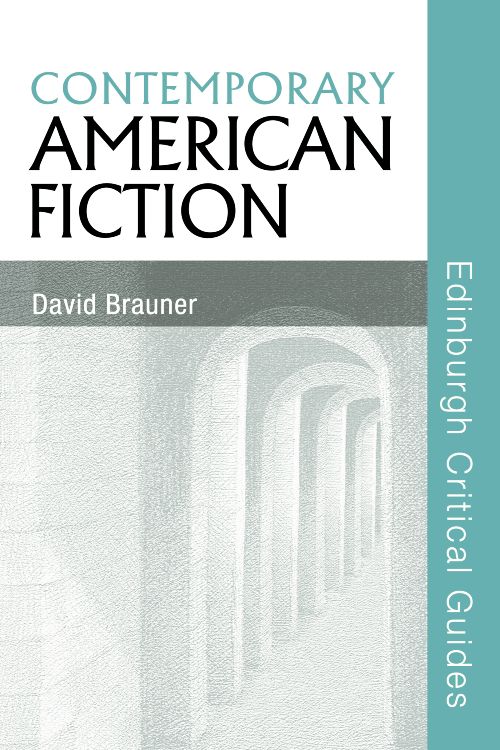
Contemporary American Fiction
This is an accessible, lucid and incisive study that will prove indispensable to students and scholars of contemporary American fiction. Featuring a wide range of authors - from canonical figures such as Philip Roth, Don DeLillo and Annie Proulx, to increasingly influential writers such as Jeffrey Eugenides, Gish Jen and Richard Powers - the book combines detailed readings of key texts with informative discussions of their historical, social and cultural contexts.
There are chapters focusing on formal characteristics (the use of irony and paradox in novels by Don DeLillo, Paul Auster and Bret Easton Ellis, and the generic properties of the texts and films of Cold Mountain, Brokeback Mountain and No Country for Old Men) and on thematic concerns (the representation of gender and sexuality in novels by Jane Smiley, Carol Shields and Jeffrey Eugenides, and of ethnicity, race and hybridity in fiction by Gish Jen, Philip Roth and Richard Powers). Running through all these chapters is an interrogation of all three elements making up the phrase 'contemporary American fiction'.
Key Features
Identifies some of the main trends in contemporary American fiction and situates them in historical and cultural contextsDiscusses a representative range of recent fiction, providing a sense of the rich diversity of the field and of its key themes and modes of writingIntroduces students to a variety of critical approaches to, and debates concerning, contemporary American fictionEncourages reflection on the nature of national, gender, ethnic and generic identities
eBook


Contemporary drift : genre, historicism, and the problem of the present
What does it mean to call something \"contemporary\"? More than simply denoting what's new, it speaks to how we come to know the present we're living in and how we develop a shared story about it. The story of trying to understand the present is an integral, yet often unnoticed, part of the literature and film of our moment. In Contemporary Drift, Theodore Martin argues that the contemporary is not just a historical period but also a conceptual problem, and he claims that contemporary genre fiction offers a much-needed resource for resolving that problem. Contemporary Drift combines a theoretical focus on the challenge of conceptualizing the present with a historical account of contemporary literature and film. Emphasizing both the difficulty and the necessity of historicizing the contemporary, the book explores how recent works of fiction depict life in an age of global capitalism, postindustrialism, and climate change. Through new histories of the novel of manners, film noir, the Western, detective fiction, and the postapocalyptic novel, Martin shows how the problem of the contemporary preoccupies a wide range of novelists and filmmakers, including Zadie Smith, Colson Whitehead, Vikram Chandra, China Miéville, Kelly Reichardt, and the Coen brothers. Martin argues that genre provides these artists with a formal strategy for understanding both the content and the concept of the contemporary. Genre writing, with its mix of old and new, brings to light the complicated process by which we make sense of our present and determine what belongs to our time.
eBook

The Cambridge companion to postmodern American fiction
\"Few previous periods in the history of American literature could rival the richness of the postmodern era - the diversity of its authors, the complexity of its ideas and visions, and the multiplicity of its subjects and forms. This volume offers an authoritative, comprehensive, and accessible guide to the American fiction of this remarkable period. It traces the development of postmodern American fiction over the past half-century and explores its key aesthetic, cultural, and political contexts. It examines its principal styles and genres, from the early experiments with metafiction to the most recent developments, such as the graphic novel and digital fiction, and offers concise, compelling readings of many of its major works. An indispensable resource for students, scholars, and the general reader, the Companion both highlights the extraordinary achievements of postmodern American fiction and provides illuminating critical frameworks for understanding it\"-- Provided by publisher.
Book

Writing at the Limit
While some cultural critics are pronouncing the death of the novel, a whole generation of novelists have turned to other media with curiosity rather than fear. These novelists are not simply incorporating references to other media into their work for the sake of verisimilitude, they are also engaging precisely such media as a way of talking about what it means to write and read narrative in a society filled with stories told outside the print medium.
By examining how some of our best fiction writers have taken up the challenge of film, television, video games, and hypertext, Daniel Punday offers an enlightening look into the current status of such fundamental narrative concepts as character, plot, and setting. He considers well-known postmodernists like Thomas Pynchon and Robert Coover, more-accessible authors like Maxine Hong Kingston and Oscar Hijuelos, and unjustly overlooked writers like Susan Daitch and Kenneth Gangemi, and asks how their works investigate the nature and limits of print as a medium for storytelling.
Writing at the Limitexplores how novelists locate print writing within the contemporary media ecology, and what it really means to be writing at print's media limit.
eBook