
Catalogue Search | MBRL


Are you sure you want to remove the book from the shelf?

{{itemTitle}}
523,003
result(s) for
"American history"
Sort by:

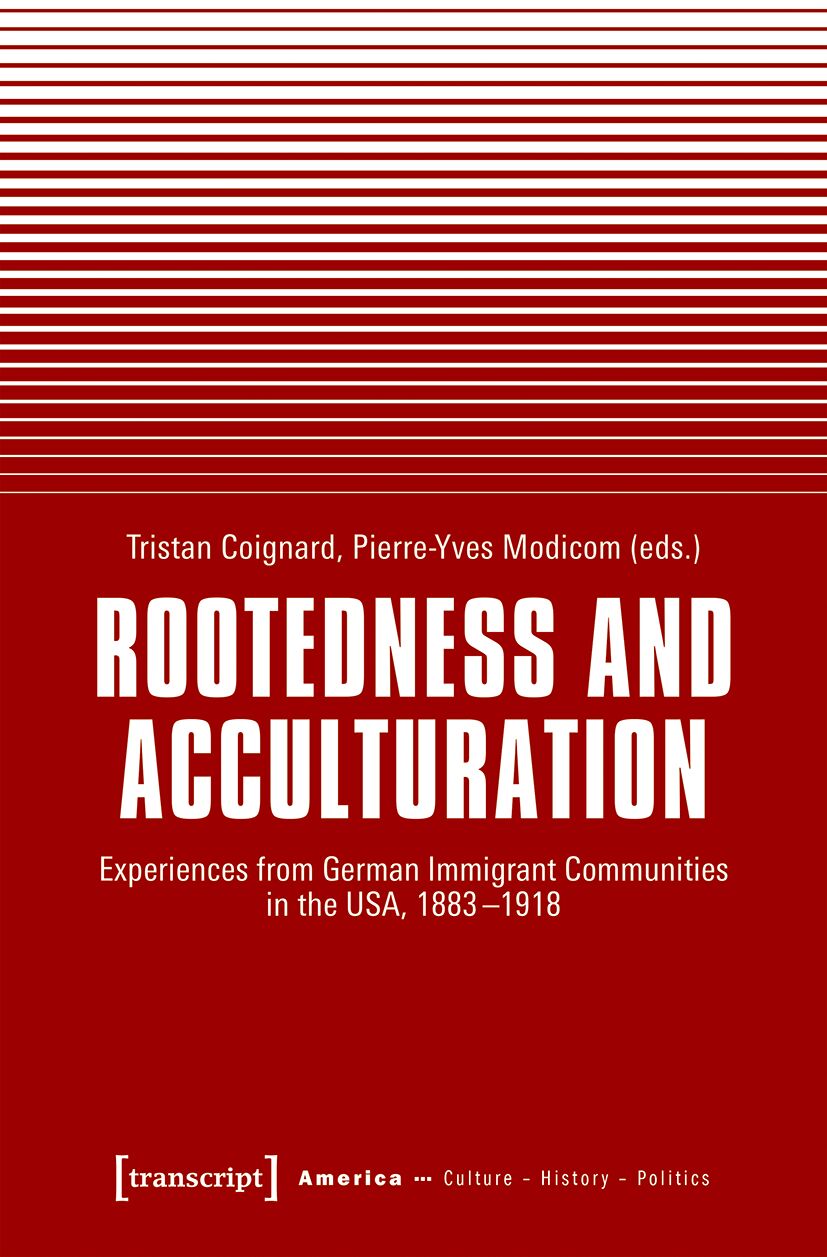
Rootedness and Acculturation
German-Americans represent the largest self-declared ancestry group in the United States of America. The period from the 200th anniversary celebration of Germantown's founding in 1883 to the end of the First World War was an age of intense turmoil within the ranks of German-American communities. These decades were marked by a massive political and cultural realignment as well as major contributions to the (self-)definition of German-Americanness. Historians and sociolinguists with backgrounds in German or American studies offer a fresh look at a critical period in the history of German-American communities.
eBook


Fit to Be Citizens?
Meticulously researched and beautifully written, Fit to Be Citizens? demonstrates how both science and public health shaped the meaning of race in the early twentieth century. Through a careful examination of the experiences of Mexican, Japanese, and Chinese immigrants in Los Angeles, Natalia Molina illustrates the many ways local health officials used complexly constructed concerns about public health to demean, diminish, discipline, and ultimately define racial groups. She shows how the racialization of Mexican Americans was not simply a matter of legal exclusion or labor exploitation, but rather that scientific discourses and public health practices played a key role in assigning negative racial characteristics to the group. The book skillfully moves beyond the binary oppositions that usually structure works in ethnic studies by deploying comparative and relational approaches that reveal the racialization of Mexican Americans as intimately associated with the relative historical and social positions of Asian Americans, African Americans, and whites. Its rich archival grounding provides a valuable history of public health in Los Angeles, living conditions among Mexican immigrants, and the ways in which regional racial categories influence national laws and practices. Molina's compelling study advances our understanding of the complexity of racial politics, attesting that racism is not static and that different groups can occupy different places in the racial order at different times.
eBook


Fighting Their Own Battles
Between 1940 and 1975, Mexican Americans and African Americans in Texas fought a number of battles in court, at the ballot box, in schools, and on the streets to eliminate segregation and state-imposed racism. Although both groups engaged in civil rights struggles as victims of similar forms of racism and discrimination, they were rarely unified. InFighting Their Own Battles, Brian Behnken explores the cultural dissimilarities, geographical distance, class tensions, and organizational differences that all worked to separate Mexican Americans and blacks.Behnken further demonstrates that prejudices on both sides undermined the potential for a united civil rights campaign. Coalition building and cooperative civil rights efforts foundered on the rocks of perceived difference, competition, distrust, and, oftentimes, outright racism. Behnken's in-depth study reveals the major issues of contention for the two groups, their different strategies to win rights, and significant thematic developments within the two civil rights struggles. By comparing the histories of these movements in one of the few states in the nation to witness two civil rights movements, Behnken bridges the fields of Mexican American and African American history, revealing the myriad causes that ultimately led these groups to \"fight their own battles.\"
eBook


The Black campus movement : Black students and the racial reconstitution of higher education, 1965-1972
This book provides the first national study of this intense and challenging struggle which disrupted and refashioned institutions in almost every state. It also illuminates the context for one of the most transformative educational movements in American history through a history of black higher education and black student activism before 1965.
eBook

A short history of Black craft in ten objects
\"Ten illustrated essays tell the stories of handcrafted objects and their makers, providing inspiration and insight into Black history and craftsmanship\"-- Provided by publisher.
BOOK

The Sovereignty of Quiet
African American culture is often considered expressive, dramatic, and even defiant. InThe Sovereignty of Quiet, Kevin Quashie explores quiet as a different kind of expressiveness, one which characterizes a person's desires, ambitions, hungers, vulnerabilities, and fears. Quiet is a metaphor for the inner life, and as such, enables a more nuanced understanding of black culture.The book revisits such iconic moments as Tommie Smith and John Carlos's protest at the 1968 Mexico City Olympics and Elizabeth Alexander's reading at the 2009 inauguration of Barack Obama. Quashie also examines such landmark texts as Gwendolyn Brooks'sMaud Martha, James Baldwin'sThe Fire Next Time, and Toni Morrison'sSulato move beyond the emphasis on resistance, and to suggest that concepts like surrender, dreaming, and waiting can remind us of the wealth of black humanity.
eBook