
Catalogue Search | MBRL


Are you sure you want to remove the book from the shelf?

{{itemTitle}}
150
result(s) for
"American literature Caribbean American authors History and criticism."
Sort by:


Asylum Speakers
Offering the first interdisciplinary study of refugees in the Caribbean, Central America, and the United States, Asylum Speakers relates current theoretical debates about hospitality and cosmopolitanism to the actual conditions of refugees. In doing so, the author weighs the questions of truth valueassociated with various modes of witnessing to explore the function of testimonial discourse in constructing refugee subjectivity in New World cultural and political formations. By examining literary works by such writers as Edwidge Danticat, Nikl Payen, Kamau Brathwaite, Francisco Goldman, Julia Alvarez, Ivonne Lamazares, and Cecilia Rodr!guez Milans, theoretical work by Jacques Derrida, Edouard Glissant, and Wilson Harris, as well as human rights documents, government documents, photography, and historical studies, Asylum Speakers constructs a complex picture of New World refugees that expands current discussions of diaspora and migration, demonstrating that the peripheral nature of refugee testimonial narratives requires us to reshape the boundaries of U.S. ethnic and postcolonial studies.
eBook

Hispanic Caribbean literature of migration : narratives of displacement
\"This collection explores the literary tradition of Caribbean Latino literature written in the U.S. beginning with José Martí and concluding with 2008 Pulitzer Prize winning novelist, Junot Díaz. The contributors consider the way that spatial migration in literature serves as a metaphor for gender, sexuality, racial, identity, linguistic, and national migrations\"--Provided by publisher.
BOOK
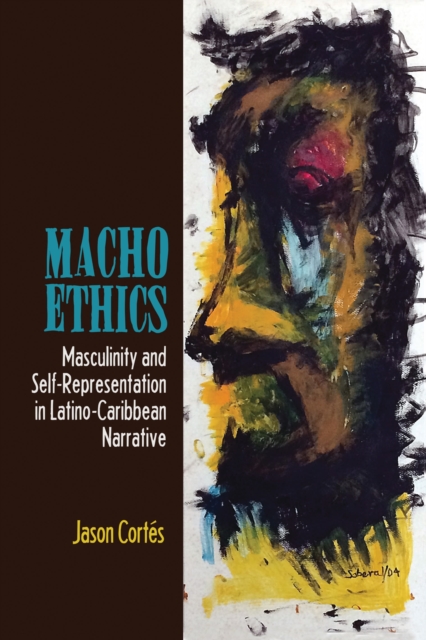
Macho ethics
Masculinity is not a monolithic phenomenon, but a historically discontinuous one—a fabrication as it were, of given cultural circumstances. Because of its opacity and instability, masculinity, like more recognizable systems of oppression, resists discernibility. In Macho Ethics: Masculinity and Self-Representation in Latino-Caribbean Narrative, Jason Cortés seeks to reveal the inner workings of masculinity in the narrative prose of four major Caribbean authors: the Cuban Severo Sarduy; the Dominican American Junot Díaz; and the Puerto Ricans Luis Rafael Sánchez and Edgardo Rodríguez Juliá. By exploring the relationship between ethics and authority, the legacies of colonial violence, the figure of the dictator, the macho, and the dandy, the logic of the Archive, the presence of Oscar Wilde, and notions of trauma and mourning, Macho Ethics fills a gap surrounding issues of power and masculinity within the Caribbean context, and draws attention to what frequently remains invisible and unspoken.
eBook


Sucking salt : Caribbean women writers, migration, and survival
In this study of Caribbean women writers, Meredith Gadsby examines the fiction and poetry of both emigrant and island women to explore strategies they have developed for overcoming the oppression of racism, sexism, and economic deprivation in their lives and work. She first reviews the cultural and historical significance of salt in the Caribbean, then delineates creative resistance to oppression as expressed in the literature of Caribbean women writing about their migration to the United States, Great Britain, and Canada. From British poet Dorothea Smartt to Edwidge Danticat of New York's Haitian community-and with a special emphasis on the creative artistry of Paule Marshall-Gadsby shows how, through migration, these writers' protagonists move into and through metropolitan spaces to create new realities for themselves, their families, and their communities.
eBook


Mayaya Rising
Who are the Black heroines of Latin America and the Caribbean? Where do we turn for models of transcendence among women of African ancestry in the region? In answer to the historical dearth of such exemplars, Mayaya Rising explores and celebrates the work of writers who intentionally center powerful female cultural archetypes. In this inventive analysis, Duke proposes three case studies and a corresponding womanist methodology through which to study and rediscover these figures. The musical Cuban-Dominican sisters and former slaves Teodora and Micaela Ginés inspired Aida Cartagena Portalatin's epic poem Yania tierra; the Nicaraguan matriarch of the May Pole, \"Miss Lizzie,\" figures prominently in four anthologies from the country's Bluefields region; and the iconic palenqueras of Cartagena, Colombia are magnified in the work of poets María Teresa Ramírez Neiva and Mirian Díaz Pérez. In elevating these figures and foregrounding these works, Duke restores and repairs the scholarly record.
eBook


Precarious Passages
Precarious Passages unites literature written by members of the far-flung Black Anglophone diaspora. Rather than categorizing novels as simply \"African American,\" \"Black Canadian,\" \"Black British,\" or \"postcolonial African Caribbean,\" this book takes an integrative approach: it argues that fiction creates and sustains a sense of a wider African diasporic community in the Western world.
eBook