
Catalogue Search | MBRL


Are you sure you want to remove the book from the shelf?

{{itemTitle}}
39,838
result(s) for
"American poetry"
Sort by:

I'm just no good at rhyming, and other nonsense for mischievous kids and immature grownups
\"An illustrated collection of comically irreverent rhyming poems for readers of all ages, ranging in topic from avocados and anacondas to zombies and zebras (dressed like ghosts)\"-- Provided by publisher
Book

Aphrodite's Daughters
The Harlem Renaissance was a watershed moment for racial uplift, poetic innovation, sexual liberation, and female empowerment.Aphrodite's Daughtersintroduces us to three amazing women who were at the forefront of all these developments, poetic iconoclasts who pioneered new and candidly erotic forms of female self-expression.
Maureen Honey paints a vivid portrait of three African American women-Angelina Weld Grimké, Gwendolyn B. Bennett, and Mae V. Cowdery-who came from very different backgrounds but converged in late 1920s Harlem to leave a major mark on the literary landscape. She examines the varied ways these poets articulated female sexual desire, ranging from Grimké's invocation of a Sapphic goddess figure to Cowdery's frank depiction of bisexual erotics to Bennett's risky exploration of the borders between sexual pleasure and pain. Yet Honey also considers how they were united in their commitment to the female body as a primary source of meaning, strength, and transcendence.
The product of extensive archival research,Aphrodite's Daughtersdraws from Grimké, Bennett, and Cowdery's published and unpublished poetry, along with rare periodicals and biographical materials, to immerse us in the lives of these remarkable women and the world in which they lived. It thus not only shows us how their artistic contributions and cultural interventions were vital to their own era, but also demonstrates how the poetic heart of their work keeps on beating.
eBook

Sail away : poems
A celebration of mermaids, wildernesses of waves, and the creatures of the deep through poems by Langston Hughes and cut-paper collage illustrations by Ashley Bryan.
Book
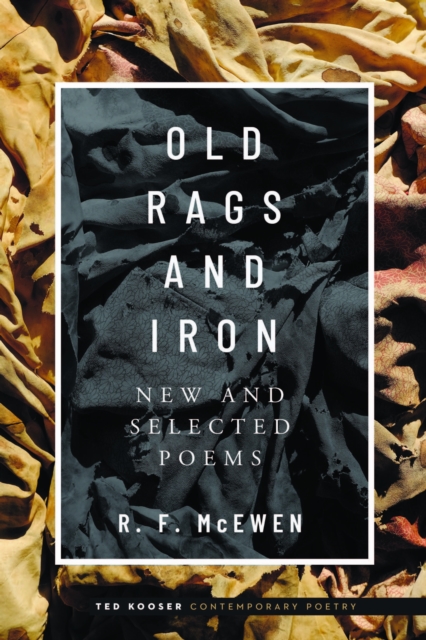
Old Rags and Iron
Old Rags and Iron is a collection of narrative poems about the life experiences of working-class people with whom the author, R. F. McEwen, is not only acquainted but whose lives he has shared. McEwen supplemented his income as a teacher while working as a professional logger and tree trimmer, and he writes with great love and respect for blue-collar families. Set primarily in the back-of-the-yard neighborhood of South Side Chicago, where McEwen grew up, as well as Pine Ridge, South Dakota, western Nebraska, Ireland, and elsewhere, the poems celebrate many voices and stories. Utilizing tree-trimming as a central metaphor, these poems of blank verse fictions reverberate like truth.
eBook

Every thing on it : poems and drawings
The second original book to be published since Silverstein's passing in 1999, this poetry collection includes more than 130 never-before-seen poems and drawings completed by the American artist, selected by his family from his archives.
Book

The Figure of Echo
In this essay on \"what the imagination has made of the phenomenon
of echo,\" John Hollander examines aspects of the figure of echo in
light of their significance for poetry. Looking at echo in its
literal, acoustic sense, echo in myth, and echo as literary
allusion, Hollander concludes with a study of the rhetorical status
of the figure of echo and an examination of the ancient and newly
interesting trope of metalepsis, or transumption, which it appears
to embody. Centered on ways in which Milton's poetry echoes, and is
echoed by, other texts, The Figure of Echo also explores
Spenser and other Renaissance writers; romantic poets such as
Keats, Shelley, and Wordsworth; and modern poets including Hardy,
Eliot, Stevens, Frost, Williams, and Hart Crane. This book has
implications for literary theory and holds great practical interest
for students and teachers of American and English literature of all
periods. This title is part of UC Press's Voices Revived program,
which commemorates University of California Press's mission to seek
out and cultivate the brightest minds and give them voice, reach,
and impact. Drawing on a backlist dating to 1893, Voices Revived
makes high-quality, peer-reviewed scholarship accessible once again
using print-on-demand technology. This title was originally
published in 1981.
eBook

Laugh-eteria : poems and drawings
A collection of more than 100 humorous poems on such topics as ogres, pizza, fear, school, dragons, trees, and hair.
Book
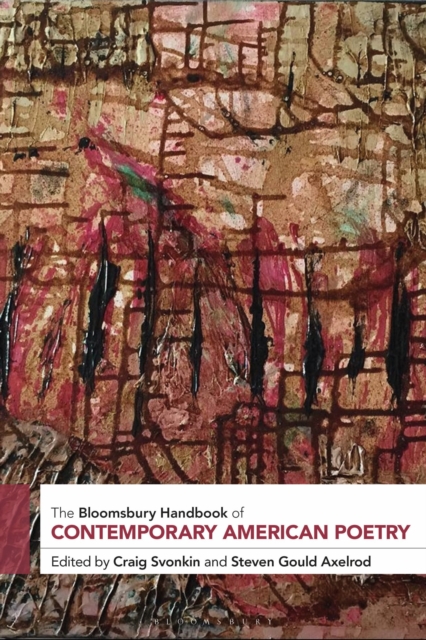
The Bloomsbury Handbook of Contemporary American Poetry
With chapters written by leading scholars such as Steven Gould Axelrod, Cary Nelson, Aldon Lynn Nielsen and Marjorie Perloff, this comprehensive Handbook explores the full range and diversity of poetry and criticism in 21st-century America. The Bloomsbury Handbook of Contemporary American Poetry covers such topics as: • Major histories and genealogies of post-war poetry – from the language poets and the Black Arts Movement to New York school and the Beats • Poetry, identity and community – from African American, Chicana/o and Native American poetry to Queer verse and the poetics of disability • Key genres and forms – including digital, visual, documentary and children’s poetry • Central critical themes – economics, publishing, popular culture, ecopoetics, translation and biography The book also includes an interview section in which major contemporary poets such as Rae Armantrout, Charles Bernstein and Claudia Rankine reflect on the craft and value of poetry today.
eBook

Zilot & other important rhymes
\"A collection of humorous and heartfelt poetry for children and adults\"-- Provided by publisher.
Book

Killing Poetry
Winner of the 2019 Lilla A. Heston Award
Co-winner of the 2018 Ethnography Division’s Best Book from the NCA
In recent decades, poetry slams and the spoken word artists who compete in them have sparked a resurgent fascination with the world of poetry. However, there is little critical dialogue that fully engages with the cultural complexities present in slam and spoken word poetry communities, as well as their ramifications.
In Killing Poetry , renowned slam poet, Javon Johnson unpacks some of the complicated issues that comprise performance poetry spaces. He argues that the truly radical potential in slam and spoken word communities lies not just in proving literary worth, speaking back to power, or even in altering power structures, but instead in imagining and working towards altogether different social relationships. His illuminating ethnography provides a critical history of the slam, contextualizes contemporary black poets in larger black literary traditions, and does away with the notion that poetry slams are inherently radically democratic and utopic.
Killing Poetry —at times autobiographical, poetic, and journalistic—analyzes the masculine posturing in the Southern California community in particular, the sexual assault in the national community, and the ways in which related social media inadvertently replicate many of the same white supremacist, patriarchal, and mainstream logics so many spoken word poets seem to be working against. Throughout, Johnson examines the promises and problems within slam and spoken word, while illustrating how community is made and remade in hopes of eventually creating the radical spaces so many of these poets strive to achieve.
eBook