
Catalogue Search | MBRL


Are you sure you want to remove the book from the shelf?

{{itemTitle}}
1,339
result(s) for
"American poetry 21st century."
Sort by:


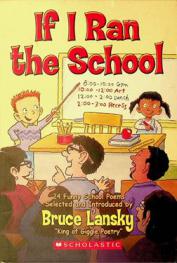
If I ran the school
Bruce Lansky has written five new poems for this book and selected nineteen others from some of his favorite poets, including Jack Prelutsky, Kenn Nesbitt, Ted Scheu, and Robert Pottle.
Book

Gray Matter
Simultaneously restless and enchanted, the primary speaker of these poems is a tourist in the truest sense. She finds herself on trains, in the backcountry of the American wilderness, in crowded European hostels, and in Vietnam, eating a partially fertilized egg. All the while, Michigan, the landscape of childhood, serves as her reference point (\"A rustic sort of place I can't back away from\"). Inspired by the Buddhist concept of anatta, or \"no-self,\" the speaker navigates unfamiliar terrain, sparking the question of identity and the agent of its construction. The poems ask how through perception the body metabolizes experience. From this intersection the passionate investigation of consciousness takes flight, framing the slippage between thinking and being, the feast of the subconscious and the seeds planted from waking life, the impermanence of a given moment, versus the materialism of memory, the reality of isolation despite the presence of a crowd, the influence of culture versus biology's common baseline. Drawing from contemporary neuroscience and rare case studies, the poems illuminate the peculiar, interrelated aspects of the mechanisms of the brain and personality. But there is nothing clinical about these poems, culled from dreams and memory fragments. The question of consciousness gives rise to the distinct human ability to reflect, to invent. Which is what the poems-poignant, strange, radiating musicality-enact: someone gropes for the deer mount its goofy snarl and patchwork hide a ruse underway laughter in the pantry the deer lifted into someone's sleep (from \"Staff After Hours\") Not the love a mile underground on a train that slows into the station like a sore arm bending, but the kind boarded on a ship and sailed hard into the storm we've made of ourselves. (from \"Please do Not Touch\") Gray Matter: 1. the material of the brain. 2. an expression naming an idea or situation held in shadow. This book tangles with the unknown, but also celebrates the seductive curiosity its mystery provokes. It is a love letter from the imagination to the scientists and philosophers who, despite remarkable attempts, still cannot locate its source.
eBook


The matter of capital : poetry and crisis in the American century
In this highly original reexamination of North American poetry in English from Ezra Pound to the present day, Christopher Nealon demonstrates that the most vital writing of the period is deeply concerned with capitalism. This focus is not exclusive to the work of left-wing poets: the problem of capitalism's effect on individuals, communities, and cultures is central to a wide variety of poetry, across a range of political and aesthetic orientations. Indeed, Nealon asserts, capitalism is the material out of which poetry in English has been created over the last century.
Much as poets of previous ages continually examined topics such as the deeds of King Arthur or the history of Troy, poets as diverse as Jack Spicer, John Ashbery, and Claudia Rankine have taken as their \"matter\" the dynamics and impact of capitalism—not least its tendency to generate economic and political turmoil. Nealon argues persuasively that poets' attention to the matter of capital has created a corresponding notion of poetry as a kind of textual matter, capable of dispersal, retrieval, and disguise in times of crisis. Offering fresh readings of canonical poets from W. H. Auden to Adrienne Rich, as well as interpretations of younger writers like Kevin Davies, The Matter of Capital reorients our understanding of the central poetic project of the last century.
eBook


Lyric as Comedy
A poet walks into a bar... In Lyric as Comedy , Calista
McRae explores the unexpected comic opportunities in recent
American poems about deeply personal, often embarrassing,
experiences. Lyric poems, she finds, can be surprising sites of a
shifting, unruly comedy, as seen in the work of John Berryman,
Robert Lowell, A. R. Ammons, Terrance Hayes, Morgan Parker, Natalie
Shapero, and Monica Youn.
Lyric as Comedy draws out the ways in which key
American poets have struggled with persistent expectations about
what expressive poetry can and should do. McRae reveals how the
modern lyric, rather than bestowing order on the poet's thoughts
and emotions, can center on impropriety and confusion, formal
breakage and linguistic unruliness, and self-observation and
self-staging.
The close readings in Lyric as Comedy also provide new
insight into the theory and aesthetics of comedy, taking in the
indirect, glancing comic affordances of poetry. In doing so, McRae
captures varieties of humor that do not align with traditional
terms, centering abjection and pleasure as facets of contemporary
lyric practice.
eBook