
Catalogue Search | MBRL


Are you sure you want to remove the book from the shelf?

{{itemTitle}}
1,632
result(s) for
"American robin"
Sort by:

The astonishment tapes : talks on poetry and autobiography with Robin Blaser and friends
\"The Astonishment Tapes is the edited transcript of revealing autobiographical audiotapes recorded by the groundbreaking poet Robin Blaser, a founding member of the Berkeley contingent of the San Francisco Renaissance in New American Poetry\"-- Provided by publisher.
Book

Increase in suicides the months after the death of Robin Williams in the US
Investigating suicides following the death of Robin Williams, a beloved actor and comedian, on August 11th, 2014, we used time-series analysis to estimate the expected number of suicides during the months following Williams' death. Monthly suicide count data in the US (1999-2015) were from the Centers for Disease Control and Prevention Wide-ranging ONline Data for Epidemiologic Research (CDC WONDER). Expected suicides were calculated using a seasonal autoregressive integrated moving averages model to account for both the seasonal patterns and autoregression. Time-series models indicated that we would expect 16,849 suicides from August to December 2014; however, we observed 18,690 suicides in that period, suggesting an excess of 1,841 cases (9.85% increase). Although excess suicides were observed across gender and age groups, males and persons aged 30-44 had the greatest increase in excess suicide events. This study documents associations between Robin Williams' death and suicide deaths in the population thereafter.
Journal Article

Do-over! : in which a forty-eight-year-old father of three returns to kindergarten, summer camp, the prom, and other embarrassments
Robin Hemley's childhood made a wedgie of his memory, leaving him sore and embarrassed for over forty years. He was the most pitiful kindergartner, the least spirited summer camper, and dateless for prom. In fact, there's nary an event from his youth that couldn't use improvement. If only he could do them all over a few decades later, with an adult's wisdom, perspective, and giant-like height. In the spirit of cult film classics like Billy Madison and Wet Hot American Summer, Hemley reencounters papier mمachâe, revisits his childhood home, and finally attends the prom--bringing readers the thrill of recapturing a misspent youth and discovering what's most important: simple pleasures, second chances, and the forgotten joys of recess.--From publisher description.
Book
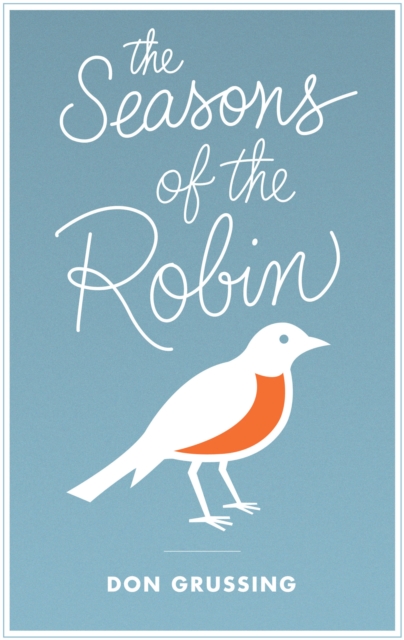
seasons of the robin
In a small nest in a large oak tree, the drama begins. A young American Robin breaks open his shell and emerges into a world that will provide the warmth of sunny days and the life-threatening chill of cold, rainy nights; the satisfaction of a full stomach and the danger of sudden predator attacks; and the chance to mature into an adult robin who'll begin the cycle of life all over again come next spring. In The Seasons of the Robin, Don Grussing tells the uncommon life story of one of the most common birds, the North American Robin. Written as fiction to capture the high drama that goes on unnoticed right outside our windows, the book follows a young male robin through the first year of life. From his perspective, we experience many common episodes of a bird's life—struggling to get out of the egg; awkwardly attempting to master flight; learning to avoid predators; migrating for the first time; returning home; establishing a territory; finding a mate; and beginning the cycle again. This creative approach of presenting natural history through a fictional, yet factually based, story allows us to experience the spine-tingling, nerve-wracking, adrenaline-flowing excitement that is so much a part of the life of every wild thing. As Don Grussing concludes in his preface, \"Once you experience the world through a robin's eyes, I hope you'll look at every wild thing with new appreciation and respect for what they accomplish by living.\"
eBook

Fighter pilot : the memoirs of legendary ace Robin Olds
A biography of top fighter pilot and squadron commander Robin Olds--who arrived in Vietnam in 1966 to find a dejected group of pilots and motivated them by placing himself on the flight schedule under officers junior to himself, then challenging them to train him properly because he would soon be leading them.
Book

Cellular and immunological mechanisms influence host-adapted phenotypes in a vector-borne microparasite
Predicting pathogen emergence and spillover risk requires understanding the determinants of a pathogens’ host range and the traits involved in host competence. While host competence is often considered a fixed species-specific trait, it may be variable if pathogens diversify across hosts. Balancing selection can lead to maintenance of pathogen polymorphisms (multiple-niche-polymorphism; MNP). The causative agent of Lyme disease, Borrelia burgdorferi (Bb), provides a model to study the evolution of host adaptation, as some Bb strains defined by their outer surface protein C (ospC) genotype, are widespread in white-footed mice and others are associated with non-rodent vertebrates (e.g. birds). To identify the mechanisms underlying potential strain × host adaptation, we infected American robins and white-footed mice, with three Bb strains of different ospC genotypes. Bb burdens varied by strain in a host-dependent fashion, and strain persistence in hosts largely corresponded to Bb survival at early infection stages and with transmission to larvae (i.e. fitness). Early survival phenotypes are associated with cell adhesion, complement evasion and/or inflammatory and antibody-mediated removal of Bb, suggesting directional selective pressure for host adaptation and the potential role of MNP in maintaining OspC diversity. Our findings will guide future investigations to inform eco-evolutionary models of host adaptation for microparasites.
Journal Article
Media coverage of Robin Williams’ suicide in the United States: A contributor to contagion?
Evidence suggests that suicide rates can increase following the suicide of a prominent celebrity or peer, sometimes known as 'suicide contagion'. The risk of contagion is especially high when media coverage is detailed and sensational. A recent study reported a 10% increase in U.S. suicides in the months following the suicide of comedian Robin Williams, who died in August 2014. The authors tentatively linked this increase to sensational media coverage; however, no content analysis of U.S. media was performed. As such, the aim of the present study is to formally examine the tone and content of U.S. newspaper coverage of Williams' suicide. The primary objective is to assess adherence to suicide reporting guidelines in U.S. newspapers after his suicide. The secondary objective is to identify common emerging themes discussed in these articles. The tertiary objective is to compare patterns of results in the U.S media with those in the Canadian media. Articles about Williams' suicide were collected from 10 U.S. newspapers in the 30-day period following his death using systematic retrieval software, which were then examined for adherence to suicide reporting recommendations. An inductive thematic analysis was also undertaken. A total of 63 articles were included in the study. We found that 100% of articles did not call it a 'successful' suicide, 96.8% did not use pejorative phrases and 71% did not say 'commit' suicide. However, only 11% included information about help-seeking, 27% tended to romanticize his suicide and 46% went into detail about the method. The most prominent emerging theme was Williams' struggles with mental illness and addiction. These findings suggest that U.S. newspapers moderately adhered to best practice recommendations when reporting Williams' suicide. Key recommendations were underapplied, which may have contributed to suicide contagion. New interventions targeting U.S. journalists and media may be needed to improve suicide reporting.
Journal Article

The Spread of the Mosquito‐Transmitted West Nile Virus in North America and Europe
West Nile virus (WNV) disease, a mosquito‐transmitted Flavivirus infection, represents a substantial public health research interest. This virus was unknown in the Western hemisphere until it was introduced in 1999 into an immunologically naïve population. WNV caused an epizootic and epidemic in New York City. The infection then swept over North America, causing mass mortality in birds and cumulatively 60,000 human cases, half of whom were hospitalised, mostly with neurological symptoms. The virus closely resembled a goose virus isolated in Israel in 1998. Mosquitoes of the genus Culex were identified as the insect viral vectors. WNV can infect more than 300 bird species, but in the US, the American robin (Turdus migratorius) represented the ecologically most important bird viral reservoir. Mosquito‐to‐mosquito viral transmission might amplify the viral spread, and iatrogenic WNV transmission was also observed, leading to the screening of blood products. Compared with African WNV isolates, the New York WNV isolate NY99 showed a mutation in the nonstructural protein NS3 that increased its virulence in birds and was also observed in WNV outbreaks from Romania in 1996 and from Russia in 1999. During its spread across the US, NY99 acquired a mutation in the envelope gene E that favoured viral infection in the insect vector. Europe reported 1200 annual WNV cases in 2024, with a focus in Mediterranean countries, but a northward spread of the infection to Germany and The Netherlands was also noted. Global warming is likely to affect the geographical distribution of vector‐borne infections such that people living in temperate climate areas might be increasingly exposed to these infections. Therefore, research on temperature effects on WNV transmission by Culex mosquitoes has become a recent focus of research. Pertinent climate aspects of WNV infections are retraced in the present review. The West Nile flavivirus is not only maintained in the USA in a primary infection cycle between the American robin and Culex mosquitoes but also causes incidental infections in horses and humans, causing epizootics and epidemics. The ecological conditions influencing virus transmission in North America and Europe are reviewed.
Journal Article
Vector host-feeding preferences drive transmission of multi-host pathogens: West Nile virus as a model system
Seasonal epizootics of vector-borne pathogens infecting multiple species are ecologically complex and difficult to forecast. Pathogen transmission potential within the host community is determined by the relative abilities of host species to maintain and transmit the pathogen and by ecological factors influencing contact rates between hosts and vectors. Increasing evidence of strong feeding preferences by a number of vectors suggests that the host community experienced by the pathogen may be very different from the local host community. We developed an empirically informed transmission model for West Nile virus (WNV) in four sites using one vector species (Culex pipiens) and preferred and non-preferred avian hosts. We measured strong feeding preferences for American robins (Turdus migratorius) by Cx. pipiens, quantified as the proportion of Cx. pipiens blood meals from robins in relation to their abundance (feeding index). The model accurately predicted WNV prevalence in Cx. pipiens at three of four sites. Sensitivity analysis revealed feeding preference was the most influential parameter on intensity and timing of peak WNV infection in Cx. pipiens and a threshold feeding index for transmission was identified. Our findings indicate host preference-induced contact heterogeneity is a key mediator of vector-borne pathogen epizootics in multi-species host communities, and should be incorporated into multi-host transmission models.
Journal Article

First tracking of individual American Robins across seasons/Primer rastreo de Turdus migratorius entre temporadas
The American Robin (Turdus migratorius) is one of the most widespread, common bird species in North America; yet, very little is known about its migratory connectivity, migration timing, and migratory routes. Using archival GPS tags, we tracked the movements of 7 individual robins from 3 breeding populations in the United States. Four robins captured in Denali National Park and Preserve, Alaska, overwintered in Texas, Nebraska, Oklahoma, and Montana, up to 4,500 km from the capture location. One robin captured in Amherst, Massachusetts, overwintered in South Carolina 1,210 km from the capture location, whereas 2 robins captured in Washington, D.C., spent the entire year within 6 km of their original capture location. Understanding the annual cycle and differences in migration strategies for a species that exhibits large regional variation in movement has the potential to provide novel insights into how conspecific populations respond to current and future heterogeneity in climate and habitat. The region-specific patterns presented here suggest robins could serve as sentinels of environmental change at a continental scale. Received 24 July 2018. Accepted 21 September 2018.
Journal Article