
Catalogue Search | MBRL


Are you sure you want to remove the book from the shelf?

{{itemTitle}}
20
result(s) for
"Americans Italy Fiction."
Sort by:
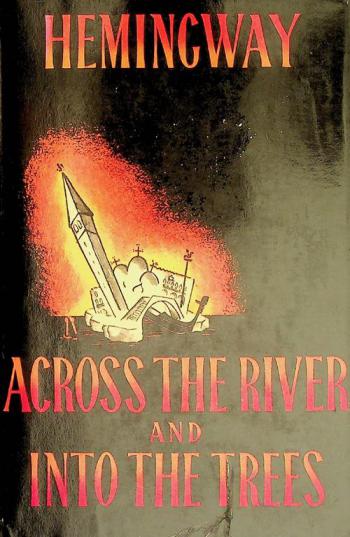
Across the river and into the trees
A post war story of an American colonel, whose fifty-years and heart condition weigh heavily upon him as he spends a week-end in Venice.

Understanding Pat Conroy
Pat Conroy’s work as a novelist and a memoirist has indelibly shaped the image of the American South in the cultural imagination. His writing has rendered the physical landscape of the South Carolina lowcountry familiar to legions of readers, and it has staked out a more complex geography as well, one defined by domestic trauma, racial anxiety, religious uncertainty, and cultural ambivalence. In Understanding Pat Conroy, Catherine Seltzer engages in a sustained consideration of Conroy and his work. The study begins with a sketch of Conroy’s biography, a narrative that, while fascinating in its own right, is employed here to illuminate many of the motifs and characters that define his work and to locate him within southern literary tradition. The volume then moves on to explore each of Conroy’s major works, tracing the evolution of the themes within and among each of his novels, including The Great Santini, The Lords of Discipline, The Prince of Tides, Beach Music, and South of Broad, and his memoirs, among them The Water Is Wide and My Losing Season. Seltzer’s insightful close readings of Conroy’s work are supplemented by interviews and archival material, shedding new light on the often-complex dynamics between text and context in Conroy’s oeuvre. More broadly Understanding Pat Conroy also explores the ways that Conroy delights in troubling the boundaries that circumscribe the literary establishment. Seltzer links Conroy’s work to existing debates about the contemporary American canon, and, like Conroy’s work itself, Understanding Pat Conroy will be of interest to his readers, students of American literature, and new and veteran South watchers.
eBook

Lost in the Spanish Quarter : a novel
\"Despite years of navigating the narrow, winding streets of Naples's Spanish Quarter, the city never fails to instill in [Heddi] the pain of longing, a desire to belong. A place she wants to call home despite being l'americano or the American. For Heddi's group of university friends, Naples is either a refuge from their familial responsibilities or an entryway to a wider world ... Heddi's days of shuttling between her classes and the crumbling apartment she shares with her rambunctious friends are interrupted when she unexpectedly meets a fellow student named Pietro. The two immediately fall into a whirlwind romance, moving in together, enjoying every minute of their precious present, and dreaming of their futures\"--Publisher marketing.
Book

The Mirage of America in Contemporary Italian Literature and Film
The Mirage of America in Contemporary Italian Literature and Film explores the use of images associated with the United States in Italian novels and films released between the 1980s and the 2000s. In this study, Barbara Alfano looks at the ways in which the individuals portrayed in these works – and the intellectuals who created them – confront the cultural construct of the American myth. As Alfano demonstrates, this myth is an integral part of Italians’ discourse to define themselves culturally – in essence, Italian intellectuals talk about America often for the purpose of talking about Italy.
The book draws attention to the importance of Italian literature and film as explorations of an individual’s ethics, and to how these productions allow for functioning across cultures. It thus differentiates itself from other studies on the subject that aim at establishing the relevance and influence of American culture on Italian twentieth-century artistic representations.
eBook

Through the skylight
Living temporarily in Venice, three American siblings uncover a mystery surrounding magical objects, an Arabian Nights book, and animals that can walk in and out of paintings.
Book

The Race to Primitivism: Ralph Ellison's Transatlantic Musings and the Italian Reception of Invisible Man
This article traces the ways in which the discourse of primitivism runs through Ralph Ellison's view of 1950s Europe and the Italian reception of his novel Invisible Man , published in Italian in 1953. The overlaps in the understanding of the term primitive, widely used in the 1950s transatlantic world, give way to fundamental distinctions. Italian critics use primitivism to maintain African American literature at the margin of the Euro-American canon. By discounting its aesthetic features to focus on its sociological analysis, Italian reviewers foreclosed conversations of analogous experiences in Italian history, such as racial relations and colonialism. Ellison reverses the gaze to locate primitivism in postwar Europe itself, where the engagement with the recent horrors of its history and the worldviews that made them possible had yet to emerge.
Journal Article

The broker
In his final hours in the Oval Office, the outgoing President grants a controversial last-minute pardon to Joel Backman, a notorious Washington power broker who has spent the last six years hidden away in a federal prison. What no one knows is that the President issues the pardon only after receiving enormous pressure from the CIA. It seems Backman, in his power broker heyday, may have obtained secrets that compromise the world's most sophisticated satellite surveillance system. Backman is quietly smuggled out of the country in a military cargo plane, given a new name, a new identity, and a new home in Italy. Eventually, after he has settled into his new life, the CIA will leak his whereabouts to the Israelis, the Russians, the Chinese, and the Saudis. Then the CIA will do what it does best: sit back and watch. The question is not whether Backman will survive--there is no chance of that. The question the CIA needs answered is, who will kill him?
Book

Beautiful ruins : a novel
Follows a young Italian innkeeper and his almost-love affair with a beautiful American starlet, which draws him into a glittering world with unforgettable characters.
Book

Combat Reporter
No one bore witness better than Don Whitehead . . . this volume, deftly combining his diary and a previously unpublished memoir, brings Whitehead and his reporting back to life, and 21st-century readers are the richer for it.-from the Foreword, by Rick AtkinsonWinner of two Pulitzer Prizes, Don Whitehead is one of the legendary reporters of World War II. For the Associated Press he covered almost every important Allied invasion and campaign in Europe-from North Africa to landings in Sicily, Salerno, Anzio, and Normandy, and to the drive into Germany. His dispatches, published in the recent Beachhead Don, are treasures of wartime journalism.From the fall of September 1942, as a freshly minted A.P. journalist in New York, to the spring of 1943 as Allied tanks closed in on the Germans in Tunisia, Whitehead kept a diary of his experiences as a rookie combat reporter. The diary stops in 1943, and it has remained unpublished until now. Back home later, Whitehead started, but never finished, a memoir of his extraordinary life in combat.John Romeiser has woven both the North African diary and Whitehead's memoir of the subsequent landings in Sicily into a vivid, unvarnished, and completely riveting story of eight months during some of the most brutal combat of the war. Here, Whitehead captures the fierce fighting in the African desert and Sicilian mountains, as well as rare insights into the daily grind of reporting from a war zone, where tedium alternated with terror. In the tradition of cartoonist Bill Mauldin's memoir Up Front, Don Whitehead's powerful self-portrait is destined to become an American classic.
eBook