
Catalogue Search | MBRL


Are you sure you want to remove the book from the shelf?

{{itemTitle}}
550
result(s) for
"Americans Libya."
Sort by:


The NATO Intervention in Libya: Lessons learned from the campaign
This book explores \"lessons learned\" from the military intervention in Libya by examining key aspects of the 2011 NATO campaign. NATO's intervention in Libya had unique features, rendering it unlikely to serve as a model for action in other situations. There was an explicit UN Security Council mandate to use military force, a strong European commitment to protect Libyan civilians, Arab League political endorsement and American engagement in the critical, initial phase of the air campaign. Although the seven-month intervention stretched NATO's ammunition stockpiles and political will almost to their respective breaking points, the definitive overthrow of the Gaddafi regime is universally regarded as a major accomplishment. With contributions from a range of key thinkers and analysts in the field, the book first explains the law and politics of the intervention, starting out with deliberations in NATO and at the UN Security Council, both noticeably influenced by the concept of a Responsibility to Protect (R2P). It then goes on to examine a wide set of military and auxiliary measures that governments and defence forces undertook in order to increasingly tilt the balance against the Gaddafi regime and to bring about an end to the conflict, as well as to the intervention proper, while striving to keep the number of NATO and civilian casualties to a minimum. This book will be of interest to students of strategic studies, history and war studies, and IR in general.
eBook

Clean Bombs and Dirty Wars
After the United States, along with NATO allies, bombed the
Serbian forces of Slobodan Milosevic for seventy-eight days in
1999, Milosevic withdrew his army from Kosovo. With no troops on
the ground, political and military leaders congratulated themselves
on the success of Operation Allied Force, considered to be the
first military victory won through the use of strategic air power
alone. This apparent triumph motivated military and political
leaders to embrace a policy of using \"clean bombs\" (precision
munitions and air strikes)-without a dirty ground war-as the
preferred choice for answering military aggression. Ten years later
it inspired a similar air campaign against Muammar Gaddafi's forces
in Libya as a groundswell of protests erupted into revolution.
Clean Bombs and Dirty Wars offers a fresh perspective
on the role, relevance, and effectiveness of air power in
contemporary warfare, including an exploration of the political
motivations for its use as well as a candid examination of
air-to-ground targeting processes. Using recently declassified
materials from the William J. Clinton Presidential Library along
with primary evidence culled from social media posted during the
Arab Spring, Robert H. Gregory Jr. shows that the argument that air
power eliminates the necessity for boots on the ground is an
artificial and illusory claim.
eBook

The Day After
Since 9/11, why have we won smashing battlefield victories only
to botch nearly everything that comes next? In the opening phases
of war in Afghanistan, Iraq, and Libya, we mopped the floor with
our enemies. But in short order, things went horribly wrong.
We soon discovered we had no coherent plan to manage the \"day
after.\" The ensuing debacles had truly staggering consequences-many
thousands of lives lost, trillions of dollars squandered, and the
apparent discrediting of our foreign policy establishment. This
helped set the stage for an extraordinary historical moment in
which America's role in the world, along with our commitment to
democracy at home and abroad, have become subject to growing doubt.
With the benefit of hindsight, can we discern what went wrong? Why
have we had such great difficulty planning for the aftermath of
war?
In The Day After , Brendan Gallagher-an Army lieutenant
colonel with multiple combat tours to Iraq and Afghanistan, and a
Princeton Ph.D.-seeks to tackle this vital question. Gallagher
argues there is a tension between our desire to create a new
democracy and our competing desire to pull out as soon as possible.
Our leaders often strive to accomplish both to keep everyone happy.
But by avoiding the tough underlying decisions, it fosters an
incoherent strategy. This makes chaos more likely.
The Day After draws on new interviews with dozens of
civilian and military officials, ranging from US cabinet
secretaries to four-star generals. It also sheds light on how, in
Kosovo, we lowered our postwar aims to quietly achieve a surprising
partial success. Striking at the heart of what went wrong in our
recent wars, and what we should do about it, Gallagher asks whether
we will learn from our mistakes, or provoke even more disasters?
Human lives, money, elections, and America's place in the world may
hinge on the answer.
eBook

Libya and the United States, Two Centuries of Strife
Diplomatic relations between the United States and Libya have rarely followed a smooth path. Washington has repeatedly tried and failed to mediate lasting solutions, to prevent recurrent crises, and to secure its own national interests in a region of increasing importance to the United States.Libya and the United States, Two Centuries of Strifeprovides a unique and up-to-date analysis of U.S.-Libyan relations, assessing within the framework of conventional historical narrative the interaction of the governments and peoples of Libya and the United States over the past two centuries. Drawing on a wide range of new and unfamiliar material, Ronald Bruce St John, an expert with over thirty years of experience in international relations, charts the instances of ignorance, misunderstanding, treachery, and suffering on both sides that have shaped and limited commercial and diplomatic intercourse. St John argues that Cold War strategies resulted in a paradoxical and ambiguous U.S. policy toward Libya during the Idris regime of the 1960s, strategies that contributed to the bankruptcy of that monarchy. Following the Libyan revolution, the U.S. wrongly believed Qaddafi would become an ally in support of U.S. policy to keep Soviet influence and communism out of the region; his failure to do so marked the beginning of an era of political tension and mutual distrust.Libya and the United States, Two Centuries of Strifedocuments how long-standing policy differences over the Palestinian issue and such terrorist acts as the destruction of the U.S. embassy in Tripoli and the Pan Am explosion over Lockerbie in 1988 resulted in a sharp deterioration of relations. St John contends that the ensuing demonization of Libya and the U.S. policy of confrontation, which has spanned successive administrations in Washington, have ironically often not served American interests in the region but, rather, have facilitated Qaddafi's survival.
eBook

The Origins of the US War on Terror
The war on terror did not start after 9/11, rather its origins must be traced back much further to the Reagan administration and the 1980s. Utilizing recently declassified archival resources, Toaldo offers an in-depth analysis of how ideas and threat perceptions were shaped both by traditional US policy in the Middle East during the Cold War and by the cooperation with the Israeli right. The book examines two case studies of American intervention in the region and of its reactions to terrorism: Lebanon between 1982 and 1984 and Libya from 1981 to 1986. The first encounter with Hizbullah and the 'pre-emptive strike' against Qadhafi are analyzed in light of the recently released sources.
Tracing foreign policy thinking developed by Reagan officials and Israeli intellectuals and leaders, the work demonstrates the significant impact this thinking had on US foreign policy after 9-11: ideas such as pre-emptive strikes, regime change and state-sponsorship were elaborated in the Reagan years and would later influence Bush's Global War on Terror. The book will be of great interest to scholars of US Foreign Policy, Middle East studies and American history.
eBook
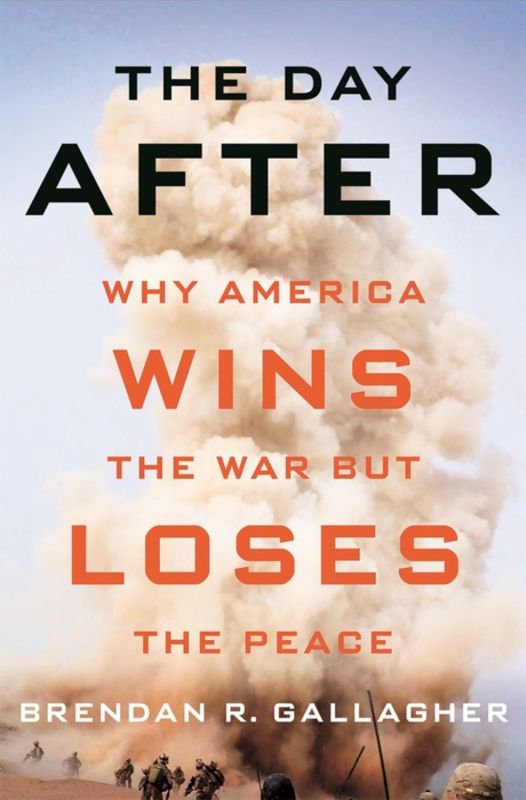
The Day After
Since 9/11, why have we won smashing battlefield victories only to botch nearly everything that comes next? In the opening phases of war in Afghanistan, Iraq, and Libya, we mopped the floor with our enemies. But in short order, things went horribly wrong.We soon discovered we had no coherent plan to manage the \"day after.\" The ensuing debacles had truly staggering consequences—many thousands of lives lost, trillions of dollars squandered, and the apparent discrediting of our foreign policy establishment. This helped set the stage for an extraordinary historical moment in which America's role in the world, along with our commitment to democracy at home and abroad, have become subject to growing doubt. With the benefit of hindsight, can we discern what went wrong? Why have we had such great difficulty planning for the aftermath of war?In The Day After, Brendan Gallagher—an Army lieutenant colonel with multiple combat tours to Iraq and Afghanistan, and a Princeton Ph.D.—seeks to tackle this vital question. Gallagher argues there is a tension between our desire to create a new democracy and our competing desire to pull out as soon as possible. Our leaders often strive to accomplish both to keep everyone happy. But by avoiding the tough underlying decisions, it fosters an incoherent strategy. This makes chaos more likely.The Day After draws on new interviews with dozens of civilian and military officials, ranging from US cabinet secretaries to four-star generals. It also sheds light on how, in Kosovo, we lowered our postwar aims to quietly achieve a surprising partial success. Striking at the heart of what went wrong in our recent wars, and what we should do about it, Gallagher asks whether we will learn from our mistakes, or provoke even more disasters? Human lives, money, elections, and America's place in the world may hinge on the answer.
eBook

Evaluation of a 49 InDel Marker HID panel in two specific populations of South America and one population of Northern Africa
The majority of STR loci are not ideal for the analysis of forensic samples with degraded and/or low template DNA. One alternative to overcome these limitations is the use of bi-allelic markers, which have low mutation rates and shorter amplicons. Human identification (HID) InDel marker panels have been described in several countries, including Brazil. The commercial kit available is, however, mostly suitable for Europeans, with lower discrimination power for other population groups. Recently, a combination of 49 InDel markers used in four different ethnic groups in the USA has been shown to be more informative than another panel from Portugal, already tested in a Rio de Janeiro sample. However, these 49 InDels have yet to be applied to other admixed or isolated populations. We assessed the efficiency of this panel in two urban admixed populations (Rio de Janeiro, Brazil; Tripoli, Libya) and one isolated Native Brazilian community. All markers are in Hardy-Weinberg equilibrium (HWE) after the Bonferroni correction, and no Linkage disequilibrium was detected. Assuming loci independence and no substructure effect, cumulative RMP was 2.7×10
−18
, 1.5×10
−20
, and 4.5×10
−20
for Native Brazilian, Rio de Janeiro, and Tripoli populations, respectively. The overall Fst value was 0.05512. Rio de Janeiro and Tripoli showed similar admixture levels, however for Native Brazilians one parental cluster represented over 60 % of the total parental population. We conclude that this panel is suitable for HID on these urban populations, but is less efficient for the isolated group.
Journal Article