
Catalogue Search | MBRL


Are you sure you want to remove the book from the shelf?

{{itemTitle}}
6,767
result(s) for
"Amis, Martin"
Sort by:

Martin Amis : the biography
Explores the life and career of British novelist and world citizen Martin Amis.
BOOK

Reading Martin Amis’s Recreation of the Perpetrator’s Gaze in The Zone of Interest
The Zone of Interest is a historical novel set in Auschwitz in the months from August 1942 to April 1943, and which belongs to the category of perpetrator fiction. Thisarticle centres on the character of Paul Doll, the camp commandant, who represents the banality of evil and, through whose voice Amis gives the readers a sharp pictureof the abominations committed by the Nazis, while he recounts the causes and devastating consequences of the perpetrators’ actions. By transforming Doll into a buffoon, Amis offers a different perspective on the Holocaust and makes the reader realise that those responsible for the worst crimes were neither monsters nor exceptional human beings, but normal, vulnerable people who had the fate of millions of Jews in their hands.
Journal Article

The New Atheist Novel
The New Atheist Novel is the first study of a major new genre of contemporary fiction.It examines how Richard Dawkins's so-called 'New Atheism' movement has caught the imagination of four eminent modern novelists: Ian McEwan, Martin Amis, Salman Rushdie and Philip Pullman.
eBook

The Purification of Semantic Environments and Des’s Process of Moral Growth in Lionel Asbo: State of England
Martin Amis’s new novel Lionel Asbo: State of England (2012) is a reflection and criticism of the pollution of the semantic environment. It’s a satire of the media and celebrity culture in the capitalist society. From the perspective of media ecology, this paper studies the purification of the semantic environment which leads to the protagonist Des’s moral growth. Initially, Des is immoral, for he lives in the polluted semantic environment of Diston. With the purification of semantic environment by traditional culture in the public library, Des gets moral growth and rises from darkness. His obsession with good books and serious newspapers leads to his moral growth. Through seeking knowledge, Des achieves his self-perfection, and helps the improvement of the society by becoming a crime reporter for a national newspaper the Daily Mirror and writes about law and order to guide people.
Journal Article


Masculinity and Pornography in Martin Amis’s London Fields
The portrayal of masculinity has been a predominant theme in Martin Amis’s fiction, which, in the case of London Fields, triggered a wave of fierce criticism from feminist circles, most notably from Maggie Gee and Val Hennessy. According to these critics, this controversial “bloke” novel is a mere misogynistic caricature aimed to reduce the role of women to objects of the infamous male gaze. However, this paper argues that the depiction of male characters, especially the working-class Keith Talent, conjures an image of a helpless man so strongly driven by the insatiable sexual appetites, which eventually leads to his downfall caused by a disturbingly powerful femme fatale, Nicola Six. The tragicomic epitome of a promiscuous woman by choice, Six transforms herself into a perfect pornographic material for Keith Talent by inviting him to masturbate to her self-made videos. Apart from frequent mentions of sexual acts, the novel presents a thought-provoking view on pornography: Talent perceives reality through the lens of pornographic frames. This analysis is further complemented by Amis’s own behind-the-scenes research into the world of pornography business. Additionally, the characterisation of Keith Talent is examined against the leading theories dealing with the representation of masculinity in contemporary literature. The scrutiny of the relationship between masculinity and pornography in London Fields has not been extensively studied, therefore an analysis combining these closely related issues in London Fields may contribute to a more specific interpretation of Amis’s repulsive, yet strangely intriguing protagonist.
Journal Article

Islamism and the Roots of Liberal Rage
As the neoconservative idea of a clash of civilisations is increasingly challenged, a number of liberal writers Paul Berman, Nick Cohen, Martin Amis, Andrew Anthony, Bernard Henry-Levy and Christopher Hitchens are rethinking the war on terror as a cold war against Islamism, defined as a totalitarian political movement analogous to fascism or Stalinism. Europe is the new front line in this battle for the hearts and minds of Muslims and, it is argued, violations of certain human rights are necessary in the name of defending liberal freedoms. Yet such an analysis fails to comprehend the complex dynamics of Islamism in Europe. Members of a new generation of European Muslims are creating a globalised Islamic identity that is distanced from the ethnic cultures of their parents a process that is more likely to lead to new forms of democratic activism than to political violence unless diverted from this course by counter-productive policies. Adapted from the source document.
Journal Article

Father and Son
An innovative study of two of England’s most popular, controversial, and influential writers,
Father and Son breaks new ground in examining the relationship between Kingsley Amis and his son, Martin Amis. Through intertextual readings of their essays and novels, Gavin Keulks examines how the Amises’ work negotiated the boundaries of their personal relationship while claiming territory in the literary debate between mimesis and modernist aesthetics. Theirs was a battle over the nature of reality itself, a twentieth-century realism war conducted by loving family members and rival, antithetical writers. Keulks argues that the Amises’ relationship functioned as a source of literary inspiration and that their work illuminates many of the structural and stylistic shifts that have characterized the British novel since 1950.
eBook

Responding to the Effect of the Holocaust in the Present: A Comparison of Narrative Strategies in Time's Arrow, A Blessing on the Moon and The Reader
Michael is ill with hepatitis which causes one to turn yellow, like the yellow star worn by the Jews. [...]post-war Germany is sick and needs to address its Nazi past in order to recover.14 The book is '[w]ritten in a style of icy clarity that simultaneously reveals and conceals'.15 Like Tod, Hanna holds a secret. Elie Wiesel's Night is a classic example.19 Wiesel was protective over his authority to transform his experience into knowledge.20 Similarly, in If This Is A Man, Primo Levi wrote an account of his own experiences at Auschwitz where he 'became aware that our language lacks words to express this offence, the demolition of a man.'21 Levi's aim was nevertheless to promote understanding of the death camps as a 'sinister alarm-signal' and to 'furnish documentation for a quiet study of certain aspects of the human mind.'22 The first generation factual accounts have become resources for the second and third generation imaginative accounts, aimed at understanding our modern day reaction to the Holocaust. Amis acknowledges his debt to Levi, from whom he borrows his alternative title, The Nature of the Offence.23 The narrator in A Blessing is named after the author's grandfather and the book, apart from claiming a commemorative function, demonstrates 'that in the post-Holocaust era, as more descendants of survivors grow up, the silenced voice returns in a new form.'24 By writing from the perspective of the dead, Skibell responds to Levi's observation that only the dead are true witnesses.25 In The Reader, the narrator is himself the second generation, directly taking on the complex issue of a nation coming to terms with its past.26 Michael comments: 'Whatever validity the concept of collective guilt may or may not have, morally and legally-for my generation of students it was a lived reality.'27 Nonetheless, today's writers who take up the subject of the Holocaust are not 'unfettered in their creation' as 'concerns for truthfulness and authenticity' linger.28 It has been argued that German literature about the Holocaust entails special limitations because 'the German novelist, playwright or poet-no matter how remote-is still identified with the perpetrators of atrocities', raising the question of the right to identify with the victims.29 This may have constrained Schlink, although it is doubtful that Auschwitz means a German writer today 'cannot mourn over the ruins of Dresden'.30 None of the three selected works appears to upset the delicate balance of preserving the inherently unknowable nature of the Holocaust while probing its modern-day presence and persistence as an inspiration for fiction. Each of the three novels has a degree of 'uncertainty, paralysis, and ambivalence' but this may be preferable to a narrative 'controlled by a tangible voice committed to the traditional transmutation of suffering into beauty and chaos into tragic significance.'55 The three selected works are in a sense 'unaccommodating to the reader', yet have the potential to convey more successfully 'the disruption and unease that the subject demands than the more seamless, aesthetically pleasing work'.56 When Michael observes the trial in The Reader he comments on the 'numbness' described in survivor literature 'in which life's functions are reduced to a minimum [...] and gassing and burning are everyday occurrences.'57 He finds that this numbness grips everyone 'who had to deal with these events now'.58 Literature offers an escape from the numbness, 'an imaginative access to past events'.59 The Holocaust continues to capture writers' imagination as evident in more recent novels, such as The Kindly Ones60 and The Boy in the Striped Pyjamas.61 The challenge today may be less one of achieving historical authenticity than in captivating readers when media images of conflict and atrocity are inescapable.
Journal Article
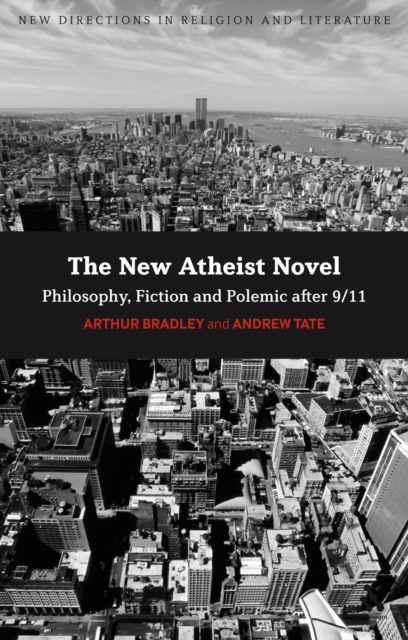
The New Atheist Novel
The New Atheist Novel is the first study of a major new genre of contemporary fiction. It examines how Richard Dawkins's so-called 'New Atheism' movement has caught the imagination of four eminent modern novelists: Ian McEwan, Martin Amis, Salman Rushdie and Philip Pullman. For McEwan and his contemporaries, the contemporary novel represents a new front in the ideological war against religion, religious fundamentalism and, after 9/11, religious terror: the novel apparently stands for everything - freedom, individuality, rationality and even a secular experience of the transcendental - that religion seeks to overthrow. In this book, Bradley and Tate offer a genealogy of the New Atheist Novel: where it comes from, what needs it serves and, most importantly, where it may go in the future. What is it? How does it dramatise the war between belief and non-belief? To what extent does it represent a genuine ideological alternative to the religious imaginary or does it merely repeat it in secularised form? This fascinating study offers an incisive critique of this contemporary testament of literary belief and unbelief.
eBook