
Catalogue Search | MBRL


Are you sure you want to remove the book from the shelf?

{{itemTitle}}
581
result(s) for
"Amman"
Sort by:


Walkability assessment for university campuses in the MENA region. Case of Applied Science Private University (ASU), Amman, Jordan
This study investigates the quality of pedestrian environments' walkability at university campuses in MENA contexts. The Applied Science Private University (ASU) in Amman, Jordan, was employed as a study case; a total of (19) street segments were analysed, and a sample total of (57) campus users were considered. The study adopted mixed-methods including spatial mapping, photographic documentation, a tailored survey, and, an adaptation of the CDC audit tool which was developed for the study context - considering shade and terrain as two unique factors. The results were analysed using statistical tests, including the Cronbach alpha test, mean and standard deviation analysis, T-test, One-way ANOVA, and Bonferroni post hoc test. The results yielded that the campus has medium walking attractiveness. The average score for walkability suggests that it is considered a setting with intermediate risk for pedestrians and generally provides a pleasant and visually attractive environment. The study's findings indicate that pedestrian facilities scored higher than vehicle-pedestrian roads. The mean value for both variables suggests that the presence of campus roads impacts the walkability of the environment. Overall, the study concludes that ASU has an opportunity to develop a more walkable campus by utilizing available landscapes to improve environmental quality and resources.
Journal Article



BUREAUCRAFT
Bakers and soldiers strive to provide subsistence and security to the residents of Amman and Baghdad. Neither set of actors is involved in straightforward administrative work; they do not sit behind desks, they rarely push paper. They are instead enrolled in bureaucratic assemblages colored with an altogether different hue. This article dissects the embodied dexterities deployed by bakers and soldiers as they carry out their jobs at bakeries and checkpoints dotted across the Jordanian and Iraqi capitals. Drawing on ethnographic work, we develop the concept of bureaucraft to analyze the variegated modes of labor without which citizens would lack for some of the most basic of public goods. Taming people and things to make them congenial to the state effect takes a great deal of shrewd maneuvering. We strive to demonstrate that it requires craft.
Journal Article

The Relationship Effect of Organizational Climate In between Strategic leadership and Organizational Innovation at Private Hospitals in Amman
This research aimed to identify the relationship effect of organizational climate role between strategic leadership and organizational innovation in Jordanian private hospitals. A quantitative and descriptive analytical approach was employed, with the research population consisting of hospitals with more than 50 beds, totaling 29 out of 48 hospitals. The sample was selected using a stratified sampling method, comprising hospital workers, specifically managers and heads of departments in middle management, with a total of 432 individuals (170 managers and 262 department heads). Data were collected from the research sample through an electronically distributed survey. The statistical analysis of the hypotheses was conducted using SPSS. The research findings reveal a statistical significant effect of strategic leadership on organizational innovation, and a statistical significant effect of strategic leadership on organizational climate as a mediating variable, and a statistical significant effect of organizational climate on organizational innovation. Additionally, a partial significant relationship of organizational climate between strategic leadership and organizational innovation. Both theoretical and practical contributions were provided to assist and guide private hospital administrations in enhancing innovative environment to creative thinking and initiative. The research recommends private hospitals administration to organize workshops and training courses to enhance employees creative thinking to enhance organizational creativity skills of leaders within private hospitals.
Journal Article

The Relationship between Corporate Governance Quality and Firm Performance: The Moderating Role of Capital Structure
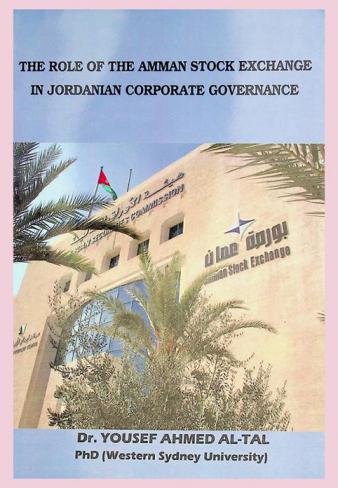
This study aims to explore whether capital structure (CS) has a contingent role in the relationship between corporate governance (CG) quality and firm performance. The empirical findings indicate that CG quality had a positive and significant effect on the performance of Jordanian non-financial firms listed on the Amman Stock Exchange (ASE) from 2014 to 2019. Additionally, the moderate effect of the CS reinforces this relationship. These results are robust to alternative econometric specifications and variable definitions. This study utilizes certain firm-specific characteristics to represent the CS to assess its role as a moderating variable in the relationship between CG quality and firm performance. This study makes a contribution to the literature by showing that CS can strengthen the relationship between CG quality and firm performance. The results have important managerial implications for the practice of CG in developing countries. Firms in developing countries can enhance performance by implementing and abiding by good governance practices. Moreover, firms in developing countries should adopt effective financial strategies regarding CS to enhance the relationship between CG quality and firm performance. Finally, potential investors should consider the debt level in the CS of non-financial firms in Jordan when making investment decisions.
Journal Article

Spatial and Temporal Variation of Air Quality Index in Amman-Zarqa Urban Area
This paper aimed to investigate the Spatial and Temporal Variation of the air quality index (AQI) in the Amman and Zarqa Metropolitan Areas during the period 2016-2022 following the method adopted by the Environmental Protection Agency of the United States of America (EPA). Air quality data for PM10, PM2.5, O3, NO2, SO2, and CO recorded at five monitoring stations were downloaded from the official website of the Jordanian Ministry of Environment. Calculated AQI values were generally between the Good class (AQI <50) and the Moderate class (AQI 50-100) at all stations, the AQI calculations for PM10 demonstrated a noticeable increase during autumnal months, likely due to natural dust. PM2.5 demonstrated seasonal variation, with higher values in winter months where residents burn fossil fuel for heating. Stabel air in winter due to the cooled land surface, and the weak natural air mix and ventilation contribute to the deterioration of air quality. Calculated individual AQI for SO2 and NO2 reveals that all extent of the study area falls in the Good AQI class. Similarly, CO and ozone-based AQI values fluctuate within the “Good” class, with occasional episodes of compromised air quality at specific stations.
Journal Article