
Catalogue Search | MBRL


Are you sure you want to remove the book from the shelf?

{{itemTitle}}
102
result(s) for
"Amphibien"
Sort by:

Aquatic herbicide applications for the control of aquatic plants in Canada
Nuisance growths of aquatic plants in Canadian surface waters continue to be problematic. Only diquat, a contact herbicide that is used to control many free-floating plants (but is less effective at controlling emergent plants), is registered in Canada for general aquatic use. Other herbicides are currently only permitted under “emergency registration.” Recent emergency registrations have been granted to glyphosate and imazapyr, and these two herbicides are likely candidates to be proposed for full registration for direct application to water in Canada in the foreseeable future. These herbicides have been extensively studied in laboratory conditions and have provided a benchmark for ecotoxicity for a variety of aquatic organisms, yet the inherent toxicity of these herbicides derived from tests does not always translate into their environmental toxicity in natural aquatic ecosystems as the fate (e.g., removal from the water body via binding to sediments and suspended solids, degradation, volatization, etc.) and exposure (i.e., continuous in the laboratory versus “pulsed” in the field) of herbicides in the natural environment is very different from their fate and exposure in laboratories. These differences will likely result in field studies having lower biological effects than laboratory studies, even if the initial exposure concentrations were similar. This review details the current knowledge based on field studies that examine the effects of the direct application of diquat, glyphosate, and imazapyr to aquatic environments on aquatic organisms. The studies of the effects of the aquatic formulations of diquat, glyphosate, and imazapyr that are reviewed here generally found negligible or short-lived impacts on fish and aquatic invertebrates in situ, whereas they found that the application of these herbicides was often beneficial through the physical modification of available habitat (i.e., an increase in open water outweighs any potential toxic effects). Conversely, certain surfactants used to increase herbicide efficacy have been suggested to be more toxic than the herbicide itself.Wethus suggest monitoring the effects associated with controlled applications of diquat and other aquatic herbicides including glyphosate and imazapyr and their surfactants, as this would be a means of accumulating information that may guide future uses of herbicides in Canadian waterways.
La prolifération de plantes aquatiques dans les eaux de surface canadiennes continue d’être problématique. Seulement le diquat, un herbicide de contact utilisé pour contrôler un grand nombre de plantes flottantes libres (mais moins efficace au niveau du contrôle des plantes émergentes) est homologué au Canada aux fins d’utilisation aquatique générale. On permet actuellement les autres herbicides uniquement sous « licence d’utilisation d’urgence ». On a récemment accordé des licences d’utilisation d’urgence à glyphosate et à imazapyr et ces deux herbicides sont, dans un avenir prévisible, des candidats probables à être soumis pour homologation complète pour application directe dans l’eau au Canada. Ces herbicides ont été largement étudiés dans des conditions de laboratoire et ont fourni un point de référence pour l’écotoxicité touchant une variété d’organismes aquatiques, pourtant la toxicité intrinsèque de ces herbicides découlant de tests ne se traduit pas toujours par leur toxicité environnementale dans les écosystèmes aquatiques naturels parce que le devenir des herbicides dans l’environnement naturel (p. ex., leur élimination du plan d’eau en se liant aux sédiments et aux matières en suspension, par dégradation, par volatisation, etc.) et leur exposition (c.-à-d., continue dans le laboratoire par rapport à « pulsée » dans le milieu) diffèrent grandement de leur devenir et de leur exposition en laboratoire. Ces différences donneront probablement lieu à des recherches in situ montrant des effets biologiques moindres que les études de laboratoire, même si les concentrations d’exposition initiales sont semblables. Cette revue présente en détail la connaissance actuelle fondée sur les recherches in situ examinant les effets de l’application directe de diquat, de glyphosate et d’imazapyr dans les milieux aquatiques, et ce, sur les organismes aquatiques. Les recherches sur les effets des formulations aquatiques de diquat, de glyphosate et d’imazapyr qui sont passées en revue ici ont généralement révélé des impacts négligeables ou éphémères sur les poissons et les invertébrés aquatiques in situ, tandis qu’elles ont montré que l’application de ces herbicides était souvent avantageuse par la modification physique de l’habitat disponible (c.-à-d., l’augmentation de l’eau libre compense pour les effets toxiques possibles). Au contraire, certains agents de surface utilisés pour augmenter l’efficacité des herbicides pourraient être, selon les données, plus toxiques que l’herbicide lui-même. Nous suggérons ainsi de surveiller les effets liés aux applications contrôlées de diquat et d’autres herbicides aquatiques, y compris le glyphosate et l’imazapyr et leurs agents de surface, car ceci serait un moyen d’accumuler des informations qui peuvent orienter les utilisations d’herbicides dans les voies navigables canadiennes à l’avenir.
Journal Article

The ‘male escape hypothesis’: sex-biased metamorphosis in response to climatic drivers in a facultatively paedomorphic amphibian
Paedomorphosis is a major evolutionary process that bypasses metamorphosis and allows reproduction in larvae. In newts and salamanders, it can be facultative with paedomorphs retaining gills and metamorphs dispersing. The evolution of these developmental processes is thought to have been driven by the costs and benefits of inhabiting aquatic versus terrestrial habitats. In this context, we aimed at testing the hypothesis that climatic drivers affect phenotypic transition and the difference across sexes because sex-ratio is biased in natural populations. Through a replicated laboratory experiment, we showed that paedomorphic palmate newts (Lissotriton helveticus) metamorphosed at a higher frequency when water availability decreased and metamorphosed earlier when temperature increased in these conditions. All responses were sex-biased, and males were more prone to change phenotype than females. Our work shows how climatic variables can affect facultative paedomorphosis and support theoretical models predicting life on land instead of in water. Moreover, because males metamorphose and leave water more often and earlier than females, these results, for the first time, give an experimental explanation for the rarity of male paedomorphosis (the ‘male escape hypothesis’) and suggest the importance of sex in the evolution of paedomorphosis versus metamorphosis.
Journal Article

Similar Local and Landscape Processes Affect Both a Common and a Rare Newt Species
Although rare species are often the focus of conservation measures, more common species may experience similar decline and suffer from the same threatening processes. We tested this hypothesis by examining, through an information-theoretic approach, the importance of ecological processes at multiple scales in the great crested newt Triturus cristatus, regionally endangered and protected in Europe, and the more common smooth newt, Lissotriton vulgaris. Both species were similarly affected by the same processes, i.e. suitability of aquatic and terrestrial components of their habitat at different scales, connectivity among breeding sites, and the presence of introduced fish. T. cristatus depended more on water depth and aquatic vegetation than L. vulgaris. The results show that environmental pressures threaten both common and rare species, and therefore the more widespread species should not be neglected in conservation programs. Because environmental trends are leading to a deterioration of aquatic and terrestrial habitat features required by newt populations, populations of the common species may follow the fate of the rarest species. This could have substantial conservation implications because of the numerical importance of common species in ecosystems and because commonness could be a transient state moving towards rarity. On the other hand, in agreement with the umbrella species concept, targeting conservation efforts on the most demanding species would also protect part of the populations of the most common species.
Journal Article

Using kernels and ecological niche modeling to delineate conservation areas in an endangered patch-breeding phenotype
Efficient delineation of conservation areas is a great challenge in maintaining biodiversity. Kernel density estimators (KDEs) are a powerful tool in this perspective, but they have not been applied at the population level on patch-distributed organisms. This would be particularly worthy for species that need broad habitats beyond those where they can be sampled; such as terrestrial lands for pond-breeding amphibians. The aim of this study was to compare different approaches for the identification of suitable areas for conservation: KDE, ecological niche modelling, and a combination of KDE and niche models. Paedomorphosis was chosen as a model system because this is an important form of intraspecific variation that is present in numerous taxa, but geographically localized within species and globally endangered. 277 ponds were sampled in one of the hotspots of paedomorphosis to determine the abundance and distribution of paedomorphs (i.e., individuals retaining gills at the adult stage) of the palmate newt (
Lissotriton helveticus
), with emphasis on the connections between the most valuable populations. KDEs gave insights into the surface areas required to balance the maintenance of certain number of connected ponds and the respective number of disjoint areas in which the whole population is divided. The inclusion of barriers in the models helped in accurately designing the limits of the areas to protect. Alone, habitat models were not able to successfully delineate the area to protect, but the integration between terrestrial suitable areas or barriers and KDE allowed an objective identification of areas required for conservation. Overall, the best performance was observed by the KDE integrating ecological barriers, and by the combination between KDE and niche modelling. In a broader perspective, KDEs are thus a pertinent tool in providing quantitative spatial measurements to delineate conservation areas based on patch-abundance data with a specific focus to connectivity.
Journal Article

Exotic Amphibians and Reptiles of the United States
The first complete field guide to the exotic amphibians and
reptiles established in the continental United States and Hawai'i,
this volume covers 74 species that are not native to the country
and 29 species that are native but occur beyond their original
geographic range. Dispersed from their former habitats by human
activity, many of these species are invasive in their new
environments, causing ecological or economic harm.
Ideal for naturalists of all levels, Exotic Amphibians and
Reptiles of the United States details each species' taxonomy,
distribution, history, and ecology and portrays each one with
vibrant photographs. Drawing on county-level distribution maps from
2,908 published records, this guide provides an in-depth
understanding of local factors that drive the success of exotic
species. It connects species-specific information to conservation
issues as it explores human causes of exotic and invasive
establishment. The book also includes eight invited essays which
provide regional perspectives on scientific, economic, and
management-related aspects of this phenomenon.
As ecological pressures on native species and habitats increase,
understanding the histories and roles of exotic species is becoming
more and more important for conservation efforts. Providing
practical identification skills and an awareness of the
environmental impacts of these amphibians and reptiles, this
indispensable guide equips readers to confront the unusual
biodiversity crisis of exotic species.
eBook

Fatty acids and eicosanoids regulate gene expression through direct interactions with peroxisome proliferator-activated receptors alpha and gamma
Peroxisome proliferator-activated receptors (PPARs) alpha and gamma are key regulators of lipid homeostasis and are activated by a structurally diverse group of compounds including fatty acids, eicosanoids, and hypolipidemic drugs such as fibrates and thiazolidinediones. While thiazolidinediones and 15-deoxy-delta(12,14)-prostaglandin J2 have been shown to bind to PPARgamma, it has remained unclear whether other activators mediate their effects through direct interactions with the PPARs or via indirect mechanisms. Here, we describe a novel fibrate, designated G2331, that is a high-affinity ligand for both PPARalpha and PPARgamma. Using GW2331 us a radioligand in competition binding assays, we show that certain mono- and polyunsaturated fatty acids bind directly to PPARalpha and PPARgamma at physiological concentrations, and that the eicosanoids 8(S)-hydroxyeicosatetraenoic acid and 15-deoxy-delta(12,14)-prostaglandin J2 can function as subtype-selective ligands for PPARalpha and PPARgamma, respectively. These data provide evidence that PPARs serve as physiological sensors of lipid levels and suggest a molecular mechanism whereby dietary fatty acids can modulate lipid homeostasis
Journal Article

Morphological and Behavioural Responses of Frog Tadpoles to Perceived Predation Risk: A Possible Role for Corticosterone Mediation?
Predators can have an important influence on prey survival and fitness, and many prey species exhibit morphological or behavioural responses to perceived predation risk. Although basic characteristics of anti-predator responses have been well documented, physiological pathways underlying such responses are poorly understood. We sought evidence for a role of corticosterone, a major stress hormone in amphibians, in the behavioural and morphological anti-predator responses of leopard frog tadpoles (Rana pipiens) exposed to caged dragonfly nymphs (Aeshna spp.). By superimposing a metyrapone treatment (corticosteroid synthesis inhibitor) over chronic predator exposure in a 2 × 2 factorial design, we evaluated if tadpole anti-predator responses were mediated by corticosterone. Tadpoles were less active and more likely to exhibit a startle response when exposed to perceived predation risk, but direct and interactive effects of the metyrapone treatment on behaviour were negligible. Predator-exposed tadpoles grew larger and had deeper tail fins, whereas the metyrapone treatment resulted in smaller tadpoles with shallower tail fins. Tadpoles simultaneously exposed to metyrapone treatment and predation risk had reduced tail-fin depth and increased body:tail ratio compared to steroid-normal animals. Because both traits are implicated in tadpole vulnerability to predation, these results suggest that the corticosteroid pathway may mediate tadpole morphological response to perceived predation risk. We provide evidence supporting a possible role for corticosterone in anti-predator responses of amphibians specifically in terms of morphological responses. Our results suggest that corticosteroid adjustment may impact prey survival through phenotypic change upon exposure to predation risk and thereby suggest a possible functional role of this hormonal pathway in amphibian physiological ecology. Nomenclature : Hillis, 1988.
Journal Article

Reptiles and amphibians of the Pacific Islands
The Pacific is not only the world’s largest body of water; its vast expanse also includes an extraordinary number and diversity of oceanic islands, from Palau and the Marianas east of the Philippines to Cocos Island and the Galápagos west of the Americas. The isolation of these islands and the extreme distances between them long prevented scientists from studying their floras and faunas in a comparative context. But now George R. Zug, one of the world's foremost experts on the diverse reptiles and amphibians of the Pacific Basin, offers the first such systematic overview in more than half a century. Reptiles and Amphibians of the Pacific Islands is a compendium of frogs, lizards, snakes, and turtles living on these lands and in the adjacent waters of the oceanic islands in the tropical Pacific. The means to identify each species is included, along with entries that describe each animal's form, coloration, habitat, distribution, reproductive biology, and natural history. Color plates of more than 75 percent of the species also help to facilitate visual identification. This accessible and informative guide is the most comprehensive field guide available and will appeal to both novice sightseers and professional naturalists.
eBook
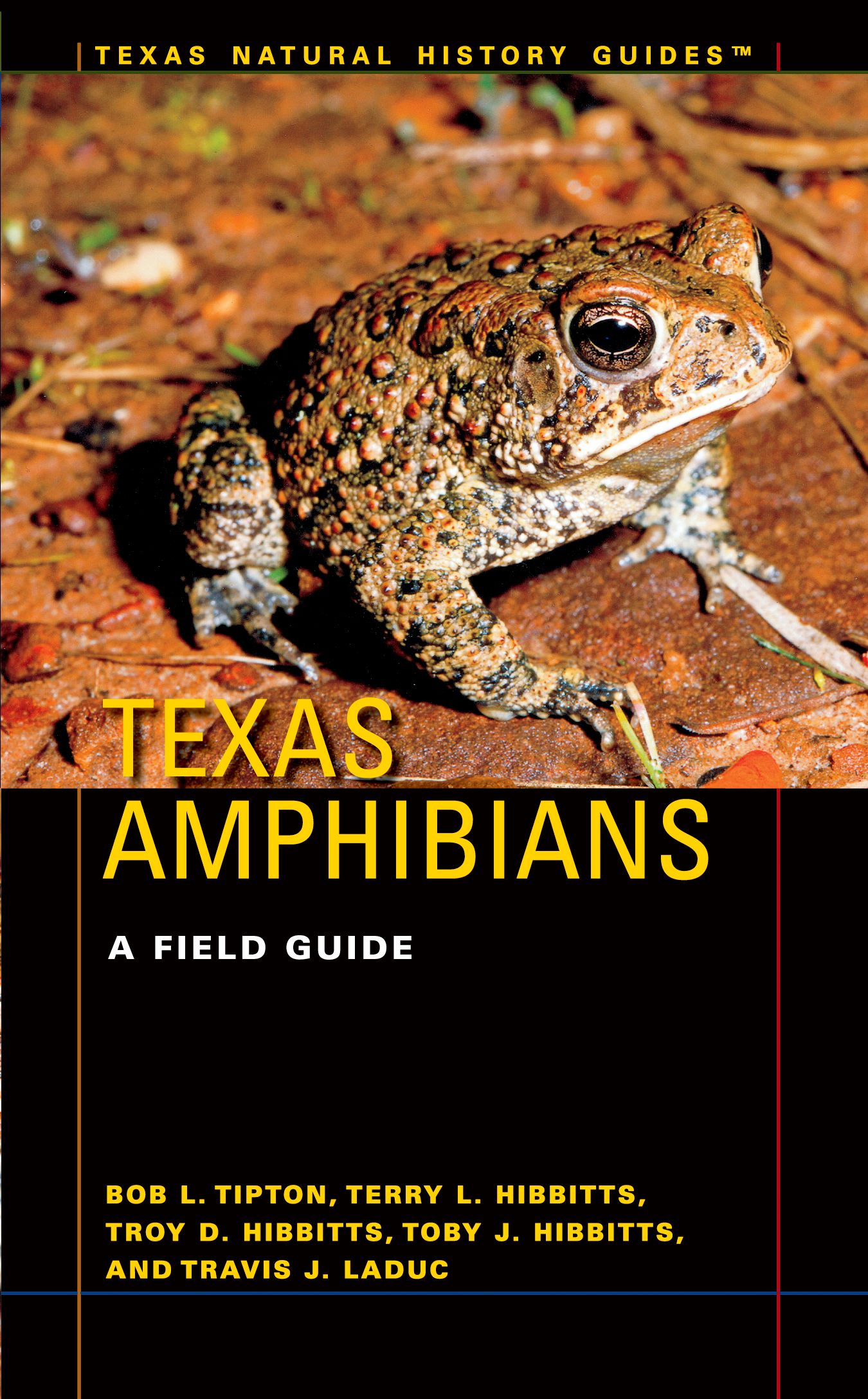
Texas Amphibians
With a wide variety of habitats ranging from southeastern swamps to western deserts, Texas is home to numerous species of frogs, toads, and salamanders. Each area of Texas has a particular set of species that has evolved there over thousands of years. Indeed, most amphibians are not very mobile, and many live their entire lives within a few square meters. This makes them particularly vulnerable to environmental degradation and habitat destruction. Texas Amphibians is the only field guide focused exclusively on the state’s frogs, toads, and salamanders. It presents brief, general accounts of the two orders and fifteen families. Then it identifies each of the seventy-two species in detail, including size, description, voice (if applicable), similar species, distribution (with maps), natural history, reproduction, subspecies (if applicable), and comments and conservation information. Color photographs illustrate the species. The book also includes a general introduction to amphibian natural history, conservation, observation and collection, maintenance in captivity, museum and preserved specimens, and scientific and common names, as well as scientific keys to Texas salamanders and frogs and a generic key to amphibian larvae. This wealth of information, compiled by a team of experts who collectively have over a century of experience in field herpetology, will increase our appreciation for amphibians and the vital role they play as an early indicator of threats to the quality of the environment that we all share.
eBook
Culverts Alone do not Reduce Road Mortality in Anurans 1
Roads are linked to population declines in amphibians, primarily due to road mortality. Culvert-type ecopassages, along with fencing to direct animals to the passage, have been used to mitigate these impacts. However, the effectiveness of the ecopassage itself, independent of the associated mitigation fencing, is largely untested. In regions with heavy snowfall, long-term maintenance of amphibian-proof fencing is extremely costly. Therefore, it is important to know whether ecopassages alone (without fencing) mitigate amphibian mortality. We used a Before-After-Control-Impact design to experimentally test the hypothesis that pre-existing drainage culverts of the type typically used to mitigate road effects on herptiles mitigate anuran road mortality. Grates were installed at both ends of 6 culverts to exclude anurans from the culverts. At an additional 4 sites fencing was installed on either side of culverts on both sides of the road, to keep anurans off the road. Ten control culverts were left un-manipulated. Roadkill surveys were conducted 1 y before treatments were installed and in each of 2 y after. We predicted that, if culverts alone mitigate mortality, road kill should increase following installation of the grates. If fencing is effective for mitigation, road kill should decrease following installation of fences. We found no evidence for the first prediction: culverts alone did not mitigate road kill effects. In contrast, there was a large decrease in mortality at fenced sites, relative to control sites, indicating that fencing is effective at mitigating road mortality. These results suggest that culverts alone do not reduce anuran mortality; to reduce mortality, animals must be excluded from the road surface.
Journal Article