
Catalogue Search | MBRL


Are you sure you want to remove the book from the shelf?

{{itemTitle}}
126
result(s) for
"Anatomical museums"
Sort by:

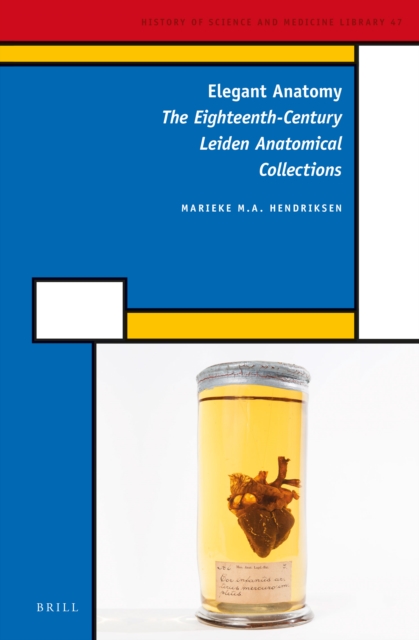
Elegant anatomy : the eighteenth-century Leiden anatomical collections
In Elegant Anatomy Marieke Hendriksen offers an account of the material culture of the eighteenth-century Leiden anatomical collections, which have not been studied in detail before. Starting from the materiality of preparations, it introduces the novel analytical concept of aesthesis.
eBook

The Otago Medical School Anatomy Museum collection : taonga for learning in the 21st century
Emphasises the value of retaining the collection of 19th and 20th century anatomy specimens and models held in the Otago Medical School W.D. Trotter Anatomy Museum for active use in teaching and learning. Focuses particularly on a reproduction undertaken by the two authors of Dr Louis Auzoux’s large clastique papier mâché ear model from the 1880s, via CT scanning and 3D printing. Source: National Library of New Zealand Te Puna Matauranga o Aotearoa, licensed by the Department of Internal Affairs for re-use under the Creative Commons Attribution 3.0 New Zealand Licence.
Journal Article

Lessons from an historical museum of anatomical pathology: thoraco-abdominopagus fetus
Historical Museums of Anatomical Pathology are a relevant teaching tool for medical undergraduate students and postgraduate residents. The visualization of real specimens allow a deeper comprehension of diseases, namely of rare conditions as in Teratology. This article emphasizes the need to preserve and use Universities Museums, by presenting a XIXth Thoraco-Abdominopagus Fetus.
Journal Article

AFRICAN SKELETAL REMAINS HOUSED AT THE ANATOMICAL MUSEUM OF THE LEIDS UNIVERSITAIR MEDISCH CENTRUM
As part of a bigger project aimed to stimulate further research and raise awareness regarding African remains housed in foreign skeletal collections, the catalogues of the Anatomical Museum of the Leids Universitair Medisch Centrum (AM-LUMC) were searched for skeletal remains of documented African origin. A total of 19 specimens housed in the AM-LUMC were documented to have originated from Africa — two from the \"Cape of Good Hope\", four from \"the Congo\"; three were of possible Khoe-San descent, and ten came from Makapan's Cave. The total sample consisted of ten females, six males and three for whom the sex could not be determined. Included were 1 juvenile, 14 younger adults (20-39 years) and four individuals estimated to have been over the age of 40 years at the time of death. Results obtained using population specific discriminant functions indicated that one individual documented to be a \"Dutch Cape of Good Hope Farmer\" was of European descent and that the rest of the individuals probably originated from Africa. Very little skeletal and dental pathology was observed. The ten individuals documented to come from Makapan's Cave were of special interest since the possibility exists that they may have been associated with a siege which took place at Makapan's Cave in 1854. These remains add significant information to the reconstruction of events surrounding this historical incident and corroborate reports that the deceased were never buried after the siege and that some remains, especially crania, were removed from the site and taken abroad. This paper illustrates the scientific value of African remains housed abroad and stresses the importance of cataloguing and describing these forgotten remains.
Journal Article


Aphrodites of the Operating Theater
This chapter focuses on the waxworks at La Specola, an eighteenth-century anatomical museum at the University of Florence in Italy. La Specola, which means mirror in Latin (the museum is housed in a former observatory), opened its doors in 1775 under the official name Royal Museum of Physics and Natural History. The museum houses a collection of visible bodies, medical teaching aids that comprise some of the finest examples of ceroplasty, the art of modeling anatomical specimens in wax. La Specola’s wax women hold a mirror up to culture rather than nature—specifically, the Enlightenment culture into which they were born, when scientists were busy weaving myths about gender and the “natural order” that denied women the democratic promise of equality and instead redefined them as the weaker sex. But there is more to La Specola’s anatomical models than meets the male gaze. They were essential aids to medical pedagogy and obscure objects of desire, disseminating lifesaving knowledge about female anatomy even as they reaffirmed the primacy of women’s sexual and maternal functions.
Book Chapter

Real vs. immersive-virtual emotional experience: Analysis of psycho-physiological patterns in a free exploration of an art museum
Virtual reality is a powerful tool in human behaviour research. However, few studies compare its capacity to evoke the same emotional responses as in real scenarios. This study investigates psycho-physiological patterns evoked during the free exploration of an art museum and the museum virtualized through a 3D immersive virtual environment (IVE). An exploratory study involving 60 participants was performed, recording electroencephalographic and electrocardiographic signals using wearable devices. The real vs. virtual psychological comparison was performed using self-assessment emotional response tests, whereas the physiological comparison was performed through Support Vector Machine algorithms, endowed with an effective feature selection procedure for a set of state-of-the-art metrics quantifying cardiovascular and brain linear and nonlinear dynamics. We included an initial calibration phase, using standardized 2D and 360° emotional stimuli, to increase the accuracy of the model. The self-assessments of the physical and virtual museum support the use of IVEs in emotion research. The 2-class (high/low) system accuracy was 71.52% and 77.08% along the arousal and valence dimension, respectively, in the physical museum, and 75.00% and 71.08% in the virtual museum. The previously presented 360° stimuli contributed to increasing the accuracy in the virtual museum. Also, the real vs. virtual classifier accuracy was 95.27%, using only EEG mean phase coherency features, which demonstrates the high involvement of brain synchronization in emotional virtual reality processes. These findings provide an important contribution at a methodological level and to scientific knowledge, which will effectively guide future emotion elicitation and recognition systems using virtual reality.
Journal Article
Heart rate variability analysis for the assessment of immersive emotional arousal using virtual reality: Comparing real and virtual scenarios
Many affective computing studies have developed automatic emotion recognition models, mostly using emotional images, audio and videos. In recent years, virtual reality (VR) has been also used as a method to elicit emotions in laboratory environments. However, there is still a need to analyse the validity of VR in order to extrapolate the results it produces and to assess the similarities and differences in physiological responses provoked by real and virtual environments. We investigated the cardiovascular oscillations of 60 participants during a free exploration of a real museum and its virtualisation viewed through a head-mounted display. The differences between the heart rate variability features in the high and low arousal stimuli conditions were analysed through statistical hypothesis testing; and automatic arousal recognition models were developed across the real and the virtual conditions using a support vector machine algorithm with recursive feature selection. The subjects’ self-assessments suggested that both museums elicited low and high arousal levels. In addition, the real museum showed differences in terms of cardiovascular responses, differences in vagal activity, while arousal recognition reached 72.92% accuracy. However, we did not find the same arousal-based autonomic nervous system change pattern during the virtual museum exploration. The results showed that, while the direct virtualisation of a real environment might be self-reported as evoking psychological arousal, it does not necessarily evoke the same cardiovascular changes as a real arousing elicitation. These contribute to the understanding of the use of VR in emotion recognition research; future research is needed to study arousal and emotion elicitation in immersive VR.
Journal Article

Fetal Development in Anatomical Preparations of Ruysch and the Meckels in Comparison
Anatomical collections have been used for centuries for research and teaching purposes. By the example of selected preparations of fetal development from the Ruysch collection (17th–18th centuries) and the Meckel collections (18th–19th century), this article aims to trace the changing purposes, specifics and methods of creating specimens as well as the development of anatomy during that period. The selected specimens are compared and analyzed implementing the historical-critical method. Regarding the appearance of the preparations, we see a transition from the visually aesthetic specimens (Ruysch) to exact ones (Meckel collections). If Ruysch’s preparations were compared in his time to works of art, specimens created by three anatomists of the Meckel dynasty were primarily created for teaching and research purposes. However, Ruysch’s preparations tracing fetal circulation were scientific discoveries of the time. As for preparations of fetal development from the Meckel collections, we see both specimens of physiological processes already known at that time and experimental ones. Regarding teratology, Ruysch and Meckel the Younger tried to explain malformations, but their anatomical preparations could hardly give answers to the cause of deviations from the norm. The differences between the collections can be explained by the different stages of development of anatomy of the time and by the research interests of the anatomists themselves.
Journal Article