
Catalogue Search | MBRL


Are you sure you want to remove the book from the shelf?

{{itemTitle}}
2,741
result(s) for
"Anchorages"
Sort by:
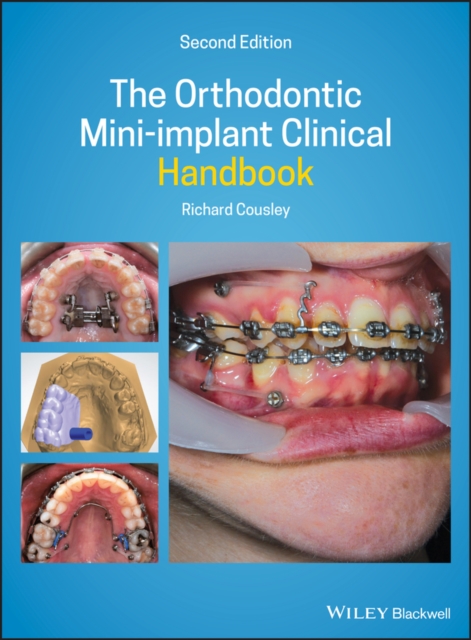
The Orthodontic Mini-implant Clinical Handbook
Offers the very latest on the theory and practice of integrating mini-implant techniques into clinical practice
This all-new second edition of The Orthodontic Mini-implant Clinical Handbook provides a thoroughly revised and expanded update to the theoretical and practical aspects of using mini-implants in orthodontic practice. Taking a practical step-by-step approach with hundreds of clinical images, it presents updated clinical techniques and new clinical cases, covering all topics of importance for utilising mini-implants. It also includes a new chapter on mini-implant anchored maxillary expansion appliances.
It begins with a chapter that looks at mini-implant principles and potential complications, before moving onto clinical and design factors for maximising mini-implant success. Other chapters cover incisor retraction; molar distalisation and protraction; intrusion and anterior openbite treatments; bone anchored rapid maxillary expansion; orthognathic surgical uses; and ectopic teeth.
* Provides a comprehensive guide to both theoretical and practical advice for the use of mini-implants in orthodontic practice
* Covers updated clinical techniques and new clinical cases
* Presents a new chapter on mini-implant anchored maxillary expansion appliances
* Takes a highly illustrated step-by-step approach ideal for clinical practice
The Orthodontic Mini-Implant Clinical Handbook is an essential resource to orthodontists, maxillofacial surgeons, practicing dentists, and anyone with an interest in mini-implant skeletal anchorage.
eBook

Accuracy of guided insertion of orthodontic temporary anchorage devices comparing two different 3D printed surgical guide designs: a randomized controlled trial
Temporary anchorage devices (TADs) provide maximum anchorage in orthodontic therapy. Surgical guides can be used to accurately achieve pre-planned TAD positions. The objective of this study was to assess the accuracy of guided TAD insertion in the anterior palate, comparing two 3D printed surgical guide designs. Patients were randomized in two groups. TADs were inserted using either a surgical guide with a skeletonized design or full arch design. The primary outcome was translational and rotational deviations from the virtually planned TAD positions. Secondary outcomes included the dependence of deviations on age and gender and TAD success rate after a follow-up period of three months. In total 40 patients were included in this RCT and 80 TADs were inserted. During the follow-up period, no TAD loss was observed. The skeletonized design showed significantly higher deviations between the planned TAD position and the actual TAD position in all, but two spatial dimensions (translational and rotational) compared to the full arch design. The right TAD showed higher deviations compared to the left TAD for the skeletonized design. The full arch design showed significantly higher accuracy compared to the skeletonized design. During virtual planning of TAD positions, a safety distance should be considered to account for possible deviations using 3D printed surgical guides for TAD insertion in the anterior palate.
Journal Article

Is mandibular posterior dento-alveolar intrusion essential in treatment of skeletal open bite in adult patients? A single center randomized clinical trial
Background
Anterior open bite (AOB) malocclusion usually represents a complicated and advanced orthodontic problem. The skeletal variant of AOB used to be treated with a combined orthodontic and surgical approach, until the posterior segments’ intrusion has been validated as an alternative, effective and conservative treatment modality for such cases with comparable outcomes to the surgical approach. The objective of this two-arm parallel randomized clinical trial was to compare the effects of mini-screw supported maxillary versus bi-maxillary buccal segments’ intrusion on the amount of anterior open bite closure.
Methods
Twenty-two adult patients aged 17–25 years, with skeletal open bite and anterior dental separation of 3–8 mm were randomized to either the comparator (Maxillary Intrusion with Consolidation of mandibular buccal segments-MIC) or intervention (Bimaxillary buccal segments’ intrusion-BMI) groups. Miniscrew-assisted buccal segments’ intrusion was instituted using fixed appliances on rigid stainless steel archwires (19 × 25 stainless steel) via nickel-titanium coil springs in the maxilla and memory chains in the mandible. The intrusion force was 200 g per maxillary buccal segment in both groups, and it was 150 g for each mandibular posterior segment in the BMI group. Duration of intrusion was 6 months.
Results
Anterior open bite was significantly closed in both groups with means of 3.8 ± 0.84 (95% confidence interval [CI] 3.2–4.4) and 3.84 ± 1.47 mm (CI;2.8–4.9) for the MIC and BMI groups, respectively with no significant difference between them (p-value < 0.05). Maxillary posterior teeth experienced significant intrusion in both groups, with a mean of 2.89 ± 1.13 mm (CI;2.63–3.14) in the MIC group and 2.26 ± 1.62 mm (CI;1.89–2.62) in the BMI group. Statistically significant mandibular posterior teeth intrusion occurred in both groups with means of 0.86 ± 0.91 (CI;0.65–1.06) and 0.33 ± 0.84 mm (CI;0.14–0.52) in the BMI and MIC groups, respectively, with a statistically significant difference of 0.53 ± 0.14 (CI;0.25–0.8) mm. However, such difference was considered clinically insignificant.
Conclusions
Anterior open bite closure could be successfully achieved with maxillary buccal segments intrusion without the need for active intrusion of the mandibular posterior segments, as long as the latter are efficiently consolidated.
Trial registration
The trial was prospectively registered at clinicaltrials.gov with an identifier number of NCT04713280.
Journal Article

Provisional rehabilitation using temporary anchorage device (mini-implant) in adolescent patients with hypodontia
Hypodontia presents a significant challenge when managing dental rehabilitation in adolescent patients. The lack of definitive treatment options during this developmental stage necessitates the exploration of provisional alternatives that provide satisfactory esthetic and functional outcomes. This article aims to showcase a technique for provisional rehabilitation using a temporary anchorage device, specifically a mini-implant, in the context of hypodontia in adolescents. Materials and methods: A 14-year-old patient with hypodontia was selected for this case report. The missing tooth, tooth 12, was replaced with a mini-implant for provisional rehabilitation. The installation procedure and subsequent follow-up evaluations were documented through tomography. Results: Imaging follow-up demonstrated a slight reduction in alveolar bone thickness; however, the overall height of the bone remained well-maintained. This finding suggests that the technique employed in this case offers promising results in terms of preserving alveolar bone integrity during the provisional rehabilitation phase. Conclusion: The presented technique provides both patient comfort and practicality. Moreover, it offers the added advantage of maintaining alveolar bone height, thus serving as a potential alternative to current rehabilitative interventions. Further research and long-term studies are warranted to validate these findings and establish its efficacy in a larger patient population.
Journal Article

Efficacy of an innovative Herbst appliance with TADs for patients with hyperdivergent class II malocclusion: study protocol for a randomised controlled trial
IntroductionClass II treatment with mandibular retrusion often involves the Herbst appliance due to its efficiency and low requirement of cooperation. Despite its advantages, it causes side effects concerning the occlusal plane and pogonion in terms of clockwise rotation that hinder the desired mandibular advancement for hyperdivergent patients. In this study, we will use a newly designed Herbst appliance, and a protocol that is accompanied by TADs for vertical control to avoid maxillary clockwise rotation. We hypothesise that the effect of the Herbst appliance with the vertical control approach will be beneficial for maintaining or even decreasing the skeletal divergence in hyperdivergent class II patients compared with conventional Herbst treatment.Methods and analysisThis study is a randomised, parallel, prospective controlled trial that will study the efficacy of Herbst with or without vertical control in children with hyperdivergent skeletal class II malocclusion. A total of 44 patients will be enrolled and randomised in a ratio of 1:1 to either Herbst treatment or Herbst treatment with vertical control. Participants will be recruited at the Shanghai Stomatological Hospital, Shanghai, China. The primary endpoint is the change in the angle indicating the occlusal plane and Sella-Nasion plane from baseline (T0) to the primary endpoint (T2) on cephalometric measurements by lateral X-ray examination. Important secondary outcomes include the root length of the anterior teeth, and the assessment score of the Visual Analogue Scale Questionnaire, etc. Safety endpoints will also be evaluated.Ethics and disseminationThis study has been approved by the ethics committee of the Shanghai Stomatological Hospital (Approval No. (2021) 012). Before enrolment, a qualified clinical research assistant will obtain written informed consent from both the participants and their guardians after full explanation of this study. The results will be presented at national or international conferences and published in peer-reviewed journals.Trial registration numberChiCTR2100049860, Chinese Clinical Trial Registry
Journal Article

Patient experiences and discomfort associated with mid-palatal temporary skeletal anchorage devices
Background
Mid-palatal placement of temporary skeletal anchorage devices (TSADs) has become increasingly popular among clinicians due to high success rates, low associated risk and streamlining and enhanced customization of associated supra-structures. There is however limited patient data in relation to associated experiences and impacts.
Methods
A survey of patients undergoing mid-palatal TSAD insertion was undertaken using a 27-item bespoke questionnaire. Questionnaires were sent using both electronic and surface mail with a 3-month period allowed for response. Pain experience; the use of analgesia; requirement for additional visits; impacts on hygiene, speech, eating, and hobbies; and social impacts were assessed. Reponses involved the use of a Visual Analogue Scale as well as binary information.
Results
Overall, 152 responses were obtained with 87.5% describing experience of TSAD insertion either “as expected” or “better”. Procedural pain was reported as mild in 62.5%. Local post-operative pain was scored as moderate in 21.1%. Some functional impairment was reported with 63.2% attributing difficulty with speech and 67.8% difficulty with eating due to the implant. However, these functional impairments were generally considered mild (by 68.1% and 60.2%, respectively) and most were very likely to recommend this treatment to others, with 65.1% (n = 99) scoring 8 or above out of 10.
Conclusions
Appreciable levels of pain, discomfort and functional impairment were noted with the use of mid-palatal TSADs. However, any unpleasant experiences were generally regarded as mild with most highly likely to recommend mid-palatal TSADs to prospective patients.
Journal Article

Temporary Anchorage Devices in Clear Aligner Therapy: A Systematic Review
This systematic review analyzed the combined use of aligners and orthodontic temporary anchorage devices (TADs) in orthodontic treatment. The aim was to evaluate the effectiveness, benefits, and potential challenges of integrating the use of miniscrews with aligners. This review was conducted according to the PRISMA statement, and the protocol was registered at PROSPERO under the ID CRD42024576712. A comprehensive search on PubMed, Scopus, and Web of Science was conducted to identify relevant papers involving patients treated with aligners and TADs, dating from 1 January 2004 to 17 July 2024. The electronic database search identified a total of 458 articles. After eligibility, 14 records were selected for qualitative analysis. The findings suggest that the combination of aligners and miniscrews significantly enhances treatment precision and control, especially in cases requiring complex tooth movements, such as intrusion, extrusion, and distalization. The use of miniscrews allows greater control of movement and stability. The integration of these two techniques presents challenges, such as the need for precise miniscrew placement and potential discomfort during insertion. However, there was high satisfaction due to the aesthetic and comfort benefits of aligners. Further research is desirable to delve deeper into the topic to optimize clinical outcomes.
Journal Article

Anchorage Performance of an Innovative Assembled Joint with Large-Diameter Steel Bar Grout Lapping in Concrete Reserved Hole
To investigate the anchorage performance of an innovative assembled joint with large-diameter steel bar grout lapping in a concrete reserved hole, the effects of anchorage length and high-strength grouting material types on the failure mode, load–displacement curve, ultimate bond strength and strain variation were analyzed through the pull-out tests of 15 specimens. On this basis, the calculation formulae of critical and ultimate anchorage length were established and the applicability was verified, and then the recommended value of minimum anchorage length was provided. The results showed that the failure modes included splitting-steel bar pull-out failure and UHPC-concrete interface failure. With the increase in anchorage length, the bond strength showed a trend of increasing first and then decreasing. Increasing the grouting material strength can effectively improve the bond performance. When the anchored steel bar is HRB400 with a diameter not less than 20 mm, the recommended minimum anchorage length is 15.0d~18.3d. When the grouting material strength is larger than or equal to 100 MPa, the anchorage length should not be less than 15.0d.
Journal Article
Effectiveness of palatal anchorage device (PAD) for maxillary anterior retraction with clear aligners using finite element study
The palatal anchorage device (PAD) is commonly used in fixed appliance for anchorage, but the biomechanics of PAD in patients treated with clear aligners(CAs)remains poorly understood, especially in its elastic mode and force magnitude. This study aimed to assess the biomechanical effects of using PAD for retraction during clear aligner treatment (CAT) with the extraction of two maxillary first premolars. Four finite element models were created: (1) Incisors retraction (IR) with active contraction of the clear aligner only; (2) IR with PAD using different forces (50,75,100 g) or not; (3) PAD without IR (forces of 50,75,100 g), and (4) Different elastic directions (D1, D2, D3) from aligner to PAD without IR. IR caused lingual tipping and extrusion of the central incisors, as well as mesial and buccal tipping of the first molar. PAD during IR provided strong anchorage for the first molar, with elastics slightly increasing the lingual tipping and extrusion of the central incisors. Elastics applied to the U-shaped arch led to central incisor intrusion and reduced lingual retraction. The highest stress was observed on the mesial attachment of the canine. PAD effectively reinforced posterior anchorage in CAT, while anterior positioning facilitated anterior teeth intrusion. The biomechanical importance of the canine’s mesial attachments in maxillary teeth treatment planning was highlighted.
Journal Article
Risk factors for orthodontic mini-implants in skeletal anchorage biological stability: a systematic literature review and meta-analysis
The reason of the biological stability loss of mini-implants is still a matter of discussion between dentistry professionals. The main objective of this systematic literature review and meta-analysis was to analyze the risk factors that prejudice this loss. A search was made in the electronic databases Pubmed, Scopus, Embase and Cochrane, in addition a manual search was made too in Grey Literature (Opengrey). No limits were set on the year of publication or language. The inclusion criteria were: studies in humans treated with fixed appliances with mini-implants, where the risk factors for secondary stability were evaluated for a minimum of 8 weeks. After eliminating duplicate studies and assessing which ones achieve the inclusion criteria, a total of 26 studies were selected for the qualitative synthesis, 18 of them were included in the quantitative synthesis. Common risk variables were compared in all of them. Analyzing the forest and funnel plots, statistically significant differences were obtained only for location, the upper maxilla having lower risk than the mandible with an odds ratio of 0.56 and confidence interval of 0.39 to 0.80. Prospective studies under controlled conditions should be required in order to obtain a correct assessment of the variables analyzed.
Journal Article