
Catalogue Search | MBRL


Are you sure you want to remove the book from the shelf?

{{itemTitle}}
2,805
result(s) for
"Ancient Rome"
Sort by:

A companion to the city of Rome
\"A Companion to the City of Rome presents a series of original essays from top experts that offer an authoritative and up-to-date overview of current research on the development of the city of Rome from its origins until circa AD 600. Offers a unique interdisciplinary, closely focused thematic approach and wide chronological scope making it an indispensible reference work on ancient Rome Includes several new developments on areas of research that are available in English for the first time Newly commissioned essays written by experts in a variety of related fields Original and up-to-date readings pertaining to the city of Rome on a wide variety of topics including Rome's urban landscape, population, economy, civic life, and key events\"-- Provided by publisher.
Book
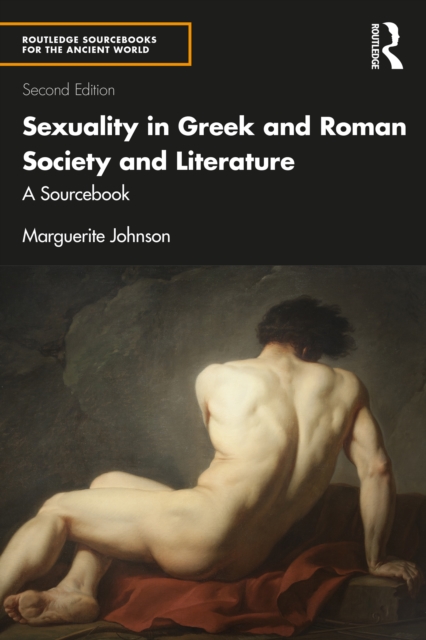
Sexuality in Greek and Roman Society and Literature
This second edition includes an updated review of sexuality in Greece and Rome, an expanded bibliography and numerous new passages with original translations.
This book provides readers with detailed information, notes and the original translated passages on the fascinating and multi-faceted theme of ancient sexuality. The sources range from the era of Homer and Hesiod through to the Graeco-Roman world of the Fourth Century ce and explore the diversity of approaches to sexuality and sexual expression, as well as how these issues relate to the rest of ancient society and culture.
Sexuality in Greek and Roman Society and Literature is an invaluable resource to students and academics alike, providing a detailed series of chapters on all major facets of sexuality in ancient Greece and Rome. It will particularly appeal to those interested in sexuality and gender in antiquity, as well as ancient literature and social studies.
eBook

Artifacts from ancient Rome
\"When Roman objects and artifacts are properly analyzed, they serve as valuable primary sources for learning about ancient history. This book provides the guidance and relevant historical context students need to see relics as evidence of long-past events and society\"-- Provided by publisher.
Book

Rome and environs
This superb guide brings the work of Filippo Coarelli, one of the most widely published and well-known scholars of Roman topography, archeology and art, to a broad English-language audience. Conveniently organized by walking tours and illustrated throughout with clear maps, drawings, and plans, Rome and Environs: An Archaeological Guide covers all of the major, and an unparalleled number of minor, ancient sites in the city, and, unlike most other guides of Rome, includes major and many minor sites within easy reach of the city, such as Ostia Antica, Palestrina, Tivoli, and the many areas of interest along the ancient Roman roads. An essential resource for tourists interested in a deeper understanding of Rome's classical remains, it is also the ideal book for students and scholars approaching the ancient history of one of the world's most fascinating cities. • Covers all the major sites including the Capitoline, the Roman Forum, the Imperial Fora, the Palatine Hill, the Valley of the Colosseum, the Esquiline, the Caelian, the Quirinal, and the Campus Martius. • Discusses important clusters of sites-one on the area surrounding Circus Maximus and the other in the vicinity of the Trastevere, including the Aventine and the Vatican. • Covers the history and development of the city walls and aqueducts. • Follows major highways leading outside of the city to important and fascinating sites in the periphery of Rome. • Features 189 maps, drawings, and diagrams, and an appendix on building materials and techniques. • Includes an updated and expanded bibliography for students and scholars of Ancient Rome.
eBook

Gladiators : deadly arena sports of ancient Rome
A history of gladiators--with an added bite! The Gladiators is a comprehensive survey of arena sports in ancient Rome, focusing upon gladiatorial combat and the beast-hunts (venationes). While numerous books have been written on arena spectacles in ancient Rome, they generally neglect the venationes, despite the fact that the beast-hunts, in which men were pitted in mortal combat against various dangerous wild animals (including lions, tigers, elephants, and rhinos), were almost as popular as gladiatorial spectacles and were staged over a longer period of time. Dr Christopher Epplett, gives a full and detailed treatment of both types of spectacle. The author starts by explaining the origins of these bloody combat sports in the late Roman Republic, before surveying the growth of these events during the first two centuries of the Empire, when emperors possessed the resources to stage arena spectacles on an unmatched scale. The details of the training, equipment, and fighting styles used by different types of combatants are covered, as are the infrastructure of the arenas and behind-the-scenes organization that was essential to the successful staging of arena events. Particular attention is paid to the means by which Roman spectacle organizers were able to procure the countless wild animals necessary for the staging of venationes throughout the Empire. A gladiator book with added bite, The Gladiators is sure to be welcomed by scholars and general readers alike.
Book

The final pagan generation
The Final Pagan Generationrecounts the fascinating story of the lives and fortunes of the last Romans born before the Emperor Constantine converted to Christianity. Edward J. Watts traces their experiences of living through the fourth century's dramatic religious and political changes, when heated confrontations saw the Christian establishment legislate against pagan practices as mobs attacked pagan holy sites and temples. The emperors who issued these laws, the imperial officials charged with implementing them, and the Christian perpetrators of religious violence were almost exclusively young men whose attitudes and actions contrasted markedly with those of the earlier generation, who shared neither their juniors' interest in creating sharply defined religious identities nor their propensity for violent conflict. Watts examines why the \"final pagan generation\"-born to the old ways and the old world in which it seemed to everyone that religious practices would continue as they had for the past two thousand years-proved both unable to anticipate the changes that imperially sponsored Christianity produced and unwilling to resist them. A compelling and provocative read, suitable for the general reader as well as students and scholars of the ancient world.
eBook

Belief and cult : rethinking Roman religion
\"A major new take on how Roman religion functioned cognitively to impact participants at both the individual level and the social\"-- Provided by publisher.
BOOK

The Mask of Socrates
This richly illustrated work provides a new and deeper perspective on the interaction of visual representation and classical culture from the fifth century B.C. to the fourth century A.D. Drawing on a variety of source materials, including Greco-Roman literature, historiography, and philosophy, coupled with artistic renderings, Paul Zanker forges the first comprehensive history of the visual representation of Greek and Roman intellectuals. He takes the reader from the earliest visual images of Socrates and Plato to the figures of Christ, the Apostles, and contemporaneous pagan and civic dignitaries. Through his interpretations of the postures, gestures, facial expressions, and stylistic changes of particular pieces, we come to know these great poets and philosophers through all of their various personas--the prophetic wise man, the virtuous democratic citizen, or the self-absorbed bon vivant. Zanker's analysis of how the iconography of influential thinkers and writers changed demonstrates the rise and fall of trends and the movement of schools of thought and belief, each successively embodying the most valued characteristics of the period and culture. This title is part of UC Press's Voices Revived program, which commemorates University of California Press's mission to seek out and cultivate the brightest minds and give them voice, reach, and impact. Drawing on a backlist dating to 1893, Voices Revived makes high-quality, peer-reviewed scholarship accessible once again using print-on-demand technology. This title was originally published in 1995. Many titles in the Voices Revived program are also newly available as ebooks, offered at a discounted price to support wider access to scholarly work.
eBook

Exemplary ethics in ancient Rome
\"The well-known mythographer Marina Warner has described the process of reading fairy tales and folktales as 'tasting the dragon's blood' - a magical and transformative process by which one's ears are opened to the voices of the past and of other worlds. Roman exempla, which constitute a national story-telling tradition, are very different in many ways from the dream-like fantasies of fairy-tales and other narrative folk traditions that have been the subject of Warner's studies. In (supposedly) true stories from history, battle-hardened warriors, noble maidens and honourable sons of the soil face impossible dangers, take terrible decisions and sacrifice their lives, their limbs and even their own children for the sake of justice, discipline and the Roman community. Yet for the ancient Romans too, hearing the blood-soaked stories of their ancestral heroes was an intimate and potent experience, and this 'taste of the hero's blood' had an intoxicating effect similar to the blood of Warner's dragon: evoking other worlds, shaping understanding of their own world\"-- Provided by publisher.
Book

The Care of the Dead in Late Antiquity
In this provocative book Éric Rebillard challenges many long-held assumptions about early Christian burial customs. For decades scholars of early Christianity have argued that the Church owned and operated burial grounds for Christians as early as the third century. Through a careful reading of primary sources including legal codes, theological works, epigraphical inscriptions, and sermons, Rebillard shows that there is little evidence to suggest that Christians occupied exclusive or isolated burial grounds in this early period.
In fact, as late as the fourth and fifth centuries the Church did not impose on the faithful specific rituals for laying the dead to rest. In the preparation of Christians for burial, it was usually next of kin and not representatives of the Church who were responsible for what form of rite would be celebrated, and evidence from inscriptions and tombstones shows that for the most part Christians didn't separate themselves from non-Christians when burying their dead. According to Rebillard it would not be until the early Middle Ages that the Church gained control over burial practices and that \"Christian cemeteries\" became common.
In this translation ofReligion et Sépulture: L'église, les vivants et les morts dans l'Antiquité tardive, Rebillard fundamentally changes our understanding of early Christianity.The Care of the Dead in Late Antiquitywill force scholars of the period to rethink their assumptions about early Christians as separate from their pagan contemporaries in daily life and ritual practice.
eBook