
Catalogue Search | MBRL


Are you sure you want to remove the book from the shelf?

{{itemTitle}}
5,588
result(s) for
"Ancient World"
Sort by:

Initiation into the Mysteries of the Ancient World
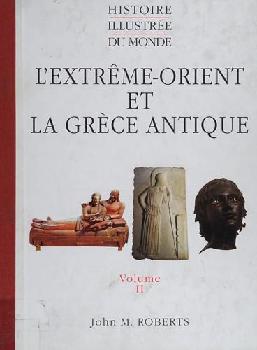
The ancient Mysteries have long attracted the interest of scholars, an interest that goes back at least to the time of the Reformation. After a period of interest around the turn of the twentieth century, recent decades have seen an important study of Walter Burkert (1987). Yet his thematic approach makes it hard to see how the actual initiation into the Mysteries took place. To do precisely that is the aim of this book. It gives a ‘thick description’ of the major Mysteries, not only of the famous Eleusinian Mysteries, but also those located at the interface of Greece and Anatolia: the Mysteries of Samothrace, Imbros and Lemnos as well as those of the Corybants. It then proceeds to look at the Orphic-Bacchic Mysteries, which have become increasingly better understood due to the many discoveries of new texts in the recent times. Having looked at classical Greece we move on to the Roman Empire, where we study not only the lesser Mysteries, which we know especially from Pausanias, but also the new ones of Isis and Mithras. We conclude our book with a discussion of the possible influence of the Mysteries on emerging Christianity. Its detailed references and up-to-date bibliography will make this book indispensable for any scholar interested in the Mysteries and ancient religion, but also for those scholars who work on initiation or esoteric rituals, which were often inspired by the ancient Mysteries.
eBook

Ancient worlds : a global history of antiquity
Scott presents a narrative of a unique age in human civilization, showing how diverse societies responded to similar pressures and how they influenced one another: through conquest and conversion, through trade in people, goods, and ideas. A reinvention of our grandest histories, this book reveals new truths about our common human heritage.
Book

The Routledge Companion to Women and Monarchy in the Ancient Mediterranean World
This volume offers the first comprehensive look at the role of women in the monarchies of the ancient Mediterranean. It consistently addresses certain issues across all dynasties: title; role in succession; the situation of mothers, wives, and daughters of kings; regnant and co-regnant women; and role in cult and in dynastic image, and examines a sampling of the careers of individual women while placing them within broader contexts. Written by an international group of experts, this collection is based on the assumption that women played a fundamental role in ancient monarchy, that they were part of, not apart from it, and that it is necessary to understand their role to understand ancient monarchies. This is a crucial resource for anyone interested in the role of women in antiquity.
eBook

The religion of the Mithras cult in the Roman Empire : mysteries of the unconquered sun
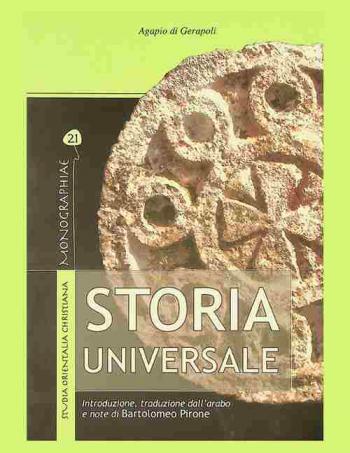
A study of the religious system of Mithraism, one of the 'mystery cults' popular in the Roman Empire contemporary with early Christianity. Mithraism is described from the point of view of the initiate engaging with its rich repertoire of symbols and practices.
eBook

World history : from the ancient world to the information age
Discover the events that have shaped our world, from the dawn of prehistoric civilization to the digital age, brought to life with contemporary photographs, maps, paintings, and artifacts that place each event in a wider social and historical context.
BOOK

Death in Late Bronze Age Greece
Late Bronze Age tombs in Greece and their attendant mortuary practices have been a topic of scholarly debate for over a century, dominated by the idea of a monolithic culture with the same developmental trajectories throughout the region. This book contributes to that body of scholarship by exploring both the level of variety and of similarity in the practices at each site and thereby highlights the differences between communities that otherwise look very similar. Bringing together an international group of scholars working on tombs and cemeteries on mainland Greece, Crete, and in the Dodecanese, the volume affords a unique view of the development and diversity of these communities. The chapters provide a penetrative analysis of the related issues by discussing tombs connected with sites ranging in size from palaces to towns to villages and in date from the start to the end of the Late Bronze Age. This book contextualizes the mortuary studies in recent debates on diversity at the main palatial and secondary sites and between the economic and political strategies and practices throughout Greece. The chapters in the volume illustrate the pervasive connection between the mortuary sphere and society through the creation and expression of cultural narratives, and draw attention to the social tensions played out in the mortuary arena.
eBook

National Geographic almanac of world history
With authoritative and enlightening essays and detailed maps, charts, and time lines, National Geographic Almanac of World History encapsulates in one volume all of the important people and events that have changed the world. In chronological chapters, this amazing almanac reveals the fascinating story of the growth and change of society, from the Neanderthals to the nuclear age. Culled from the extensive National Geographic archives, Almanac of World History includes more than 220 maps, photographs, and illustrations to enhance readers' understanding of history. Each chapter features three types of easy-to-access entries, including lively introductory spreads that are filled with time lines, charts, images, and sidebars; essay spreads that give more in-depth information on a person, place, or event; and finally, summary spreads that reveal what was happening simultaneously in other parts of the world. Rich in cartography, information, and illustrations, National Geographic Almanac of World History is an indispensable tool for understanding both past and present. Annotation. This comprehensive, accessible reference is designed for the desk and library--with all the pertinent facts of world history from the dawn of humanity to the 21st century.
Book

Prehistoric Mobility and Diet in the West Eurasian Steppes 3500 to 300 BC
Questions concerning mobility and migration as well as subsistence strategies of past societies have always been of major importance in archaeological research. The West Eurasian steppes in the Eneolithic, the Early Bronze and the Iron Age were largely inhabited by cultural communities believed to show an elevated level of spatial mobility, often linked to their subsistence economy. In this volume, questions concerning the mobility and potential migration as well as the diet and economy of the West Eurasian steppes communities during the 4th, the 3rd and the 1st Millennia BC are approached by applying isotope analysis, specifically 87Sr/86Sr, δ18O, δ15N and δ13C analyses. Adapting a combination of different isotopic systems to a study area of vast spatial and chronological dimension allowed a wide variety of questions to be answered and establishes the beginning of a database of biogeochemical data for the West Eurasian steppes. Besides the characterisation of mobility and subsistence patterns of the archaeological communities under discussion, attempts to identify possible Early Bronze Age migrations from the steppes to the steppe-like plains in parts of Eastern Europe were made, alongside an evaluation of the applicability of isotope analysis to this context.
eBook