
Catalogue Search | MBRL


Are you sure you want to remove the book from the shelf?

{{itemTitle}}
41,066
result(s) for
"Ancient civilizations"
Sort by:

Uncovering the culture of ancient Egypt
Ancient Egypt was a formative civilization in the history of the world. This volume examines the main archaeological sites of ancient Egypt from the predynastic period through the Greco-Roman period, allowing readers to trace the chronological development of the civilization. Readers will marvel at the exciting digs at major temple sitesincluding Valley of the Kings, the Giza pyramids, Karnak Temple, and moreas well as at the everyday objects ordinary citizens left behind. Highly detailed photographs, exciting fact boxes, maps, and a timeline help readers gain a full understanding of ancient Egypts unique culture.
Book

Addison Cooke and the ring of destiny
\"Addison and the team travel to Paris, Istanbul, Cyprus, and beyond to stop the enemy Malazar and find the treasured Ring of Destiny\"-- Provided by publisher. Includes notes on Knights Templar.
BOOK

Adaptation to Variable Environments, Resilience to Climate Change
This paper explores the nature and dynamics of adaptation and resilience in the face of a diverse and varied environmental and ecological context using the case study of South Asia’s Indus Civilization (ca. 3000–1300 BC). Most early complex societies developed in regions where the climatic parameters faced by ancient subsistence farmers were varied but rain falls primarily in one season. In contrast, the Indus Civilization developed in a specific environmental context that spanned a very distinct environmental threshold, where winter and summer rainfall systems overlap. There is now evidence to show that this region was directly subject to climate change during the period when the Indus Civilization was at its height (ca. 2500–1900 BC). The Indus Civilization, therefore, provides a unique opportunity to understand how an ancient society coped with diverse and varied ecologies and change in the fundamental environmental parameters. This paper integrates research carried out as part of the Land, Water and Settlement project in northwest India between 2007 and 2014. Although coming from only one of the regions occupied by Indus populations, these data necessitate the reconsideration of several prevailing views about the Indus Civilization as a whole and invigorate discussion about human-environment interactions and their relationship to processes of cultural transformation.
Journal Article

The crocodile tomb
\"Hylas and Pirra arrive in Egypt to search for the powerful dagger, but Telemon and the Crows are there too, and they will stop at nothing to find the dagger first\"-- Provided by publisher. Includes historical notes.
Book
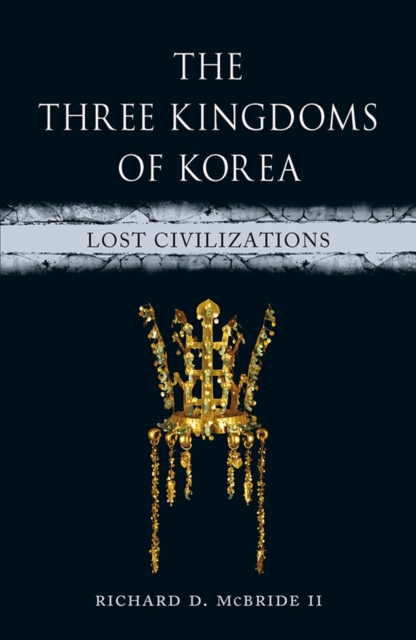
The Three Kingdoms of Korea
An expansive and accessible introduction to the history of Korea during the first millennium CE. Korea s Three Kingdoms period is a genuine lost civilization, during which ancient realms vied for supremacy during the first millennium CE. Nobles from this period s feuding states adopted and adapted Buddhism and Confucianism through interactions with early medieval Chinese dynasties. It was not until the mid-seventh century that the aristocratic Silla state, with the assistance of the mighty Chinese Tang empire, unified the Three Kingdoms of Korea by conquering the kingdoms of Koguryo and Paekche. Weaving together legends of ancient kings with the true histories of monks, scholars, and laypeople, this book sheds new light on a foundational period that continues to shape Korean identity today.
eBook

The Pompeii disaster
Sent back in time to 79 AD, on a mission to photograph the eruption of Mount Vesuvius, the Flashback Four race to get their picture.
Book

Radiocarbon-Based Chronology for Dynastic Egypt
The historical chronologies for dynastic Egypt are based on reign lengths inferred from written and archaeological evidence. These floating chronologies are linked to the absolute calendar by a few ancient astronomical observations, which remain a source of debate. We used 211 radiocarbon measurements made on samples from short-lived plants, together with a Bayesian model incorporating historical information on reign lengths, to produce a chronology for dynastic Egypt. A small offset (19 radiocarbon years older) in radiocarbon levels in the Nile Valley is probably a growing-season effect. Our radiocarbon data indicate that the New Kingdom started between 1570 and 1544 B.C.E., and the reign of Djoser in the Old Kingdom started between 2691 and 2625 B.C.E.; both cases are earlier than some previous historical estimates.
Journal Article

Battle with the Britons!
Before he can gain his freedom, Emperor Hadrian sends Julius Zebra on one last mission to Britannia where he and his fellow gladiators discover how much the Britons dislike the Romans.
Book
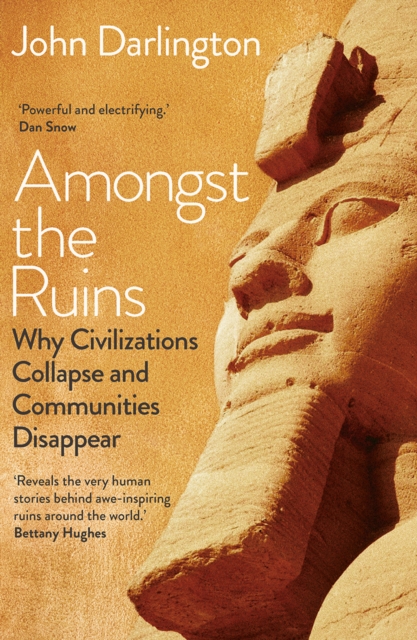
Amongst the Ruins
Amongst the Ruins explores the loss of ancient civilizations, the collapse of ruling elites, and the disappearance of more recent communities and their local traditions. Some of these are now sealed under 3,000-year-old peat, others lost to rising seas or sands, and the carcasses of twentieth-century buildings which serve as reminders of the destructive power of war. These compelling stories of fallen or lost places are brought together through themes of war, climate change, natural hazards, human self-destruction, and simple economics. From the ice of the Arctic fringe, through to the desert landscapes of North Africa, by way of South America's high mountains and Southeast Asia's urban sprawl, Amongst the Ruins charts the rise and fall of places and communities around the world, the fascinating characters associated with them, and the important events that punctuate their history. Exploring wide-ranging examples from prehistory to the present day, John Darlington challenges us to recognize past failures and identify what we need to do to protect the cultures of our current world. #160
eBook