
Catalogue Search | MBRL


Are you sure you want to remove the book from the shelf?

{{itemTitle}}
1,987
result(s) for
"Anesthesia History."
Sort by:

Anesthesia : the gift of oblivion and the mystery of consciousness
Examines what happens to the unconscious mind while under the effects of anesthesia, tracing the author's own experiences with surgery and the personal accounts of others who have experienced trauma, hallucinations, and submerged memories while under its influence.
Book

Deliver Me from Pain
Despite today's historically low maternal and infant mortality rates in the United States, labor continues to evoke fear among American women. Rather than embrace the natural childbirth methods promoted in the 1970s, most women welcome epidural anesthesia and even Cesarean deliveries. In Deliver Me from Pain, Jacqueline H. Wolf asks how a treatment such as obstetric anesthesia, even when it historically posed serious risk to mothers and newborns, paradoxically came to assuage women's anxiety about birth.
Each chapter begins with the story of a birth, dramatically illustrating the unique practices of the era being examined. Deliver Me from Pain covers the development and use of anesthesia from ether and chloroform in the mid-nineteenth century; to amnesiacs, barbiturates, narcotics, opioids, tranquilizers, saddle blocks, spinals, and gas during the mid-twentieth century; to epidural anesthesia today.
Labor pain is not merely a physiological response, but a phenomenon that mothers and physicians perceive through a historical, social, and cultural lens. Wolf examines these influences and argues that medical and lay views of labor pain and the concomitant acceptance of obstetric anesthesia have had a ripple effect, creating the conditions for acceptance of other, often unnecessary, and sometimes risky obstetric treatments: forceps, the chemical induction and augmentation of labor, episiotomy, electronic fetal monitoring, and Cesarean section.
As American women make decisions about anesthesia today, Deliver Me from Pain offers them insight into how women made this choice in the past and why each generation of mothers has made dramatically different decisions.
eBook

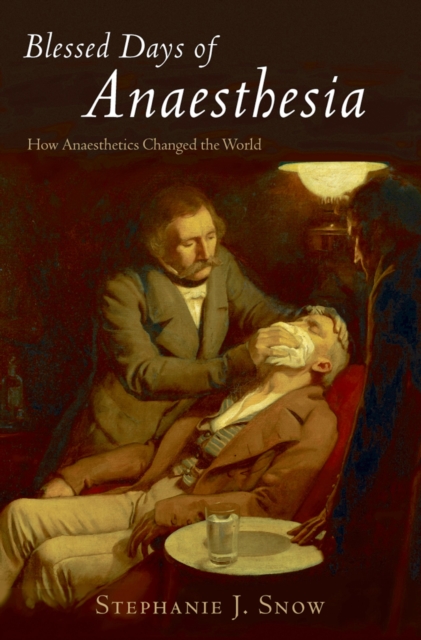
Blessed Days Of Anaesthesia
Among all the great discoveries and inventions of the nineteenth century, few offer us a more fascinating insight into Victorian society than the discovery of anaesthesia. Now considered to be one of the greatest inventions for humanity since the printing press, anaesthesia offered pain-free operations, childbirth with reduced suffering, and instant access to the world beyond consciousness. And yet, upon its introduction, Victorian medics, moralists, clergymen, and scientists, were plunged into turmoil. This vivid and engaging account of the early days of anaesthesia unravels some key moments in medical history: from Humphry Davy’ s early experiments with nitrous oxide and the dramas that drove the discovery of ether anaesthesia in America, to the outrage provoked by Queen Victoria’ s use of chloroform during the birth of Prince Leopold. And there are grisly ones too: frequent deaths, and even notorious murders. Interweaved throughout the story, a fascinating social change is revealed. For anaesthesia caused the Victorians to rethink concepts of pain, sexuality, and the links between mind and body. From this turmoil, a profound change in attitudes began to be realised, as the view that physical suffering could, and should, be prevented permeated through society, most tellingly at first in prisons and schools where pain was used as a method of social control. In this way, the discovery of anaesthesia left not only a medical and scientific legacy that changed the world, but a compassionate one too.
eBook

Two Hundred Years of Surgery
This review article traces the history and progress of surgery over the past two centuries, during which the profession evolved from rapidly performed, rudimentary, and often unsuccessful procedures to bold reconstruction, intricate microsurgery, transplantation, and more.
Surgery is a profession defined by its authority to cure by means of bodily invasion. The brutality and risks of opening a living person's body have long been apparent, the benefits only slowly and haltingly worked out. Nonetheless, over the past two centuries, surgery has become radically more effective, and its violence substantially reduced — changes that have proved central to the development of mankind's abilities to heal the sick.
Surgery before the Advent of Anesthesia
The first volume of the
New England Journal of Medicine and Surgery, and the Collateral Branches of Science,
published in 1812, gives a sense . . .
Journal Article


Necessity is the mother of invention: William Stewart Halsted’s addiction and its influence on the development of residency training in North America
William Stewart Halsted developed a novel residency training program at Johns Hopkins Hospital that, with some modifications, became the model for surgical and medical residency training in North America. While performing anesthesia research early in his career, Halsted became addicted to cocaine and morphine. This paper dissects how his innovative multi-tier residency program helped him hide his addiction while simultaneously providing outstanding patient care and academic training.
Journal Article

A Personal History of the MASTER Trial and Its Link to the Clinical Trials Network of the Australian and New Zealand College of Anaesthetists
The aim of this paper is to link the history of the Multicentre Australian Study of Epidural Anaesthesia in high risk surgery, the MASTER Trial, the first National Health and Medical Research Council (NHMRC) funded multicentre randomised clinical trial In Australia led by anaesthetist researchers, and the decision of The Australian and New Zealand College of Anaesthetists (ANZCA) to establish a clinical trials network, in 2003, to the success of contemporary researchers in Australia and New Zealand in anaesthesia and perioperative medicine.
Journal Article

Efficient application of volatile anaesthetics: total rebreathing or specific reflection?
The circle system has been in use for more than a 100 years, whereas the first clinical application of an anaesthetic reflector was reported just 15 years ago. Its functional basis relies on molecular sieves such as zeolite crystals or activated carbon. In a circle system, the breathing gas is rebreathed after carbon dioxide absorption; a reflector on the other hand specifically retains the anaesthetic during expiration and resupplies it during the next inspiration. Reflection systems can be used in conjunction with intensive care ventilators and do not need the permanent presence of trained qualified staff. Because of easy handling and better ventilatory capabilities of intensive care ventilators, reflection systems facilitate the routine use of volatile anaesthetics in intensive care units. Until now, there are three reflection systems commercially available: the established AnaConDa™ (Sedana Medical, Uppsala, Sweden), the new smaller AnaConDa-S™, and the Mirus™ (Pall Medical, Dreieich, Germany). The AnaConDa consists only of a reflector which is connected to a syringe pump for infusion of liquid sevoflurane or isoflurane. The Mirus represents a technical advancement; its control unit includes a gas and ventilation monitor as well as a gas dispensing unit. The functionality, specific features, advantages and disadvantages of both systems are discussed in the text.
Journal Article

The place of James Arnott (1797-1883) in the development of local anaesthesia in dentistry
Key Points
James Arnott developed an effective local anaesthetic method to painlessly extract teeth with his freezing apparatus.
He recognised the dangers and sudden deaths associated with general anaesthetics and campaigned that they should not be used when a safer alternative existed.
He discovered the palliative effects of freezing.
Dental disease in the form of caries and abscesses has been known since antiquity. Before the advent of anaesthesia, operations upon the mouth were painful. The introduction of general anaesthesia in the form of ether and chloroform seemed to provide a solution, but there was an unacceptable level of mortality. James Arnott introduced local anaesthesia by means of freezing with ice, which he considered safer. He waged a long campaign and his method received recognition and was used in France and the USA. His method stimulated the development of pharmacological anaesthesia.
Journal Article