
Catalogue Search | MBRL


Are you sure you want to remove the book from the shelf?

{{itemTitle}}
21
result(s) for
"Angkor (Extinct city)"
Sort by:

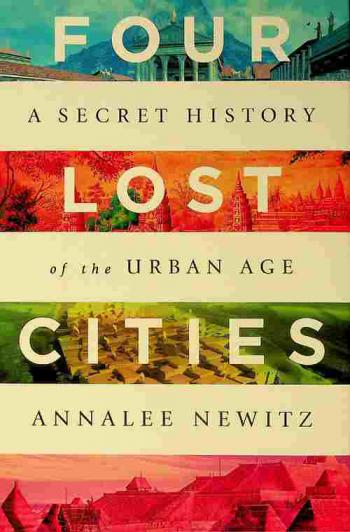
Four lost cities : a secret history of the urban age
\"A quest to explore some of the most spectacular ancient cities in human history--and figure out why people abandoned them. In Four Lost Cities, acclaimed science journalist Annalee Newitz takes readers on an entertaining and mind-bending adventure into the deep history of urban life. Investigating across the centuries and around the world, Newitz explores the rise and fall of four ancient cities, each the center of a sophisticated civilization: the Neolithic site of Çatalhöyük in Central Turkey, the Roman vacation town of Pompeii on Italy's southern coast, the medieval megacity of Angkor in Cambodia, and the indigenous metropolis Cahokia, which stood beside the Mississippi River where East St. Louis is today. Newitz travels to all four sites and investigates the cutting-edge research in archaeology, revealing the mix of environmental changes and political turmoil that doomed these ancient settlements. Tracing the early development of urban planning, Newitz also introduces us to the often anonymous workers--slaves, women, immigrants, and manual laborers--who built these cities and created monuments that lasted millennia. Four Lost Cities is a journey into the forgotten past, but, foreseeing a future in which the majority of people on Earth will be living in cities, it may also reveal something of our own fate\"-- Provided by publisher.
Secrets of the temples of Angkor
In the depths of the Cambodian forest lies the ruin of Angkor. It was once the center of a powerful civilization from the 9th to the 14th century. This is the story of the rehabilitation of this archaeological treasure, throughout the chaotic modern history of Cambodia. It all started in the 19th century when Cambodia became a French protectorate. Ever since, numerous French archaeologists have devoted their lives to the reconstruction of Angkor, while trying to unveil the secrets of the Khmer culture. This scientific work of passion was accomplished against a backdrop of turmoil and war the Cambodian people had to face.
Streaming Video

Image and reality: Ceramics on Angkorian temple reliefs in Cambodia
This paper gives an overview of recent work on ceramics at Angkor. It discusses the way ceramics are shown on temple reliefs of the twelfth and thirteenth centuries CE and relates their realistic presentation to royal propaganda. It then goes on to consider Chinese export wares and suggests that these were an ancillary part of more significant trade in cavalry horses.
Journal Article

The Khmer Empire
\"For more than 600 years, the Khmer Empire dominated Southeast Asia, ruling over much of what is now Cambodia, Laos, Thailand, and Vietnam. The Khmer Empire is known today primarily for one of its most emblematic remnants, the temple complex Angkor Wat.\" (Social Studies for Kids) Learn more about the Khmer Empire.
Web Resource

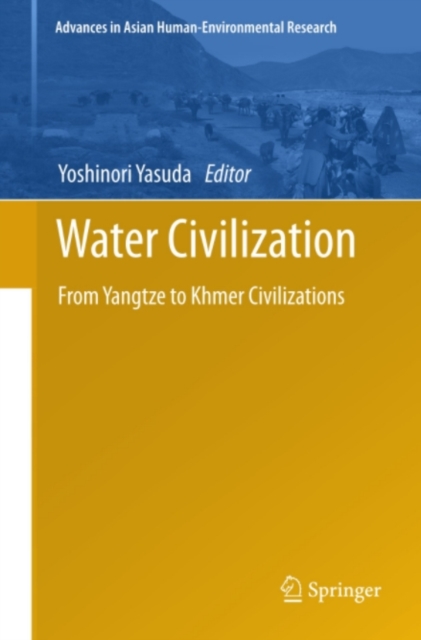
Water Civilization
This book reviews the rise and fall of rice cultivation and fishing culture, which the authors call water civilization, as revealed in Chinese archeological sites dating back to 10,000 BCE, and through analysis of DNA and human skeletal remains from Cambodia.
eBook