
Catalogue Search | MBRL


Are you sure you want to remove the book from the shelf?

{{itemTitle}}
114
result(s) for
"Angleterre dans la littérature"
Sort by:

Inhabited spaces : Anglo-Saxon constructions of place
\"We tend to think of early medieval people as unsophisticated about geography because their understandings of space and place often differed from ours, yet theirs were no less complex. Anglo-Saxons conceived of themselves as living at the centre of a cosmos that combined order and plenitude, two principles in a constant state of tension. In Inhabited Spaces, Nicole Guenther Discenza examines a variety of Anglo-Latin and Old English texts to shed light on Anglo-Saxon understandings of space. Anglo-Saxon models of the universe featured a spherical earth at the centre of a spherical universe ordered by God. They sought to shape the universe into knowable places, from where the earth stood in the cosmos, to the kingdoms of different peoples, and to the intimacy of the hall. Discenza argues that Anglo-Saxon works both construct orderly place and illuminate the limits of human spatial control.\"-- Provided by publisher.
Book

Imagining London
London was once the hub of an empire on which 'the sun never set.' After the second world war, as Britain withdrew from most of its colonies, the city that once possessed the world began to contain a diasporic world that was increasingly taking possession of it. Drawing on postcolonial theories - as well as interdisciplinary perspectives from cultural geography, urban theory, history, and sociology -Imagining Londonexamines representations of the English metropolis in Canadian, West Indian, South Asian, and second-generation 'black British' novels written in the last half of the twentieth century. It analyzes the diverse ways in which London is experienced and portrayed as a transnational space by Commonwealth expatriates and migrants.
As the former 'heart of empire' and a contemporary 'world city,' London metonymically represents the British Empire in two distinct ways. In the early years of decolonization, it is a primarily white city that symbolizes imperial power and history. Over time, as migrants from former colonies have 'reinvaded the centre' and changed its demographic and cultural constitution, it has come to represent empire geographically and spatially as a global microcosm. John Clement Ball examines the work of more than twenty writers, including established authors such as Robertson Davies, Mordecai Richler, Jean Rhys, Sam Selvon, V.S. Naipaul, Anita Desai, and Salman Rushdie, and newer voices such as Catherine Bush, David Dabydeen, Amitav Ghosh, Hanif Kureishi, and Zadie Smith.
eBook

Dire Straits
By illustrating how early modern English writers created their works in the context of a longstanding cultural inheritance from antiquity, Elizabeth Jane Bellamy offers a new approach to the history of early modern cartography and its influences on literature.
eBook

Narrative Settlements
During the interwar period, shifting attitudes toward empire dovetailed with women's achievement of citizenship, placing women at the centre of debates about what England would be. Responding to these cultural conditions, women writers used novels of place to analyze relationships among space, self, and nation in England, thereby establishing new ways for the country to view itself.
Jennifer Poulos Nesbitt'sNarrative Settlementsresituates British women's writing between the wars in light of postcolonial theories of the novel and feminist geography. Reading works by Winifred Holtby, Vita Sackville-West, Angela Thirkell, Sylvia Townsend Warner, Rebecca West, and Virginia Woolf, Nesbitt argues that renewed attention to setting provides a methodological base for a more nuanced understanding of the aesthetic preoccupations of women writers between the wars. She provides not only attentive readings of literature during this contentious time, but a convincing argument for looking beyond modernism to locate the significance of interwar literary production.
eBook
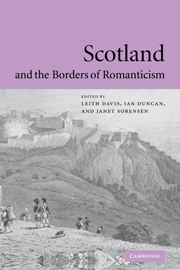
Scotland and the Borders of Romanticism
Originally published in 2004, Scotland and the Borders of Romanticism is a collection of critical essays devoted to Scottish writing between 1745 and 1830 - a key period marking the contested divide between Scottish Enlightenment and Romanticism in British literary history. Essays in the volume, by leading scholars from Scotland, England, Canada and the USA, address a range of major figures and topics, among them Hume and the Romantic imagination, Burns's poetry, the Scottish song and ballad revivals, gender and national tradition, the prose fiction of Walter Scott and James Hogg, the national theatre of Joanna Baillie, the Romantic varieties of historicism and antiquarianism, Romantic Orientalism, and Scotland as a site of English cultural fantasies. The essays undertake a collective rethinking of the national and period categories that have structured British literary history, by examining the relations between the concepts of Enlightenment and Romanticism as well as between Scottish and English writing.
eBook

New England's Crises and Cultural Memory
In this magisterial study, John McWilliams traces the development of New England's influential cultural identity. Through written responses to historical crises from early New England through the pre-Civil War period, McWilliams argues that the meaning of 'New England' despite claims for its consistency was continuously reformulated. The significance of past crises was forever being reinterpreted for the purpose of meeting succeeding crises. The crises he examines include starvation, the Indian wars, the Salem witch trials, the revolution of 1775–76 and slavery. Integrating history, literature, politics and religion this is one of the most comprehensive studies of the meaning of 'New England' to appear in print. McWilliams considers a range of writing including George Bancroft's History of the United States, the political essays of Samuel Adams, the fiction of Nathaniel Hawthorne and the poetry of Robert Lowell. This compelling book is essential reading for historians and literary critics of New England.
eBook
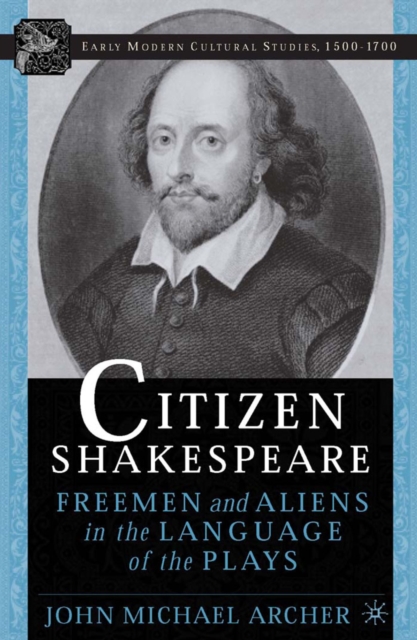
Citizen Shakespeare : freemen and aliens in the language of the plays
Shakespeare was not a citizen of London. But the language of his plays is shot through with the concerns of London 'freemen' and their wives, the diverse commercial class that nevertheless excluded adult immigrants from country towns and northern Europe alike. This book combines London historiography, close reading, and recent theories of citizen subjectivity to demonstrate for the first time that Shakespeare's plays embody citizen and alien identities despite their aristocratic settings. Through three chapters, the book points out where the city shadows the country scenes of the major comedies, shows how London's trades animate the 'civil butchery' of the history plays, ans explains why England's metropolis becomes the fractured Rome of tragedy,
eBook

Jane Austen and Representations of Regency England
In Jane Austen and Representations of Regency England, Roger Sales looks at Jane Austen's entire oeuve, and views her historically as a Regency writer voicing concerns on the condition of England. Examining Austen's literary works; her letters - in the context of those of other Regency women; as well as contemporary texts such as television adaptations of her work, Jane Austen and Representations of Regency England reconstructs the breadth of Jane Austen's writing. It also examines: * her representations of dandyism and masculine identities * the events of the Regency crisis of 1810-12 * the way in which Austen engaged in topical debates such as healthcare in both Emma and Persuasion.
eBook
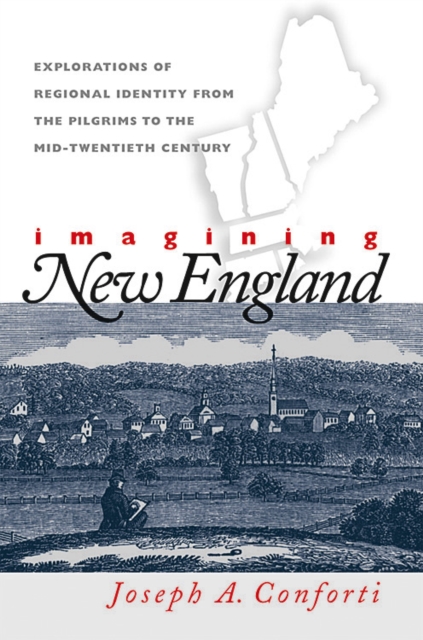
Imagining New England : explorations of regional identity from the pilgrims to the mid-twentieth century
Say \"New England\" and you likely conjure up an image in the mind of your listener: the snowy woods or stone wall of a Robert Frost poem, perhaps, or that quintessential icon of the region--the idyllic white village. Such images remind us that, as Joseph Conforti notes, a region is not just a territory on the ground. It is also a place in the imagination. This ambitious work investigates New England as a cultural invention, tracing the region's changing identity across more than three centuries. Incorporating insights from history, literature, art, material culture, and geography, it shows how succeeding generations of New Englanders created and broadcast a powerful collective identity for their region through narratives about its past. Whether these stories were told in the writings of Frost or Harriet Beecher Stowe, enacted in historical pageants or at colonial revival museums, or conveyed in the pages of a geography textbook or Yankee magazine, New Englanders used them to sustain their identity, revising them as needed to respond to the shifting regional landscape.
eBook

Sodom on the Thames
Sodom on the Thameslooks closely at three episodes involving sex between men in late-nineteenth-century England. Morris Kaplan draws on extensive research into court records, contemporary newspaper accounts, personal correspondence and diaries, even a pornographic novel. He focuses on two notorious scandals and one quieter incident.
In 1871, transvestites \"Stella\" (Ernest Boulton) and \"Fanny\" (Frederick Park), who had paraded around London's West End followed by enthusiastic admirers, were tried for conspiracy to commit sodomy. In 1889-1890, the \"Cleveland Street affair\" revealed that telegraph delivery boys had been moonlighting as prostitutes for prominent gentlemen, one of whom fled abroad. In 1871, Eton schoolmaster William Johnson resigned in disgrace, generating shockwaves among the young men in his circle whose romantic attachments lasted throughout their lives. Kaplan shows how profoundly these scandals influenced the trials of Oscar Wilde in 1895 and contributed to growing anxiety about male friendships.
Sodom on the Thamesreconstructs these incidents in rich detail and gives a voice to the diverse people involved. It deepens our understanding of late Victorian attitudes toward urban culture, masculinity, and male homoeroticism. Kaplan also explores the implications of such historical narratives for the contemporary politics of sexuality.
eBook