
Catalogue Search | MBRL


Are you sure you want to remove the book from the shelf?

{{itemTitle}}
5,962
result(s) for
"Angola"
Sort by:


Uncovering African Agency
China's engagement in Africa is generally portrayed simply as African countries being exploited for their mineral wealth by a wealthy political and economic superpower. Is this always the case?
Certain African countries have been able to use China's involvement in the region to grow their economies and solicit renewed interest from previously disengaged foreign powers by using their relationship with China to bolster their political capital. In this thought provoking and original work Lucy Corkin demonstrates how Angola has been amongst the most successful of African nations in this role. The concept of 'African agency' covers a wide range of different countries with very different capabilities and experiences of engaging with China. In each individual county there are a myriad of actors all with increasingly discernible agencies. Uncovering African Agency; Angola's Management of China's Credit Lines casts a fascinating new light on China's involvement with her largest African trading partner and through this shows how different African states and the governmental actors within them are able to exploit the relationship to their best advantage.
eBook

A Short History of Modern Angola
David Birmingham begins this short history of Angola in 1820 with the Portuguese attempt to create a third, African, empire after the virtual loss of Asia and America. In the 19th century the most valuable resource extracted from Angola was agricultural labour. The colony was managed by a few marine officers, white political convicts and black Angolans who had adopted Portuguese language and culture. The hub was the harbour city of Luanda which grew to be a dynamic metropolis of several million people. The export of labour was gradually replaced when an agrarian revolution enabled white Portuguese immigrants to drive black Angolan labourers to produce sugar-cane, cotton, maize and above all coffee. During the 20th century this wealth was supplemented by Congo copper, by gem-quality diamonds, and by off-shore oil. The generation of warfare finally ended in 2002 when national reconstruction could begin on Portuguese colonial foundations.
Book

Crude Existence
After decades of civil war and instability, the African country of Angola is experiencing a spectacular economic boom thanks to its most valuable natural resource: oil. But oil extraction--both on- and offshore--is a toxic remedy for the country's economic ills, with devastating effects on both the environment and traditional livelihoods. Focusing on the everyday realities of people living in the extraction zones, Kristin Reed explores the exclusion, degradation, and violence that are the fruits of petrocapitalism in Angola.
eBook

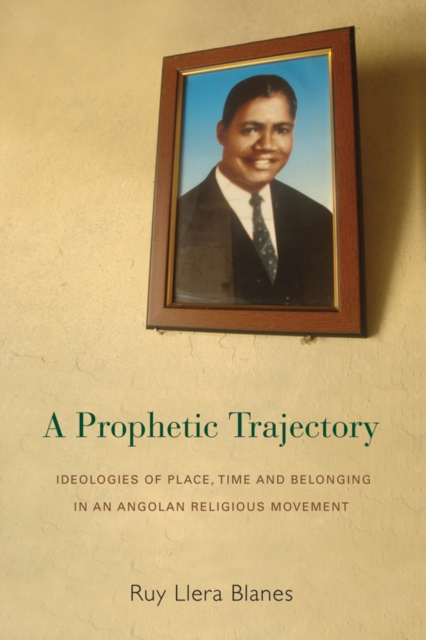
A prophetic trajectory
Combining ethnographic and historical research conducted in Angola, Portugal, and the United Kingdom,A Prophetic Trajectorytells the story of Simão Toko, the founder and leader of one of the most important contemporary Angolan religious movements. The book explains the historical, ethnic, spiritual, and identity transformations observed within the movement, and debates the politics of remembrance and heritage left behind after Toko's passing in 1984. Ultimately, it questions the categories of prophetism and charisma, as well as the intersections between mobility, memory, and belonging in the Atlantic Lusophone sphere.
eBook

Intonations : a social history of music and nation in Luanda, Angola, from 1945 to recent times
Intonations tells the story of how Angola's urban residents in the late colonial period (roughly 1945–74) used music to talk back to their colonial oppressors and, more importantly, to define what it meant to be Angolan and what they hoped to gain from independence. A compilation of Angolan music is included in CD format. Marissa J. Moorman presents a social and cultural history of the relationship between Angolan culture and politics. She argues that it was in and through popular urban music, produced mainly in the musseques (urban shantytowns) of the capital city, Luanda, that Angolans forged the nation and developed expectations about nationalism. Through careful archival work and extensive interviews with musicians and those who attended performances in bars, community centers, and cinemas, Moorman explores the ways in which the urban poor imagined the nation. The spread of radio technology and the establishment of a recording industry in the early 1970s reterritorialized an urban-produced sound and cultural ethos by transporting music throughout the country. When the formerly exiled independent movements returned to Angola in 1975, they found a population receptive to their nationalist message but with different expectations about the promises of independence. In producing and consuming music, Angolans formed a new image of independence and nationalist politics.
eBook


Working the System
Working the Systemoffers key insights into the politics of the everyday in twenty-first-century dominant party and neo-authoritarian regimes in Africa and elsewhere. Detailing the many ways ordinary Angolans fashion their relationships with the system-an emic notion of their current political and socioeconomic environment-Jon Schubert explores what it means and how it feels to be part of the contemporary Angolan polity.
Schubert finds that for many ordinary Angolans, the benefits of the post-conflict \"New Angola,\" flush with oil wealth and in the midst of a construction boom, are few. The majority of the inhabitants of the capital, Luanda, struggle to make ends meet and live on under $2.00 per day. The \"New Angola\" as promoted by the ruling MPLA, Schubert contends, is an essentially urban, upwardly mobile, and aspirational project, premised on the acceptance of the regime's political and economic dominance by its citizens. In the first ethnography of Angola to be published since the end of that country's twenty-seven years of intermittent violent internal conflict in 2002, Schubert traces how Angolans may question and resist the system within an atmosphere of apparent compliance. Working the System will appeal to anthropologists and political scientists, urban sociologists, and scholars of African studies.
eBook