
Catalogue Search | MBRL


Are you sure you want to remove the book from the shelf?

{{itemTitle}}
6,301
result(s) for
"Animal Poetry."
Sort by:

Mice squeak, we speak : a poem
Illustrations and simple text describe the ways various animals communicate.
Book

I wish I had a heart like yours, Walt Whitman
In Return of the Heroes, Walt Whitman refers to the casualties of the American Civil War: the dead to me mar not. . . . / they fit very well in the landscape under the trees and grass. . . . In her new poetry collection, Jude Nutter challenges Whitman's statement by exploring her own responses to war and conflict and, in a voice by turns rueful, dolorous, and imagistic, reveals why she cannot agree. Nutter, who was born in England and grew up in Germany, has a visceral sense of history as a constant, violent companion. Drawing on a range of locales and historical moments—among them Rwanda, Sarajevo, Nagasaki, and both world wars—she replays the confrontation of personal history colliding with history as a social, political, and cultural force. In many of the poems, this confrontation is understood through the shift from childhood innocence and magical thinking to adult awareness and guilt. Nutter responds to Whitman from another perspective as well. It was Whitman who wrote that he could live with animals because, among other things, they are placid, self-contained, and guiltless. As counterpoint, Nutter weaves a series of animal poems—a kind of personal bestiary—throughout the collection that reveals the tragedy and violence also inherent in the lives of animals. Here, as in much of Nutter's previous work, the boundaries between the animal and human worlds are permeable; the urgent voice of the poet insists we recognize that Even from a distance, suffering / is suffering. Here is both acknowledgment and challenge: distance may be measured in terms of time, culture, or place, or it may be caused by the gap between animals and humans, but it is our responsibility to speak against atrocity and bloodshed, however voiceless we may feel.
eBook

Boom! Bellow! Bleat! : animal poems for two or more voices
A collection of poems for young children that explores a variety of animal sounds.
Book

The Bestiary, or Procession of Orpheus
First Place, Large Not-for-Profit Publisher, Typographic Text, 2011 Washington Book Publishers Design and Effectiveness Awards
Guillaume Apollinaire's first book of poems has charmed readers with its brief celebrations of animals, birds, fish, insects, and the mythical poet Orpheus since it was first published in 1911. Though Apollinaire would go on to longer and more ambitious work, his Bestiary reveals key elements of his later poetry, among them surprising images, wit, formal mastery, and wry irony.
X. J. Kennedy's fresh translation follows Apollinaire in casting the poems into rhymed stanzas, suggesting music and sudden closures while remaining faithful to their sense. Kennedy provides the English alongside the original French, inviting readers to compare the two and appreciate the fidelity of the former to the latter. He includes a critical and historical essay that relates the Bestiary to its sources in medieval \"creature books, \" provides a brief biography and summation of the troubled circumstances surrounding the book's initial publication, and places the poems in the context of Apollinaire's work as a poet and as a champion of avant garde art.
This short introduction to the work of an essentially modern writer includes four curious poems apparently suppressed from the first edition and reprints of the Raoul Dufy woodcuts published in the 1911 edition.
eBook

Dog songs : thirty-five dog songs and one essay
Beloved by her readers, special to the poet's own heart, Mary Oliver's dog poems offer a special window into her world. Dog Songs collects some of the most cherished poems together with new works, offering a portrait of Oliver's relationship to the companions that have accompanied her daily walks, warmed her home, and inspired her work.
Book

The resurrection of the animals
The Resurrection of the Animals explores the trinity of the natural world, the humans adrift in it, and the animals that accompany them. Although each of the five sections centers on a particular theme, motifs of change, loss, cycles, and transformation thread through the collection, weaving the parts into a unified whole. Individual sections focus on: the seasons of the year, and by extension, people’s lives; the power of memory and its limitations; the theory that what is magical often resides within; and, the mysteries of love. The Resurrection of the Animals culminates in the title section, revealing the lessons of kinship with animals and how epiphanies occur in the simplest actions— taking a walk with dogs or catching sight of a bird on the wing. These poems suggest that memory, association, and interaction with the tangible world can revive a part of the self that has slipped below the depths of consciousness.
eBook

The sky painter : Louis Fuertes, bird artist
Louis loves to watch birds. He takes care of injured birds and studies how they look and how they move. His father wants him to become an engineer, but Louis dreams of being a bird artist. To achieve this dream, he must practice, practice, practice. He learns from the art of John James Audubon. But as Louis grows up, he begins to draw and paint living, flying birds in their natural habitats.
Book
Kingdom Animalia
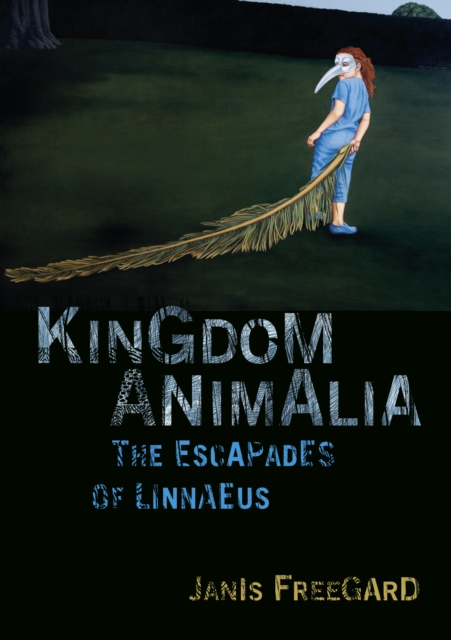
The poems in this first full collection from New Zealand's Janis Freegard are categorized by Linnaean taxonomy: the six sections Mammalia, Aves, Amphibia, Pisces, Insecta, and Vermes are interspersed with a seven-part poem on the topic of Carolus Linneaus himself. Here Freegard catalogs the various fantastic and artistic, anthropomorphic and objective, rational and self-serving ways that humans draw on the animal world: as symbol and allegory, food and friend, ravening enemy, and sacred icon. From surreal prose poems to gorgeous lists—featuring a stuffed Maori dog, murderous magpies, and cake-shop cockroaches—Freegard's verse reflects the diversity of the animal kingdom and its light-hearted fancifulness belies a strong commitment to conservation.
eBook

Resurrection of the Animals
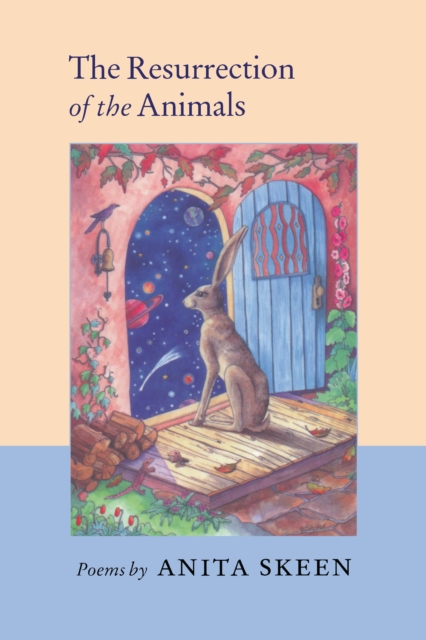
The Resurrection of the Animalsexplores the trinity of the natural world, the humans adrift in it, and the animals that accompany them. Although each of the five sections centers on a particular theme, motifs of change, loss, cycles, and transformation thread through the collection, weaving the parts into a unified whole. Individual sections focus on: the seasons of the year, and by extension, people's lives; the power of memory and its limitations; the theory that what is magical often resides within; and, the mysteries of love.The Resurrection of the Animalsculminates in the title section, revealing the lessons of kinship with animals and how epiphanies occur in the simplest actions-taking a walk with dogs or catching sight of a bird on the wing. These poems suggest that memory, association, and interaction with the tangible world can revive a part of the self that has slipped below the depths of consciousness.
eBook