
Catalogue Search | MBRL


Are you sure you want to remove the book from the shelf?

{{itemTitle}}
19
result(s) for
"Animal behavior Miscellanea."
Sort by:


What Would Animals Say If We Asked the Right Questions?
\"You are about to enter a new genre, that of scientific fables, by which I don't mean science fiction, or false stories about science, but, on the contrary, true ways of understanding how difficult it is to figure out what animals are up to.\" -Bruno Latour, form the Foreword
Is it all right to urinate in front of animals? What does it mean when a monkey throws its feces at you? Do apes really know how to ape? Do animals form same-sex relations? Are they the new celebrities of the twenty-first century? This book poses twenty-six such questions that stretch our preconceived ideas about what animals do, what they think about, and what they want.
In a delightful abecedarium of twenty-six chapters, Vinciane Despret argues that behaviors we identify as separating humans from animals do not actually properly belong to humans. She does so by exploring incredible and often funny adventures about animals and their involvements with researchers, farmers, zookeepers, handlers, and other human beings. Do animals have a sense of humor? In reading these stories it is evident that they do seem to take perverse pleasure in creating scenarios that unsettle even the greatest of experts, who in turn devise newer and riskier hypotheses that invariably lead them to conclude that animals are not nearly as dumb as previously thought.
These deftly translated accounts oblige us, along the way, to engage in both ethology and philosophy. Combining serious scholarship with humor that will resonate with anyone, this book-with a foreword by noted French philosopher, anthropologist, and sociologist of science Bruno Latour-is a must not only for specialists but also for general readers, including dog owners, who will never look at their canine companions the same way again.
eBook


Why Do Bees Buzz?
Twenty-five thousand species of bees certainly create a loud buzz. Yet silence descended a few years ago when domesticated bee populations plummeted. Bees, in particular honey bees, are critical links in the vibrant chain that brings fruits, vegetables, and nuts to markets and dinner tables across the country. Farmers and scientists on the agricultural frontlines quickly realized the impact of this loss, but many others did not see this devastation.Why Do Bees Buzz?reports on the mysterious \"colony collapse disorder\" that has affected honey bee populations, as well as other captivating topics, such as their complex, highly social lives, and how other species of bees are unique and different from honey bees. Organized in chapters that cover everything from these provocative pollinators' basic biology to the aggressive nature of killer bees, this insightful question and answer guide provides a honeycomb of compelling facts.With clarity and depth, bee biologist Elizabeth Capaldi Evans and coauthor Carol A. Butler examine the lives of honey bees, as well as other species such as orchid bees, bumblebees, and stingless bees. Accessible to readers on every level, and including the latest research and theory for the more sophisticated reader, the authors reveal more than one hundred critical answers to questions about the lives of bees.Concepts about speciation, evolutionary adaptation and pollination, as well as historical details about topics such as Mayan beekeeping and the appearance of bees in rock art, are arranged in easy-to-follow sidebars that highlight the text. Color and black and white photographs and drawings enhance the beauty and usefulness ofWhy Do Bees Buzz?
eBook

Pipsqueaks, slowpokes, and stinkers : celebrating animal underdogs
\"[This book] introduces young readers to a variety of animal underdogs and explains how characteristics that might seem like weaknesses are critical for finding food and staying safe in an eat-or-be-eaten world.\"--Publisher description.
Book

Do Hummingbirds Hum?
Hummingbirds may be the smallest birds in the world, but they have the biggest appetites. Their wings flutter on average fifty to eighty times each second as they visit hundreds of flowers over the course of a day to sip the sweet nectar that sustains them. Their hearts beat nearly twelve hundred times a minute and their rapid breathing allows these amazing birds to sustain their unique manner of flight. They can hover in the air for prolonged periods, fly backwards using forceful wings that swivel at the shoulder, and dive at nearly two hundred miles per hour. Native only to the Americas, some hummingbirds have been known to migrate from Mexico to Alaska in the course of a season. Watching a hummingbird at a backyard feeder, we only see its glittering iridescent plumage and its long, narrow beak; its rapidly moving wings are a blur to our eyes.These tiny, colorful birds have long fascinated birders, amateur naturalists, and gardeners. But, do they really hum?InDo Hummingbirds Hum?George C. West, who has studied and banded over 13,500 hummingbirds in Arizona, and Carol A. Butler provide an overview of hummingbird biology for the general reader, and more detailed discussions of their morphology and behavior for those who want to fly beyond the basics. Enriched with beautiful and rare photography, including a section in vivid color, this engaging question and answer guide offers readers a wide range of information about these glorious pollinators as well as tips for attracting, photographing, and observing hummingbirds in the wild or in captivity.
eBook

Extreme animals
Describes animals that have unique characteristics, including the cheetah, peregrine falcon, sunfish, and star-nosed mole.
Book
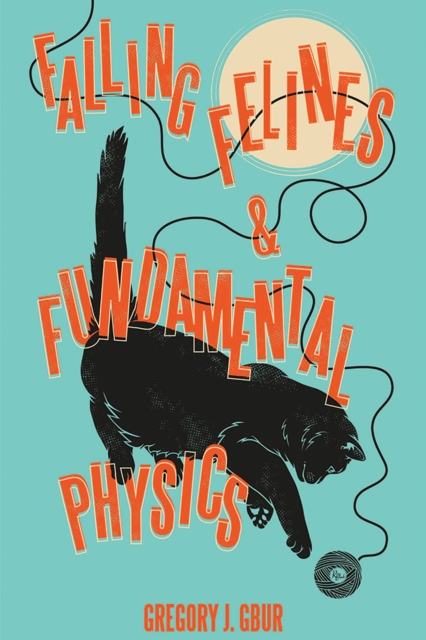
Falling Felines and Fundamental Physics
How do cats land on their feet? Discover how this question stumped brilliant minds and how its answer helped solve other seemingly impossible puzzles The question of how falling cats land on their feet has long intrigued humans. In this playful and eye†'opening history, physicist and cat parent Gregory Gbur explores how attempts to understand the cat†'righting reflex have provided crucial insights into puzzles in mathematics, geophysics, neuroscience, and human space exploration. The result is an engaging tumble through physics, physiology, photography, and robotics to uncover, through scientific debate, the secret of the acrobatic performance known as cat†'turning, the cat flip, and the cat twist. Readers learn the solution but also discover that the finer details still inspire heated arguments. As with other cat behavior, the more we investigate, the more surprises we discover.
eBook

Gross out! : animals that do disgusting things
Describes the distasteful habits of a variety of animals, including squirting blood from the eyes to scare predators, stealing other birds' vomit, and eating dung.
Book

Fishes
One fish, two fish, red fish, nearly thirty thousand species of fish—or fishes, as they are properly called when speaking of multiple species. This is but one of many things the authors of this fascinatingly informative book reveal in answering common and not-so-common questions about this ubiquitous group of animals. Fishes range in size from tiny gobies to the massive Ocean Sunfish, which weighs thousands of pounds. They live in just about every body of water on the planet. Ichthyologists Gene Helfman and Bruce Collette provide accurate, entertaining, and sometimes surprising answers to over 100 questions about these water dwellers, such as \"How many kinds of fishes are there?\" \"Can fishes breathe air?\" \"How smart are fishes?\" and \"Do fishes feel pain?\" They explain how bony fishes evolved, the relationship between them and sharks, and why there is so much color variation among species. Along the way we also learn about the Devils Hole Pupfish, which has the smallest range of any vertebrate in the world; Lota lota, the only freshwater fish to spawn under ice; the Candiru, a pencil-thin Amazonian catfish that lodges itself in a very personal place on male bathers and must be removed surgically; and many other curiosities. With more than 100 photographs—including two full-color photo galleries—and the most up-to-date facts on the world's fishes from two premier experts, this fun book is the perfect bait for any curious naturalist, angler, or aquarist.
eBook