
Catalogue Search | MBRL


Are you sure you want to remove the book from the shelf?

{{itemTitle}}
2,554
result(s) for
"Animal communication -- Philosophy"
Sort by:


The speaking animal
Animals regularly populate philosophical texts as a foil to illustrate what it means to be human. How should we understand this human-animal divide? Not only does it inform us of who we are, it also tells us how we should relate to the larger non-human world. The Speaking Animal interrogates the human-animal divide by looking at our linguistic differences – how the speaking human subject is constructed through its opposition to the dumb animal. Alison Suen begins with an analysis of the role of language in animal ethics, with an eye toward the voice/voiceless opposition that is at work in animal advocacy. After offering a critical analysis of the ethical and political significance of speaking for animals, the book takes on a more constructive turn, going against the usual interpretation of language as a capacity that allows us to reason. Instead, it argues that our language capacity is also a relational capacity. Language is that which enables us to develop kinship with others – including animal others.
eBook
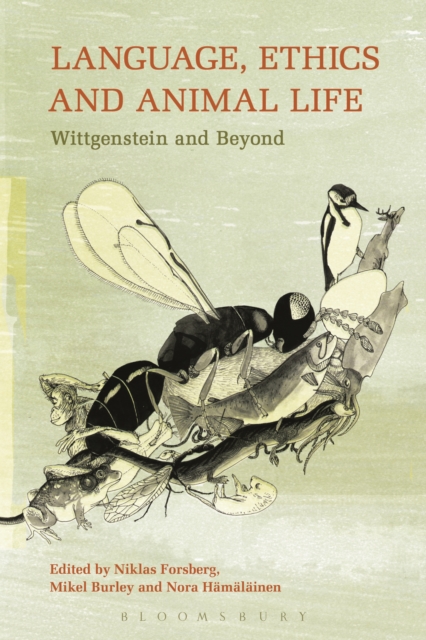
Language, ethics and animal life : Wittgenstein and beyond
New research into human and animal consciousness, a heightened awareness of the methods and consequences of intensive farming, and modern concerns about animal welfare and ecology are among the factors that have made our relationship to animals an area of burning interest in contemporary philosophy. Utilizing methods inspired by Ludwig Wittgenstein, the contributors to this volume explore this area in a variety of ways. Topics discussed include: scientific vs. non-scientific ways of describing human and animal behaviour; the ethics of eating particular animal species; human nature, emotions, and instinctive reactions; responses of wonder towards the natural world; the moral relevance of literature; the concept of dignity; and the question whether non-human animals can use language. This book will be of great value to anyone interested in philosophical and interdisciplinary issues concerning language, ethics and humanity's relation to animals and the natural world.
eBook

Art for animals : visual culture and animal advocacy, 1870-1914
Animal rights activists today regularly use visual imagery in their efforts to shape the public's understanding of what it means to be \"kind,\" \"cruel,\" and \"inhumane\" toward animals. Art for Animals explores the early history of this form of advocacy through the images and the people who harnessed their power. Following in the footsteps of earlier-formed organizations like the RSPCA and ASPCA, animal advocacy groups such as the Victoria Street Society for the Protection of Animals from Vivisection made significant use of visual art in literature and campaign materials. But, enabled by new and improved technologies and techniques, they took the imagery much further than their predecessors did, turning toward vivid, pointed, and at times graphic depictions of human-animal interactions. Keri Cronin explains why the activist community embraced this approach, details how the use of such tools played a critical role in educational and reform movements in the United States, Canada, and England, and traces their impact in public and private spaces. Far from being peripheral illustrations of points articulated in written texts or argued in impassioned speeches, these photographs, prints, paintings, exhibitions, \"magic lantern\" slides, and films were key components of animal advocacy at the time, both educating the general public and creating a sense of shared identity among the reformers. Uniquely focused on imagery from the early days of the animal rights movement and filled with striking visuals, Art for Animals sheds new light on the history and development of modern animal advocacy.
eBook
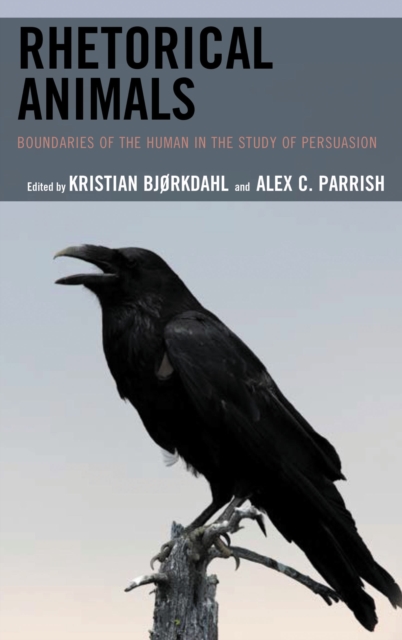
Rhetorical animals
For this edited volume, the editors solicited chapters that investigate the place of nonhuman animals in the purview of rhetorical theory; what it would mean to communicate beyond the human community; how rhetoric reveals our \"brute roots.\" In other words, this book investigates themes that enlighten us about likely or possible implications of the animal turn within rhetorical studies. The present book is unique in its focus on the call for nonanthropocentrism in rhetorical studies. Although there have been many hints in recent years that rhetoric is beginning to consider the implications of the animal turn, as yet no other anthology makes this its explicit starting point and sustained objective. Thus, the various contributions to this book promise to further the ongoing debate about what rhetoric might be after it sheds its long-standing humanistic bias.
eBook

Sensory Ecology, Behaviour, and Evolution
Throughout their lives, animals must complete many tasks, from finding food, avoiding predators, and attracting mates to navigating through the environment. To do so, they must gather and use a range of information from the world around them and from other individuals. For this, animals have evolved a staggering diversity of sensory organs that are both fundamental to survival and reproduction and shape much of evolution and behaviour. Sensory ecology deals with how animals acquire, process, and use information in behaviour and many other aspects of their lives, and the importance of this in evolution. This book is an introduction to sensory ecology, covering the various sensory modalities across all taxonomic groups. Rather than treating each sensory modality separately, they are discussed together from a behavioural and evolutionary approach with the aim of illustrating key principles and differences across modalities and taxonomic groups. Not only does sensory ecology deal with how the senses work and their use in behaviour, but recent work has also dealt more with the role of sensory systems in evolutionary change, as well as new developments in molecular biology and phylogenetics. The book begins with an introduction to the concepts of information and behaviour, followed by a discussion of the sensory systems that exist, how they work, and features of nerve cells and circuits. It then discusses key issues in communication, and the role of sensory systems and information in larger scale evolutionary processes, such as coevolution and speciation. Throughout the book, examples are given from various modalities and taxonomic groups, relating to diverse areas ranging from anti-predator strategies, foraging, and mate choice to navigation.
eBook

Intentions in interactions: an enactive reply to expressive communication proposals
The search for origins of human linguistic behavior is a consuming project in many fields. Philosophers drawing on studies of animal behavior are working to revise some of the standard cognitive requirements in hopes of linking the origins of human language to non-human animal communication. This work depends on updates to Grice’s theory of communicative intention and Millikan’s teleosemantics. Yet the classic idea of speaker meaning on which these new projects rest presupposes coherent, stable, individual, internal, and prior intention as a cognitive or mental state, which is also the framework presupposed in theory of mind. This framework neglects the co-authored nature of communicative intentions and is thereby at odds with enactivist views of cognition. In this paper we draw on the idea of participatory sense-making alongside research on non-human animal communication to identify
utterances—
co-authored meaningful acts—as the token of communicative activity cross-species. Utterances by our definition are expressive, relational, and work without mindreading. In closing we propose the possibility of dialogical subjectivity, and engage with animal studies to show that some species exhibit its traits.
Journal Article

How to do things with nonwords: pragmatics, biosemantics, and origins of language in animal communication
Recent discussions of animal communication and the evolution of language have advocated adopting a ‘pragmatics-first’ approach, according to which “a more productive framework” for primate communication research should be “pragmatics, the field of linguistics that examines the role of context in shaping the meaning of linguistic utterances” (Wheeler and Fischer, Evol Anthropol 21:195–205, 2012: 203). After distinguishing two different conceptions of pragmatics that advocates of the pragmatics-first approach have implicitly relied on (one Carnapian, the other Gricean), I argue that neither conception adequately serves the purposes of pragmatics-first approaches to the origins of human linguistic communication. My main aim in this paper is to motivate–and begin to articulate–an intermediary conception whose scope is narrower than Carnapian pragmatics but broader than Gricean pragmatics. To do so, I first spell out what I take to be the key insight offered by proponents of the Gricean approach concerning the emergence of linguistic communication, namely, its being communication ‘from a psychological point of view’ (Tomasello, Origins of human communication, MIT Press, Cambridge MA, 2008). I then develop this insight using key elements from the anti-Gricean ‘biosemantic’ account of linguistic communication due to Ruth Millikan (Millikan, Language, thought, and other biological categories: New foundations for realism, MIT Press, Cambridge MA, 1984, Millikan, Tomberlin (ed), Philosophical Perspectives 9, Ridgeview Publishing, Atascedero CA, 1995, Millikan R (2006) Varieties of Meaning. Mass.: The MIT Press (paperback edition), Cambridge, Millikan, Beyond concepts: unicepts, language, and natural information, Oxford University Press, Oxford UK, 2017, and elsewhere). I argue that the intermediary pragmatics-first approach that I propose, which draws on both Gricean and Millikanian resources, would be better equipped to serve the purposes of those who search for potential precursors of human linguistic communication in animal communication.
Journal Article

Formant analysis of vertebrate vocalizations: achievements, pitfalls, and promises
When applied to vertebrate vocalizations, source-filter theory, initially developed for human speech, has revolutionized our understanding of animal communication, resulting in major insights into the form and function of animal sounds. However, animal calls and human nonverbal vocalizations can differ qualitatively from human speech, often having more chaotic and higher-frequency sources, making formant measurement challenging. We review the considerable achievements of the “formant revolution” in animal vocal communication research, then highlight several important methodological problems in formant analysis. We offer concrete recommendations for effectively applying source-filter theory to non-speech vocalizations and discuss promising avenues for future research in this area.
Brief
Formants (vocal tract resonances) play key roles in animal communication, offering researchers exciting promise but also potential pitfalls.
Journal Article

Compositionality in Different Modalities: A View from Usage-Based Linguistics
The field of linguistics concerns itself with understanding the human capacity for language. Compositionality is a key notion in this research tradition. Compositionality refers to the notion that the meaning of a complex linguistic unit is a function of the meanings of its constituent parts. However, the question as to whether compositionality is a defining feature of human language is a matter of debate: usage-based and constructionist approaches emphasize the pervasive role of idiomaticity in language, and argue that strict compositionality is the exception rather than the rule. We review the major discussion points on compositionality from a usage-based point of view, taking both spoken and signed languages into account. In addition, we discuss theories that aim at accounting for the emergence of compositional language through processes of cultural transmission as well as the debate of whether animal communication systems exhibit compositionality. We argue for a view that emphasizes the analyzability of complex linguistic units, providing a template for accounting for the multimodal nature of human language.
Journal Article