
Catalogue Search | MBRL


Are you sure you want to remove the book from the shelf?

{{itemTitle}}
33,301
result(s) for
"Animal feeding behavior"
Sort by:

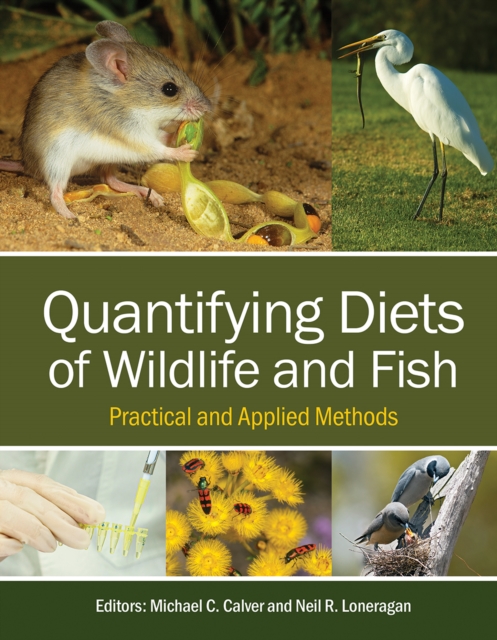
Quantifying Diets of Wildlife and Fish
Quantifying Diets of Wildlife and Fish presents different techniques available to study animal diets. Ecologists determine animal diets to build natural history knowledge, test hypotheses in ecological theory and make informed management decisions for important ecosystems. Many researchers use techniques traditionally applied to the animals they study, rather than techniques with the greatest potential for the aims of each project. In an effort to encourage researchers to consider new approaches, this book focuses on the techniques, rather than on particular groups of organisms or specific environments.With contributions from leading ecologists, chapters explore experimental design, observational techniques (including new technologies), stomach contents and faecal analysis, eDNA, tracers and stable isotopes. They also cover the latest multivariate methods of analyses suitable for describing animal diets and feeding relationships, as well as testing hypotheses relevant to ecological theory, environmental management and biological conservation. The expert knowledge provided will encourage readers to look beyond the boundaries of their specialties, assist in testing important hypotheses and provide insights into management problems. The examples in this book cover a range of vertebrates and invertebrates, as well as different environments, to open these methods up for novice ecologists and stimulate lateral thinking in more experienced researchers.
eBook


Begging behavior influenced food allocation on Creamy-bellied Thrush
The way parents allocate food among the nestlings in a brood has been the subject of several studies in recent years. Previous works have shown that parents sometimes decide who is going to receive the food according to food availability, nestlings' begging behavior, or the position of a chick in the nest. In this work, we studied the characteristics of the nestling that receives food first in nests with and without experimental food reinforcement in the Creamy-bellied Thrush (Tardus amaurochalinus). Every time parents arrived at the nest, we recorded which of the nestlings received Ibod and its characteristics related to its siblings: size, position, and begging intensity. We found that food allocation was not explained by treatment, size, age. or position of nestlings. Our results also showed that there were no differences in nestling survival among control and experimental nests. However, parents preferentially fed the chick that demanded food first and raised its head higher than its siblings. Received IS March 2021. Accepted 10 February 21)22.
Journal Article
Interspecific feeding at a bird nest: Snowy-browed Flycatcher nest, Yunnan, Southwest China
Interspecific feeding has been recorded for many bird species worldwide, especially in Europe, yet little information is available on interspecific feeding in China. Here we report a first sighting of an interspecific feeding case between a Rufous-bellied Niltava (Niltava sundara) and a Snowy-browed Flycatcher (Ficedula hyperythra) observed in the Ailao Mountains in Yunnan Province. According to the images and films captured by a camera trap, a male Snowy-browed Flycatcher was found serving as a helper at the nest of a Rufous-bellied Niltava on 17 June 2017. The helping behavior lasted for at least 2 d. The Rufous-bellied Niltava parents showed no aggression when the helper approached their nestlings. We cannot determine the causes of the reported interspecific feeding of the nestlings because the prior history of any of adults involved is unclear. The Rufous-bellied Niltava nestlings' begging behavior might have stimulated the interspecific feeding by the male Snowy-browed Flycatcher. Received 21 July 2017. Accepted 2 September 2018.
Journal Article
\An inordinate fondness for beetles\: first description of Common Nighthawk
We present the first description of Common Nighthawk (Chordeiles minor) diet from the boreal biome. Knowledge of diet is important for this crepuscular aerial insectivore, whose population declines may be related to insect food sources. We collected 4 nestling diet samples as food boluses from 1 adult female and 3 adult males on the breeding grounds in northern Alberta, Canada. Coleopterans comprised the majority of samples, and the composition of the sample from the female differed from those collected from males. Further research is needed across the boreal forest to characterize foraging strategies and assess the potential role of food availability in population declines. Received 14 December 2016. Accepted 18 January 2017.
Journal Article
Seed size, bill morphology, and handling time influence preferences for native vs. nonnative grass seeds in three declining sparrows / Tamano de semilla, morfologia del pico y tiempo de manipulacion influyen sobre las preferencias de semillas de pastos nativos vs. exoticos en tres gorriones en derive
The invasion of exotic grasses is a potential threat to the winter habitat of migratory grassland birds by reducing native sources of seed food. We compared seed preferences among 3 native (blue grama [Bouteloua gracilis], sideoats grama [Bouteloua curtipendula], and green sprangletop [Leptochloa dubia]), and 3 exotic (Lehmann lovegrass [Eragrostis lehmanniana], buffelgrass [Pennisetum ciliare], and natal grass [Melinis repens]) grass seeds in captive Baird's (Ammodramus bairdii), Grasshopper (A. savannarum), and Savannah (Passerculus sandwichensis) sparrows to investigate factors that determine vulnerability of grassland passerines to exotic grasses in the Chihuahuan Desert. We hypothesized that seed handling time would determine the ability of sparrows to exploit exotic grass seeds, and that larger-billed birds would be able to better exploit a larger variety of seeds, including exotic seeds. We offered seeds in choice and nonchoice trials and determined handling times for the different seed and bird species. The results indicate that handling time in relation to seed size determined seed preferences. Sparrows preferred seeds they could handle more efficiently to maximize energy intake over time. Baird's and Savannah sparrows, with intermediate and small bill sizes, respectively, preferred natal grass seeds of intermediate size and short handling time, and Grasshopper Sparrows, with the largest bill, preferred the larger sideoats grama seeds. Lehmann lovegrass, the smallest seed with intermediate handling time, was avoided by the 3 sparrows. Buffelgrass, the largest seed with the longest handling time, was avoided by Baird's and Savannah sparrows. Blue grama, the second-smallest seed with relative short handling time, was neither preferred nor avoided, and green sprangletop, an intermediate-sized seed with a relatively longer handling time, was avoided in the choice trials but consumed in the nonchoice trials. These results indicate that exotic grass seeds may be a source offood for 3 sparrows wintering in the Chihuahuan Desert, provided they can be handled efficiently. Our results also show, however, that wintering grassland sparrows are probably unable to consume sufficient buffelgrass and Lehmann lovegrass seeds to meet daily energy requirements, indicating that these grasses may be a threat by reducing exploitable sources of seed food. Received 6 January 2017. Accepted 7 January 2018.
Journal Article
Light Pollution Allows the Northern Mockingbird (Mimus polyglottos) to Feed Nestlings After Dark
We investigated whether Northern Mockingbirds (Mimus polyglottos) alter their nocturnal foraging behavior in areas with artificial light at night. We observed mockingbirds after sunset at six study sites that varied in levels of artificial light. We hypothesized that birds at the parking lot and residential sites would feed their nestlings later at night because of light pollution. The average time past sunset that birds across all sites continued to feed nestlings was positively correlated with average light level around the nest. Mockingbirds in the parking lot fed their nestlings ∼15 mins later than those in the other sites, suggesting that this abundant urban species can exploit light pollution.
Journal Article

Effects of Helpers on Juvenile Development and Survival in Meerkats
Although breeding success is known to increase with group size in several cooperative mammals, the mechanisms underlying these relationships are uncertain. We show that in wild groups of cooperative meerkats, Suricata suricatta, reductions in the ratio of helpers to pups depress the daily weight gain and growth of pups and the daily weight gain of helpers. Increases in the daily weight gain of pups are associated with heavier weights at independence and at 1 year of age, as well as with improved foraging success as juveniles and higher survival rates through the first year of life. These results suggest that the effects of helpers on the fitness of pups extend beyond weaning and that helpers may gain direct as well as indirect benefits by feeding pups.
Journal Article

Food and Heat Stress in the California Mussel: Evidence for an Energetic Trade-off Between Survival and Growth
In response to thermal stress, many rocky shore organisms exhibit characteristic physiological changes associated with increased tolerance to subsequent high temperatures. Although presumably adaptive, activation of the heat-shock response requires a significant energetic investment and therefore may impose a trade-off between survival and other life-history traits. We investigated the effects of chronic heat stress and variation in food availability on the relative allocation of resources to competing demographic parameters in the California mussel, Mytilus californianus. Our data support the idea that acclimatory responses to temperature stress can drive trade-offs among traits, as predicted by theory. Chronic heat stress invoked a cost to individuals, expressed as a reduction in shell growth or size-specific tissue mass in the field and laboratory, respectively. At the same time, prior thermal conditioning resulted in higher proportional survival after acute exposure to more extreme temperatures. Overall, mussels receiving less food exhibited poor condition and survival relative to individuals fed more, suggesting that individuals with limited access to resources are at greater risk because they are less able to mitigate potential costs of thermal stress through physiological mechanisms. Accurately forecasting the effects of climate change in rocky intertidal ecosystems will therefore require understanding not just how organisms respond to different temperature regimes, but also how variation in local resource availability modifies those responses.
Journal Article