
Catalogue Search | MBRL


Are you sure you want to remove the book from the shelf?

{{itemTitle}}
2,023
result(s) for
"Animal rights History."
Sort by:

The cry of nature : art and the making of animal rights
The cry of nature' reveals how humans engaged in the struggle for animal emancipation and examines for the first time the role of visual art in the growth of animal rights. Embracing the lessons of Montaigne, Rousseau, and many others, they proposed that humans and animals have a shared evolutionary heritage of sentience, intelligence and empathy, and deserve equal access to the domain of moral rights. From the mid-eighteenth century a new and more compassionate understanding of animals began to challenge prevailing views. Witnessing the pain and hearing the outcry of the animals massed together in the great cities of Europe, sympathetic writers and artists argued that animals were neither slaves nor automata, and possessed the capacity to feel and even think. Refuting the biblical dispensation of humans' dominion over animals, they contended that animals possessed inalienable rights. Thus was born a global movement that fundamentally changed how we understand our relationship to the natural world.
Book

For the prevention of cruelty : the history and legacy of animal rights activism in the United States
Animal rights. Those two words conjure diverse but powerful images and reactions. Some nod in agreement, while others roll their eyes in contempt. Most people fall somewhat uncomfortably in the middle, between endorsement and rejection, as they struggle with the profound moral, philosophical, and legal questions provoked by the debate. Today, thousands of organizations lobby, agitate, and educate the public on issues concerning the rights and treatment of nonhumans.
For the Prevention of Cruelty is the first history of organized advocacy on behalf of animals in the United States to appear in nearly a half century. Diane Beers demonstrates how the cause has shaped and reshaped itself as it has evolved within the broader social context of the shift from an industrial to a postindustrial society.
Until now, the legacy of the movement in the United States has not been examined. Few Americans today perceive either the companionship or the consumption of animals in the same manner as did earlier generations. Moreover, powerful and lingering bonds connect the seemingly disparate American Society for the Prevention of Cruelty to Animals of the nineteenth century and the People for the Ethical Treatment of Animals of today. For the Prevention of Cruelty tells an intriguing and important story that reveals society's often changing relationship with animals through the lens of those who struggled to shepherd the public toward a greater compassion.
eBook

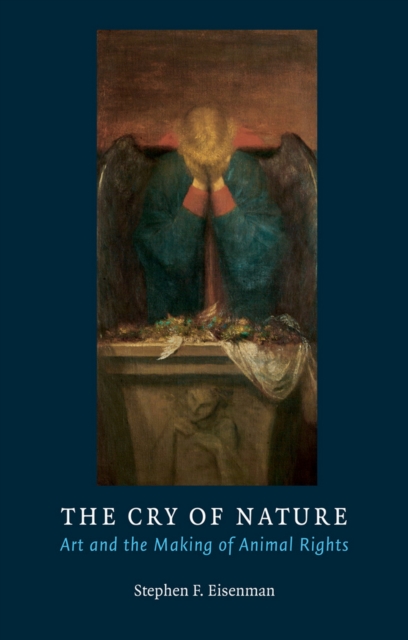
The cry of nature
The eighteenth century saw the rise of new and more sympathetic understanding of animals as philosophy, literature, and art argued that animals could feel and therefore possess inalienable rights. This idea gave birth to a diverse movement that affects how we understand our relationship to the natural world. The Cry of Nature details a crucial period in the history of this movement, revealing the significant role art played in the growth of animal rights. Stephen F. Eisenman shows how artists from William Hogarth to Pablo Picasso and Sue Coe have represented the suffering, chastisement, and execution of animals. These artists, he demonstrates, illustrate the lessons of Montaigne, Rousseau, Darwin, Freud, and others-that humans and animals share an evolutionary heritage of sentience, intelligence, and empathy, and thus animals deserve equal access to the domain of moral right. Eisenman also traces the roots of speciesism to the classical world and describes the social role of animals in the demand for emancipation. Instructive, challenging, and always engaging, The Cry of Nature is a book for anyone interested in animal rights, art history, and the history of ideas.
eBook

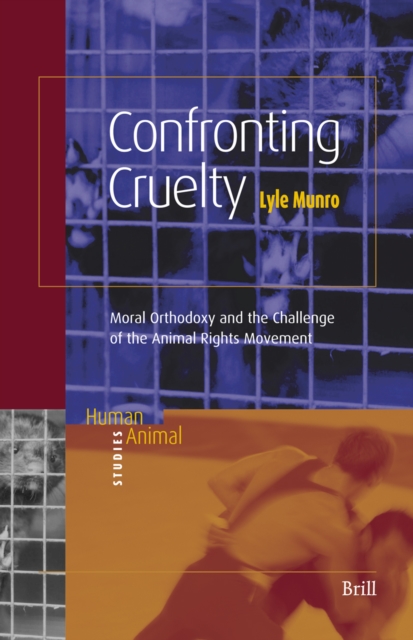
Confronting cruelty
Confronting Cruelty is a sociological study of the animal rights movement in the United States, England and Australia. Social movement theory is used to analyse animal cruelty and how and why activists seek to end it in their various campaigns.
eBook


The Death of Animals in Medical School
Although live animals had been used in medical education for millennia, with recent changes at Johns Hopkins and the University of Tennessee, every core U.S. medical school curriculum has now ceased this practice. It is worth considering the causes and implications of this milestone.
In May 2016, the Johns Hopkins University School of Medicine discontinued use of live pigs in its surgical clerkship, a practice introduced by William Halsted in 1895. Although live animals had been used in medical education for millennia, the practice has now been abolished from the standard curriculum of every U.S. medical school. It is worth considering the causes and implications of this milestone.
Use of live animals had become nearly ubiquitous in U.S. medical schools by the mid-20th century. In a 1989 survey, nearly 90% of U.S. physicians reported that live-animal labs constituted an “essential” part of their education. . . .
Journal Article


What animals want
This book presents a history of animal rights. It brings a novel, sociological perspective to an area that has been addressed largely from a philosophical perspective, or from the entrenched positions of highly committed advocates of a particular position in the debate. This book is about the people who would speak for animals in laboratories. On the one hand, people vie to speak on animals' behalf in the policy arena, to advocate for them in a forum in which they have no direct voice. Animal protectionists are immediately obvious in this role, but so are veterinarians, other animal care professionals, and many scientists. On the other hand, speaking for animals means interpreting them, translating their animal minds into human language; it's a claim of expertise and knowledge rather than commitment and advocacy. But the two are intimately intertwined, and many of the policy debates examined in this book are about these two ways of speaking for animals. This book is offered to those who are hoping for some sort of balance that promotes animal welfare and biomedical progress, not platitudes or irrelevant rules with no real impact in animals' lives.
eBook