
Catalogue Search | MBRL


Are you sure you want to remove the book from the shelf?

{{itemTitle}}
37,787
result(s) for
"Animal rights movement"
Sort by:


For the prevention of cruelty : the history and legacy of animal rights activism in the United States
Animal rights. Those two words conjure diverse but powerful images and reactions. Some nod in agreement, while others roll their eyes in contempt. Most people fall somewhat uncomfortably in the middle, between endorsement and rejection, as they struggle with the profound moral, philosophical, and legal questions provoked by the debate. Today, thousands of organizations lobby, agitate, and educate the public on issues concerning the rights and treatment of nonhumans.
For the Prevention of Cruelty is the first history of organized advocacy on behalf of animals in the United States to appear in nearly a half century. Diane Beers demonstrates how the cause has shaped and reshaped itself as it has evolved within the broader social context of the shift from an industrial to a postindustrial society.
Until now, the legacy of the movement in the United States has not been examined. Few Americans today perceive either the companionship or the consumption of animals in the same manner as did earlier generations. Moreover, powerful and lingering bonds connect the seemingly disparate American Society for the Prevention of Cruelty to Animals of the nineteenth century and the People for the Ethical Treatment of Animals of today. For the Prevention of Cruelty tells an intriguing and important story that reveals society's often changing relationship with animals through the lens of those who struggled to shepherd the public toward a greater compassion.
eBook


Game changer
Are conservation and protecting animals the same thing? In Game Changer, award-winning environmental reporter Glen Martin takes a fresh look at this question as it applies to Africa's megafauna. Martin assesses the rising influence of the animal rights movement and finds that the policies championed by animal welfare groups could lead paradoxically to the elimination of the very species—including elephants and lions—that are the most cherished. In his anecdotal and highly engaging style, Martin takes readers to the heart of the conflict. He revisits the debate between conservationists, who believe that people whose lives are directly impacted by the creation of national parks and preserves should be compensated, versus those who believe that restrictive protection that forbids hunting is the most effective way to conserve wildlife and habitats. Focusing on the different approaches taken by Kenya, Tanzania, and Namibia, Martin vividly shows how the world's last great populations of wildlife have become the hostages in a fight between those who love animals and those who would save them.
eBook

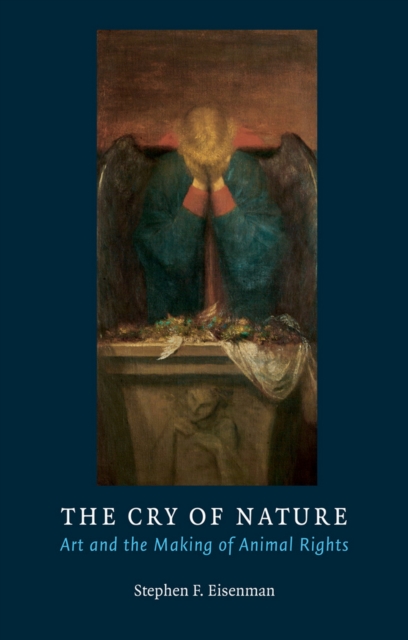
The cry of nature
The eighteenth century saw the rise of new and more sympathetic understanding of animals as philosophy, literature, and art argued that animals could feel and therefore possess inalienable rights. This idea gave birth to a diverse movement that affects how we understand our relationship to the natural world. The Cry of Nature details a crucial period in the history of this movement, revealing the significant role art played in the growth of animal rights. Stephen F. Eisenman shows how artists from William Hogarth to Pablo Picasso and Sue Coe have represented the suffering, chastisement, and execution of animals. These artists, he demonstrates, illustrate the lessons of Montaigne, Rousseau, Darwin, Freud, and others-that humans and animals share an evolutionary heritage of sentience, intelligence, and empathy, and thus animals deserve equal access to the domain of moral right. Eisenman also traces the roots of speciesism to the classical world and describes the social role of animals in the demand for emancipation. Instructive, challenging, and always engaging, The Cry of Nature is a book for anyone interested in animal rights, art history, and the history of ideas.
eBook

The cry of nature : art and the making of animal rights
The cry of nature' reveals how humans engaged in the struggle for animal emancipation and examines for the first time the role of visual art in the growth of animal rights. Embracing the lessons of Montaigne, Rousseau, and many others, they proposed that humans and animals have a shared evolutionary heritage of sentience, intelligence and empathy, and deserve equal access to the domain of moral rights. From the mid-eighteenth century a new and more compassionate understanding of animals began to challenge prevailing views. Witnessing the pain and hearing the outcry of the animals massed together in the great cities of Europe, sympathetic writers and artists argued that animals were neither slaves nor automata, and possessed the capacity to feel and even think. Refuting the biblical dispensation of humans' dominion over animals, they contended that animals possessed inalienable rights. Thus was born a global movement that fundamentally changed how we understand our relationship to the natural world.
Book

Emotion work in animal rights activism: A moral-sociological perspective
Social movement activism requires emotional motivation and entails emotional costs, and, because of this, activists tend to be deeply involved in the management of emotions — or emotion work — and not just in connection with protest events, but also on an everyday basis. Based on a case study of animal rights activism in Sweden, this article identifies five types of emotion work that animal rights activists typically perform: containing, ventilation, ritualization, micro-shocking and normalization of guilt. The emotion work performed by activists, it is argued, is best understood from a moral-sociological perspective building on Durkheim's sociology of morality, based on which the article then outlines key elements of a comprehensive theoretical framework for the study of emotion work in social movements.
Journal Article

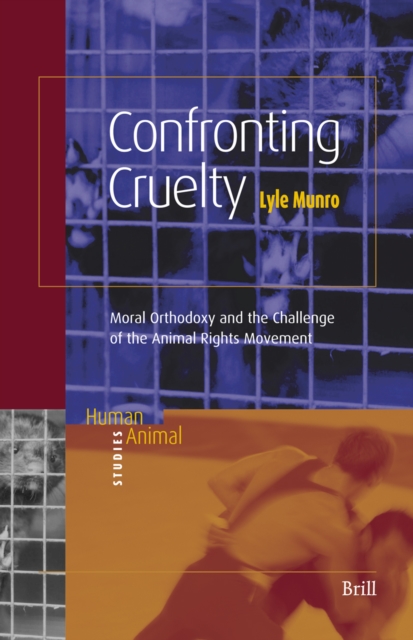
Confronting cruelty
Confronting Cruelty is a sociological study of the animal rights movement in the United States, England and Australia. Social movement theory is used to analyse animal cruelty and how and why activists seek to end it in their various campaigns.
eBook