
Catalogue Search | MBRL


Are you sure you want to remove the book from the shelf?

{{itemTitle}}
52,012
result(s) for
"Animal taxonomy"
Sort by:

Two new genera of songbirds represent endemic radiations from the Shola Sky Islands of the Western Ghats, India
Background
A long-standing view of Indian biodiversity is that while rich in species, there are few endemics or in-situ radiations within the subcontinent. One exception is the Western Ghats biodiversity hotspot, an isolated mountain range with many endemic species. Understanding the origins of the montane-restricted species is crucial to illuminate both taxonomic and environmental history.
Results
With evidence from genetic, morphometric, song, and plumage data, we show that two songbird lineages endemic to the Western Ghats montane forest each have diversified into multiple distinct species. Historically labeled as single species of widespread Asian genera, these two lineages are highly divergent and do not group with the taxa in which they were previously classified but rather are distinct early divergences in larger Asian clades of flycatchers and babblers. Here we designated two new genera, the Western Ghats shortwings as
Sholicola
and the laughingthrushes as
Montecincla
, and evaluated species-limits to reflect distinct units by revising six previously named taxa and describing one novel species. Divergence dating showed that both these montane groups split from their Himalayan relatives during the Miocene, which is coincident with a shift towards arid conditions that fragmented the previously contiguous humid forest across peninsular India and isolated these lineages in the Western Ghats. Furthermore, these two genera showed congruent patterns of diversification across the Western Ghats Sky Islands, coincident with other climatic changes.
Conclusion
Our study reveals the existence of two independent endemic radiations in the high montane Western Ghats or Shola Sky Islands with coincident divergence times, highlighting the role of climate in the diversification of these ancient lineages. The endemic and highly divergent nature of these previously unrecognized species underscores the dearth of knowledge about the biogeography of the Asian tropics, even for comparatively well-known groups such as birds. The substantial increase in the diversity of this region underscores the need for more rigorous systematic analysis to inform biodiversity studies and conservation efforts.
Journal Article

Common names for all species and subspecies of the genus Anguilla
Scientific naming rules of animals are strictly defined by the International Code of Zoological Nomenclature, while those for common names are vague and not well defined. Specifically, the common names of freshwater eels of the genus Anguilla have become confused among scientific papers, pictorial books, and online resources in recent years. This disordered use of common names among freshwater eels demonstrates the urgent need for the standardization of common names for these species. In addition, freshwater eel populations have drastically decreased worldwide over the past few decades, resulting in their listing as endangered species. In the present study, we defined the following five rules for the common names of freshwater eels: to (1) use a representative locality name of the geographic distribution of the species or subspecies, (2) distinguish two sympatric species or subspecies as longfin or shortfin, (3) select a name that would enable the scientific name to be easily recalled, (4) value longstanding former common names if they adhere to the above three rules, and (5) use the shortest name possible. Based on current scientific knowledge and on these rules, we proposed 22 common names for all known 19 species and subspecies of the genus. As a result, 21, 6, 13, and 3 species and subspecies were named based on Rules (1), (2), (3), and (4), respectively.
Journal Article

Systematics of Spiny Predatory Katydids
Listroscelidinae (Orthoptera: Tettigoniidae) are insectivorous Pantropical katydids whose taxonomy presents a long history of controversy, with several genera incertae sedis. This work focused on species occurring in the Brazilian Atlantic Forest, one of the world's most threatened biomes. We examined material deposited in scientific collections and visited 15 conservation units from Rio de Janeiro to southern Bahia between November 2011 and January 2012, catching 104 specimens from 10 conservation units. Based on morphological and molecular data we redefined Listroscelidini, adding a new tribe, new genus and eight new species to the subfamily. Using morphological analysis, we redescribed and added new geographic records for six species, synonymized two species and built a provisional identification key for the Atlantic Forest Listroscelidinae. Molecular results suggest two new species and a new genus to be described, possibly by the fission of the genus Hamayulus. We also proposed a 500 bp region in the final portion of the COI to be used as a molecular barcode. Our data suggest that the Atlantic Forest Listroscelidinae are seriously endangered, because they occur in highly preserved forest remnants, show high rates of endemism and have a narrow geographic distribution. Based on our results, we suggest future collection efforts must take into account the molecular barcode data to accelerate species recognition.
Journal Article

An inverse latitudinal gradient in speciation rate for marine fishes
Far more species of organisms are found in the tropics than in temperate and polar regions, but the evolutionary and ecological causes of this pattern remain controversial
1
,
2
. Tropical marine fish communities are much more diverse than cold-water fish communities found at higher latitudes
3
,
4
, and several explanations for this latitudinal diversity gradient propose that warm reef environments serve as evolutionary ‘hotspots’ for species formation
5
–
8
. Here we test the relationship between latitude, species richness and speciation rate across marine fishes. We assembled a time-calibrated phylogeny of all ray-finned fishes (31,526 tips, of which 11,638 had genetic data) and used this framework to describe the spatial dynamics of speciation in the marine realm. We show that the fastest rates of speciation occur in species-poor regions outside the tropics, and that high-latitude fish lineages form new species at much faster rates than their tropical counterparts. High rates of speciation occur in geographical regions that are characterized by low surface temperatures and high endemism. Our results reject a broad class of mechanisms under which the tropics serve as an evolutionary cradle for marine fish diversity and raise new questions about why the coldest oceans on Earth are present-day hotspots of species formation.
Contrary to previous hypotheses, high-latitude fish lineages form new species at much faster rates than their tropical counterparts especially in geographical regions that are characterized by low surface temperatures and high endemism.
Journal Article

Evolution of trans-Andean endemic fishes of the genus Cheirodon (Teleostei: Characidae) are associated with chromosomal rearrangements
BackgroundAmong Neotropical fishes, the family Characidae is highly diverse and speciose and its taxonomy is not completely resolved. In Chile, the family is represented by five species, all within the genus Cheirodon, of which C. pisciculus, C. galusdae, C. kiliani, and C. australe are endemic, while C. interruptus is introduced. We compared chromosomal markers in order to appreciate the taxonomy and evolution of these trans-Andean fishes.ResultsThe specimens were photographed in stereomicroscope to observe the ventral protrusive teeth and cusps for morphological analysis and species identification. All of the species analysed had equally diploid chromosome number 2n = 50, with karyotypes dominated by high number of acrocentric chromosomes as compared to those of other members of Cheirodontinae. The distribution of heterochromatin was inconspicuous and was similar in all the species. The number of active NORs (nucleolus organizer regions) was polymorphic, with the greater number of them in C. kiliani and C. galusdae. The location of 5S and 18S rDNA ranged in number and position, showing two sites in different chromosomes. The fluorescent in situ hybridization with telomeric probe did not reveal interstitial sites in all analysed species.ConclusionsThe comparative analysis of karyotypes and morphological markers revealed a biogeographic pattern of distribution, with the species that occur in the southern region forming one group and those in central and northern Chile forming another.
Journal Article
How Many Kinds of Birds Are There and Why Does It Matter?
Estimates of global species diversity have varied widely, primarily based on variation in the numbers derived from different inventory methods of arthropods and other small invertebrates. Within vertebrates, current diversity metrics for fishes, amphibians, and reptiles are known to be poor estimators, whereas those for birds and mammals are often assumed to be relatively well established. We show that avian evolutionary diversity is significantly underestimated due to a taxonomic tradition not found in most other taxonomic groups. Using a sample of 200 species taken from a list of 9159 biological species determined primarily by morphological criteria, we applied a diagnostic, evolutionary species concept to a morphological and distributional data set that resulted in an estimate of 18,043 species of birds worldwide, with a 95% confidence interval of 15,845 to 20,470. In a second, independent analysis, we examined intraspecific genetic data from 437 traditional avian species, finding an average of 2.4 evolutionary units per species, which can be considered proxies for phylogenetic species. Comparing recent lists of species to that used in this study (based primarily on morphology) revealed that taxonomic changes in the past 25 years have led to an increase of only 9%, well below what our results predict. Therefore, our molecular and morphological results suggest that the current taxonomy of birds understimates avian species diversity by at least a factor of two. We suggest that a revised taxonomy that better captures avian species diversity will enhance the quantification and analysis of global patterns of diversity and distribution, as well as provide a more appropriate framework for understanding the evolutionary history of birds.
Journal Article
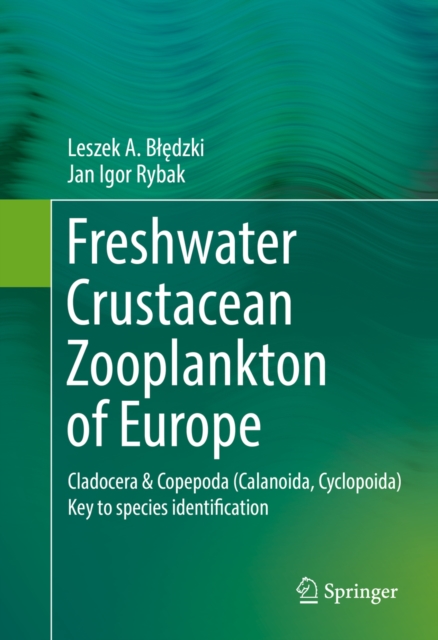
Freshwater crustacean zooplankton of Europe : cladocera & copepoda (calanoida, cyclopoida) key to species identification, with notes on ecology, distribution, methods and introduction to data analysis
This work provides a user-friendly, species level taxonomic key based on morphology, current nomenclature, and modern taxonomy using molecular tools which fulfill the most pressing needs of both researchers and environmental managers.This key arms the reader with the tools necessary to improve their species identification abilities.
eBook
The Diversity-Weighted Living Planet Index: Controlling for Taxonomic Bias in a Global Biodiversity Indicator
As threats to species continue to increase, precise and unbiased measures of the impact these pressures are having on global biodiversity are urgently needed. Some existing indicators of the status and trends of biodiversity largely rely on publicly available data from the scientific and grey literature, and are therefore prone to biases introduced through over-representation of well-studied groups and regions in monitoring schemes. This can give misleading estimates of biodiversity trends. Here, we report on an approach to tackle taxonomic and geographic bias in one such indicator (Living Planet Index) by accounting for the estimated number of species within biogeographical realms, and the relative diversity of species within them. Based on a proportionally weighted index, we estimate a global population decline in vertebrate species between 1970 and 2012 of 58% rather than 20% from an index with no proportional weighting. From this data set, comprising 14,152 populations of 3,706 species from 3,095 data sources, we also find that freshwater populations have declined by 81%, marine populations by 36%, and terrestrial populations by 38% when using proportional weighting (compared to trends of -46%, +12% and +15% respectively). These results not only show starker declines than previously estimated, but suggests that those species for which there is poorer data coverage may be declining more rapidly.
Journal Article
Global Biogeography of Reef Fishes: A Hierarchical Quantitative Delineation of Regions
Delineating regions is an important first step in understanding the evolution and biogeography of faunas. However, quantitative approaches are often limited at a global scale, particularly in the marine realm. Reef fishes are the most diversified group of marine fishes, and compared to most other phyla, their taxonomy and geographical distributions are relatively well known. Based on 169 checklists spread across all tropical oceans, the present work aims to quantitatively delineate biogeographical entities for reef fishes at a global scale. Four different classifications were used to account for uncertainty related to species identification and the quality of checklists. The four classifications delivered converging results, with biogeographical entities that can be hierarchically delineated into realms, regions and provinces. All classifications indicated that the Indo-Pacific has a weak internal structure, with a high similarity from east to west. In contrast, the Atlantic and the Eastern Tropical Pacific were more strongly structured, which may be related to the higher levels of endemism in these two realms. The \"Coral Triangle\", an area of the Indo-Pacific which contains the highest species diversity for reef fishes, was not clearly delineated by its species composition. Our results show a global concordance with recent works based upon endemism, environmental factors, expert knowledge, or their combination. Our quantitative delineation of biogeographical entities, however, tests the robustness of the results and yields easily replicated patterns. The similarity between our results and those from other phyla, such as corals, suggests that our approach may be of broad utility in describing and understanding global marine biodiversity patterns.
Journal Article