
Catalogue Search | MBRL


Are you sure you want to remove the book from the shelf?

{{itemTitle}}
33,443
result(s) for
"Animals Adaptations."
Sort by:


Sensory evolution on the threshold
From crocodiles and penguins to seals and whales, this comprehensive and authoritative synthesis explores the function and evolution of sensory systems in animals whose ancestors lived on land. Together, the contributors explore the dramatic transformation of smell, taste, sight, hearing, balance, mechanoreception, magnetoreception, and electroreception that occurred as lineages of amphibians, reptiles, birds, and mammals returned to aquatic environments. Each chapter integrates data from fields including sensory physiology, anatomy, paleontology, and neurobiology. A one-stop source for information on the sense organs of secondarily aquatic tetrapods, Sensory Evolution on the Threshold sheds new light on both the evolution of aquatic vertebrates and the sensory biology of their astonishing transition.
eBook

Jim Henson's tale of sand
An original graphic novel adaptation of an unproduced, feature-length screenplay follows scruffy everyman Mac, who wakes up in an unfamiliar town and is chased across the desert of the American Southwest by all manners of man and beast of unimaginable proportions.
Book

Ice, Fire, and Nutcrackers
Why do quaking aspens grow in prominent clumps rather than randomly scattered across the landscape? Why and how does a rufous hummingbird drop its metabolism to one-hundredth of its normal rate? Why do bull elk grow those enormous antlers? Using his experience as a biologist and ecologist, George Constantz illuminates these remarkable slices of mountain life in plain but engaging language. Whether it sketches conflict or cooperation, surprise or familiarity, each story resolves when interpreted through the theory of evolution by natural selection.
These provocative accounts of birds, insects, rodents, predators, trees, and flowers are sure to stir the reader’s curiosity. Who wouldn’t be intrigued by a rattlesnake’s ability to hunt in total darkness by detecting the infrared radiation emitted by a mouse? Or how white-tailed ptarmigan thrive in their high, treeless alpine environments -- even through the winter? The narratives, often brought home with a counterintuitive twist, invite readers to make new connections and broaden perspectives of a favorite outdoor place.
eBook

The Ninjabread Man
In this adaptation of the traditional Gingerbread man, Ninjabread Man escapes the Sensei, and defeats Ninja Bear, Ninja Snake and Ninja Mouse, only to be eaten by the clever Ninja Fox.
Book

Genomic adaptations to aquatic and aerial life in mayflies and the origin of insect wings
The evolution of winged insects revolutionized terrestrial ecosystems and led to the largest animal radiation on Earth. However, we still have an incomplete picture of the genomic changes that underlay this diversification. Mayflies, as one of the sister groups of all other winged insects, are key to understanding this radiation. Here, we describe the genome of the mayfly
Cloeon dipterum
and its gene expression throughout its aquatic and aerial life cycle and specific organs. We discover an expansion of odorant-binding-protein genes, some expressed specifically in breathing gills of aquatic nymphs, suggesting a novel sensory role for this organ. In contrast, flying adults use an enlarged opsin set in a sexually dimorphic manner, with some expressed only in males. Finally, we identify a set of wing-associated genes deeply conserved in the pterygote insects and find transcriptomic similarities between gills and wings, suggesting a common genetic program. Globally, this comprehensive genomic and transcriptomic study uncovers the genetic basis of key evolutionary adaptations in mayflies and winged insects.
Genomic studies of paleopteran insects, such as mayflies, are needed to reconstruct early insect evolution. Here, Almudi and colleagues present the genome of the mayfly
Cloeon dipterum
and use transcriptomics to characterize its adaptations to distinct habitats and the origin of insect wings.
Journal Article


cultural niche: Why social learning is essential for human adaptation
In the last 60,000 y humans have expanded across the globe and now occupy a wider range than any other terrestrial species. Our ability to successfully adapt to such a diverse range of habitats is often explained in terms of our cognitive ability. Humans have relatively bigger brains and more computing power than other animals, and this allows us to figure out how to live in a wide range of environments. Here we argue that humans may be smarter than other creatures, but none of us is nearly smart enough to acquire all of the information necessary to survive in any single habitat. In even the simplest foraging societies, people depend on a vast array of tools, detailed bodies of local knowledge, and complex social arrangements and often do not understand why these tools, beliefs, and behaviors are adaptive. We owe our success to our uniquely developed ability to learn from others. This capacity enables humans to gradually accumulate information across generations and develop well-adapted tools, beliefs, and practices that are too complex for any single individual to invent during their lifetime.
Journal Article

Pecos Bill, monster wrangler : a graphic novel
Raised by Sasquatches, Pecos Bill now lives with the Crypto Kids Gang on a ranch devoted to protecting mythical creatures, and travels the world finding cryptids and bringing them to the sanctuary--but the ranch is getting crowded, the waterholes are drying up, and a girl named Sue is determined to ride Bill's bunyip, despite being warned about the tempermental beast.
Book
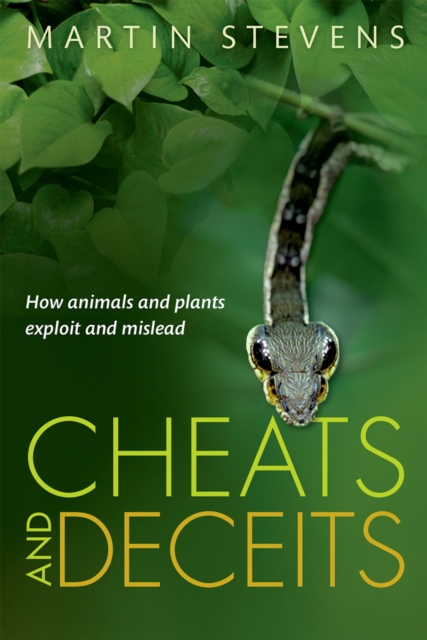
Cheats and Deceits
In Cheats and Deceits, Martin Stevens describes the remarkable range of adaptations in nature, and considers how they have evolved and increasingly been perfected as part of an arms race between predator and prey or host and parasite. He explores both classic and recent research of naturalists and biologists, showing how scientists find ways of testing the impact of particular behaviors and colorings on the animals it is meant to fool. Drawing on a wide range of examples, Stevens considers what deception tells us about the process of evolution and adaptation.--AMAZON.
eBook