
Catalogue Search | MBRL


Are you sure you want to remove the book from the shelf?

{{itemTitle}}
17,838
result(s) for
"Animals Color."
Sort by:

Animals : black and white
While one page presents specific information which serves as a clue to the identity of a particular black and white animal, the next page reveals the name of the animal.
Book
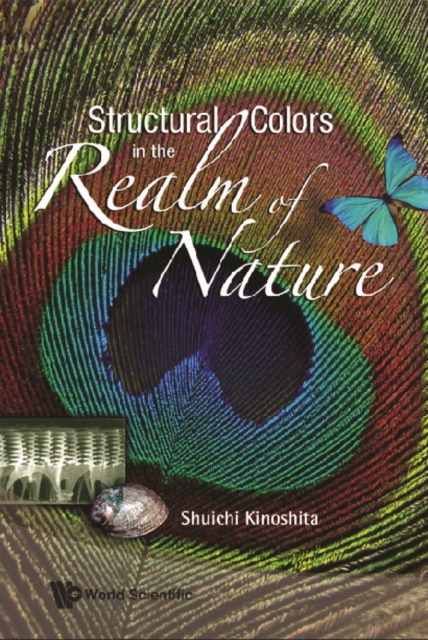
Structural colors in the realm of nature
Structural colorations originate from self-organized microstructures, which interact with light in a complex way to produce brilliant colors seen everywhere in nature. Research in this field is extremely new and has been rapidly growing in the last 10 years, because the elaborate structures created in nature can now be fabricated through various types of nanotechnologies. Indeed, a fundamental book covering this field from biological, physical, and engineering viewpoints has long been expected.
eBook

Pink is for blobfish : discovering the world's perfectly pink animals
\"An ... introduction to the weirdest, wildest, pinkest creatures in the animal kingdom\"-- Provided by publisher.
Book

The genetic basis of the kakapÅ structural color polymorphism suggests balancing selection by an extinct apex predator
The information contained in population genomic data can tell us much about the past ecology and evolution of species. We leveraged detailed phenotypic and genomic data of nearly all living kakapÅ to understand the evolution of its feather color polymorphism. The kakapÅ is an endangered and culturally significant parrot endemic to Aotearoa New Zealand, and the green and olive feather colorations are present at similar frequencies in the population. The presence of such a neatly balanced color polymorphism is remarkable because the entire population currently numbers less than 250 birds, which means it has been exposed to severe genetic drift. We dissected the color phenotype, demonstrating that the two colors differ in their light reflectance patterns due to differential feather structure. We used quantitative genomics methods to identify two genetic variants whose epistatic interaction can fully explain the species' color phenotype. Our genomic forward simulations show that balancing selection might have been pivotal to establish the polymorphism in the ancestrally large population, and to maintain it during population declines that involved a severe bottleneck. We hypothesize that an extinct apex predator was the likely agent of balancing selection, making the color polymorphism in the kakapÅ a \"ghost of selection past.\"
Journal Article


The current and future state of animal coloration research
Animal colour patterns are a model system for understanding evolution because they are unusually accessible for study and experimental manipulation. This is possible because their functions are readily identifiable. In this final paper of the symposium we provide a diagram of the processes affecting colour patterns and use this to summarize their functions and put the other papers in a broad context. This allows us to identify significant ‘holes’ in the field that only become obvious when we see the processes affecting colour patterns, and their interactions, as a whole. We make suggestions about new directions of research that will enhance our understanding of both the evolution of colour patterns and visual signalling but also illuminate how the evolution of multiple interacting traits works.
This article is part of the themed issue ‘Animal coloration: production, perception, function and application’.
Journal Article

Walking sticks and other amazing camouflage
A look at some animals who depend on camouflage to escape enemies.
Book

Copepods’ true colors: astaxanthin pigmentation as an indicator of fitness
Pigmentation is often overlooked in zooplankton, since these organisms are mostly colorless to fit the translucid water medium. However, one of the dominant zooplankton taxa in aquatic ecosystems—copepods—often show a bright red-orange or blue coloration owing to the accumulation of carotenoid pigments in some parts of their bodies. Even though there are many functional traits describing copepod’s performance (e.g., size, feeding, and reproductive modes), it is surprising that the role of such a simple and visible trait as coloration has not been studied in a coherent manner yet. Here, by reviewing 95 studies, we demonstrate that carotenoid-based pigmentation (mainly caused by astaxanthin molecules) is a widespread functional trait in freshwater and marine copepods. We propose a way to disentangle the complex and thus intriguing patterns of pigment expression along latitudinal and altitudinal gradients, addressing its relationship to diet quality and quantity, temperature, ultraviolet radiation stress, predation pressure, lipid metabolism, and reproduction. We show that large-scale variations in pigmentation are difficult to tackle because of the fundamental plasticity of this trait at short time scales (i.e., hours, days), and the most recent information about carotenoid bioconversion are addressed (genes and enzyme identification, and influence of microbiota). From this literature review, we hypothesize that pigments play a “Swiss-army knife” role for copepod’s fitness, useful in various ecosystem conditions owing to the strong antioxidant power and the finely-tuned metabolism of astaxanthin. With larger antioxidant capacities (survival), higher metabolisms (growth), and more offspring in better condition (reproduction), red morphs appear more successful than their uncolored siblings. Also, the potential camouflage strategies allowed by red and blue pigmentation are discussed. We finally formulate new directions and future research fields from molecular to ecosystem scales. Routine quantifications of copepod’s pigmentation through trait-based approaches could be useful (1) to obtain an accurate copepod fitness indicator and (2) to better estimate the transfer of antioxidant to higher trophic levels in ecosystems, including humans.
Journal Article

How animals hide
\"Describes how different animals hide from other animals by looking like their background, changing their physical appearance, and by altering their movement. Includes comprehension activity\"--Provided by publisher.
Book

The genomics of coloration provides insights into adaptive evolution
Coloration is an easily quantifiable visual trait that has proven to be a highly tractable system for genetic analysis and for studying adaptive evolution. The application of genomic approaches to evolutionary studies of coloration is providing new insight into the genetic architectures underlying colour traits, including the importance of large-effect mutations and supergenes, the role of development in shaping genetic variation and the origins of adaptive variation, which often involves adaptive introgression. Improved knowledge of the genetic basis of traits can facilitate field studies of natural selection and sexual selection, making it possible for strong selection and its influence on the genome to be demonstrated in wild populations.Colour traits have been useful for studying the genetics underlying adaptive evolution. This Review discusses how genomic technologies are providing a deeper understanding of these traits, revealing fresh insights into their genetic architecture, evolvability and origins of adaptive variation.
Journal Article