
Catalogue Search | MBRL


Are you sure you want to remove the book from the shelf?

{{itemTitle}}
1,854
result(s) for
"Animals Great Britain."
Sort by:

Cry of the wild : eight animals under siege
\"A fox, grown strong on pepperoni pizza from the dustbins of the East End, dances along a railway track towards Essex, the territory of wild foxes and wilder huntsmen. An orca, mourning the loss of her mother in a valley west of Skye, knows that she must now lead the pod as matriarch. She swims again through her childhood, thinking about the old ways, the old roads, laid down thousands of years ago. But the old roads aren't so easy now. At moonrise in a West Country river, an otter floats slowly downstream. The tide, though it pushes him landwards when it exhales, seems to pull him out when it inhales. He turns on his back. He can see the stars clearly for the first time and wonders if he can swim to them. The land has never stopped waiting. It has only ever been in exile, right under our noses, waiting to confound, outrage and re-enchant\"--Publisher's description.
Book

Beastly Possessions
InBeastly Possessions, Sarah Amato chronicles the unusual ways in which Victorians of every social class brought animals into their daily lives. Captured, bred, exhibited, collected, and sold, ordinary pets and exotic creatures - as well as their representations - became commodities within Victorian Britain's flourishing consumer culture.
As a pet, an animal could be a companion, a living parlour decoration, and proof of a household's social and moral status. In the zoo, it could become a public pet, an object of curiosity, a symbol of empire, or even a consumer mascot. Either kind of animal might be painted, photographed, or stuffed as a taxidermic specimen.
Using evidence ranging from pet-keeping manuals and scientific treatises to novels, guidebooks, and ephemera, this fascinating, well-illustrated study opens a window into an underexplored aspect of life in Victorian Britain.
eBook

Curious creatures on our shores
\"This veritable marine treasure trove of a book is richly illustrated by the author, with fifty of the most beautiful, easily encountered, and sometimes astonishing marine organisms found on British coasts, from seemingly exotic seahorses and starfish, to peculiar sea-potatoes and sea lemons.0Together, these characterful critters paint a colourful picture of life between the tides: starfish that, upon losing an arm, can grow a new one; baby sharks hatching from their fancifully named \"mermaid' purses\"; ethereal moon jellyfish pulsating in the current and, on some seabeds, even coral. Beachcombing, overturning a boulder or simply parting the strands of seaweed in a rock pool offer a glimpse into a thriving underwater world of curious creatures. 0Inspired by the Oxford University of Natural History's exceptionally rich zoology collections, which contain millions of specimens amassed from centuries of expeditions, this book tells the story of life on the seashore.\"--Publisher's description.
Book

Extinctions and Invasions
Eight thousand years ago, when the sea cut Britain off from the rest of the Continent, the island's fauna was very different: most of the animals familiar to us today were not present, whilst others, now extinct, were abundant. Over the course of millennia humans have manipulated Britain's fauna. For reasons of fear, suspicion, desire, or simply inadvertently, certain species were brought to extinction. In their place new animals were introduced: some transported purposefully by invading populations, others sent as royal gifts from far off lands, whilst several species arrived as stowaways. The story of each is fascinating, telling of the changing and multi-layered relationship between humans and animals. Drawing on new research in the fields of archaeology, ecology and history, this book examines how human society, culture, diet, lifestyles and even whole landscapes were fundamentally shaped by the animal extinctions and introductions that occurred in Britain since the last Ice Age. In its 22 chapters a wide range of mammal, bird, fish, snail and insect species are considered. All of the chapters include new and original research presented by authors who are acknowledged experts on their specific topic. Extinctions and Invasions advances our understanding of Britain's natural history whilst dispelling the myths that have become established in both popular and academic literature. It is written in a style accessible to the general reader, whilst providing the depth of research needed by academic researchers. Extinctions and Invasions provides a valuable single source of information for archaeologists, natural historians and conservation biologists, as well as interested laypeople.
eBook

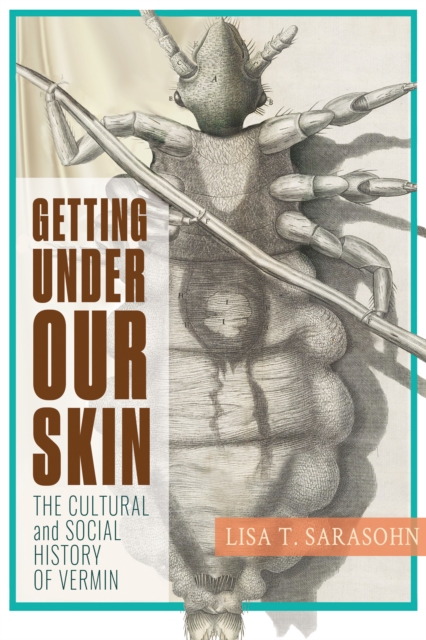
Getting under our skin : the cultural and social history of vermin
How vermin went from being part of everyone's life to a mark of disease, filth, and lower status.
For most of our time on this planet, vermin were considered humanity's common inheritance. Fleas, lice, bedbugs, and rats were universal scourges, as pervasive as hunger or cold, at home in both palaces and hovels. But with the spread of microscopic close-ups of these creatures, the beginnings of sanitary standards, and the rising belief that cleanliness equaled class, vermin began to provide a way to scratch a different itch: the need to feel superior, and to justify the exploitation of those pronounced ethnically—and entomologically—inferior.
In Getting Under Our Skin, Lisa T. Sarasohn tells the fascinating story of how vermin came to signify the individuals and classes that society impugns and ostracizes. How did these creatures go from annoyance to social stigma? And how did people thought verminous become considered almost a species of vermin themselves? Focusing on Great Britain and North America, Sarasohn explains how the label \"vermin\" makes dehumanization and violence possible. She describes how Cromwellians in Ireland and US cavalry on the American frontier both justified slaughter by warning \"Nits grow into lice.\" Nazis not only labeled Jews as vermin, they used insecticides in the gas chambers to kill them during the Holocaust.
Concentrating on the insects living in our bodies, clothes, and beds, Sarasohn also looks at rats and their social impact. Besides their powerful symbolic status in all cultures, rats' endurance challenges all human pretentions. From eighteenth-century London merchants anointing their carved bedsteads with roasted cat to repel bedbugs to modern-day hedge fund managers hoping neighbors won't notice exterminators in their penthouses, the studies in this book reveal that vermin continue to fuel our prejudices and threaten our status. Getting Under Our Skin will appeal to cultural historians, naturalists, and to anyone who has ever scratched—and then gazed in horror.
eBook

Confronting cruelty
Confronting Cruelty is a sociological study of the animal rights movement in the United States, England and Australia. Social movement theory is used to analyse animal cruelty and how and why activists seek to end it in their various campaigns.
eBook

Animals in Saxon and Scandinavian England
In this book an analysis of over 300 animal bone assemblages from English Saxon and Scandinavian sites is presented. The data set is summarised in extensive tables for use as comparanda for future archaeozoological studies.Animals in Saxon and Scandinavian England takes as its core four broad areas of analysis. The first is an investigation of the diet of the population, and how food was used to establish social boundaries. Increasingly diverse diets are recognised, with high-status populations distinguishing themselves from other social sectors through the way food was redistributed and the diversity of taxa consumed.Secondly, the role of animals in the economy is considered, looking at how animal husbandry feeds into underlying modes of production throughout the Saxon period. From the largely self-sufficient early Saxon phase animal husbandry becomes more specialised to supply increasingly urban settlements. The ensuing third deliberation takes into account the foodways and interactions between producer and consumer sites, considering the distribution of food and raw materials between farm, table and craft worker. Fundamental changes in the nature of the Saxon economy distinguish a move away from food renders in the middle Saxon phase to market-based provisioning; opening the way for greater autonomy of supply and demand. Finally, the role of wics and burhs as centres of production is investigated, particularly the organisation of manufacture and provisioning with raw materials.
eBook