
Catalogue Search | MBRL


Are you sure you want to remove the book from the shelf?

{{itemTitle}}
12
result(s) for
"Animals Religious aspects Comparative studies."
Sort by:

Learning love from a tiger : religious experiences with nature
\"Learning Love from a Tiger explores the vibrancy and variety of humans' sacred encounters with the natural world, gathering a range of stories culled from Christian, Muslim, Hindu, Mayan, Himalayan, Buddhist, and Chinese shamanic traditions. Readers will delight in tales of house cats who teach monks how to meditate, rivers that grant salvation, shamans who shape-shift into jaguars, crickets who perform Catholic mass, and many others. More than a collection of wonderful stories, this book introduces important concepts and approaches that underlie much recent work in environmental ethics, religion, and ecology. Capper's light touch prompts readers to engage their own views of humanity's place in the natural world and in particular question longstanding assumptions of human superiority\"--Provided by publisher.
Book

Learning love from a tiger
Learning Love from a Tiger explores the vibrancy and variety of humans' sacred encounters with the natural world, gathering a range of stories culled from Christian, Muslim, Hindu, Mayan, Himalayan, Buddhist, and Chinese shamanic traditions. Readers will delight in tales of house cats who teach monks how to meditate, shamans who shape-shift into jaguars, crickets who perform Catholic mass, rivers that grant salvation, and many others. In addition to being a collection of wonderful stories, this book introduces important concepts and approaches that underlie much recent work in environmental ethics, religion, and ecology. Daniel Capper's light touch prompts readers to engage their own views of humanity's place in the natural world and question longstanding assumptions of human superiority.
eBook

Foreigners and their food
Foreigners and Their Food explores how Jews, Christians, and Muslims conceptualize \"us\" and \"them\" through rules about the preparation of food by adherents of other religions and the act of eating with such outsiders. David M. Freidenreich analyzes the significance of food to religious formation, elucidating the ways ancient and medieval scholars use food restrictions to think about the \"other.\" Freidenreich illuminates the subtly different ways Jews, Christians, and Muslims perceive themselves, and he demonstrates how these distinctive self-conceptions shape ideas about religious foreigners and communal boundaries. This work, the first to analyze change over time across the legal literatures of Judaism, Christianity, and Islam, makes pathbreaking contributions to the history of interreligious intolerance and to the comparative study of religion.
eBook

Ancient DNA analysis of elite nomadic warrior from Chinge-Tey I funerary commemorative complex in the “Valley of the Kings”, Tuva
Background
In the I
st
millennium BC bearers of the Scythian-type nomadic cultures inhabited the steppes of Eurasia, from Northern China to the Carpathians. According to archaeological data, the origin of nomadic life style and economy can be traced to the eastern part of this steppe “corridor”, primarily to the territory of the present-day Republic of Tuva in Russia. Here, in the Turan-Uyuk Basin, also known as the “Valley of the Kings”, some of the earliest known Scythian-type archaeological sites called Arzhan-1, Arzhan-2, Chinge-Tey I, Tunnug 1 were studied. Each of them is a large-scale funerary commemorative complex with burials of tribal nomadic leaders, surrounded by graves of supposed members of their families or associates. All these people belonged to the societies which are associated with the earliest nomadic cultures in Asia. Representatives of similar cultures will later be known and described as the Scythians/the Saka in Assyrian, Achaemenid, and Greek sources. Arzhan 2 and Chinge-Tey I elite level sites as well as ordinary pastoralist burials of the early-Scythian period in Tuva are attributed to the Aldy-Bel archaeological culture of the Early Iron Age (8th– 6th century BC). Taking the first step to shed light on the genetic origin of Aldy-Bel elites, we carried out a comparative genome-wide analysis of an elite level person buried in grave 9 at Chinge-Tey I (7th– 6th centuries BC) and two published earlier genomes of individuals, whose burials (graves 14 and 22) accompanied the ‘royal couple’ (grave 5) at Arzhan-2. This study aims also at checking a hypothesis of genetic kinship between human individuals buried in the large-scale burial complexes of the “Valley of the Kings” and brings up the issue of possible dynastic connections of local elites, buried under different kurgans of the valley.
Results
First, ancient DNA analysis of an elite nomadic warrior from Chinge-Tey I has been carried out, thus a third wide-genome dataset for Aldy-Bel culture– one of the earliest nomadic cultures in Asia, is presented in this study. Second, we undertook a comparative analysis of genome-wide data of three mentioned Aldy-Bel culture representatives and individuals of the other Bronze and Early Iron Age population groups of Asia to estimate their possible genetic connections. Then, kinship analysis was undertaken for these three Aldy-Bel culture individuals. Finally, mitochondrial and Y-chromosome haplogroups of Chinge-Tey princely person were compared to those of other Aldy-Bel culture representatives and to individuals of subsequent Scythian-type Uyuk-Sagly culture in Tuva.
Conclusion
(1) Generating the third wide-genome of the enabled us to undertake its comparison with two other genomes of Aldy-Bel culture representatives (Arzhan-2, graves 14 and 22) and with other Bronze and Early Iron Age population groups in Asia to trace the origin and genetic connection of Aldy-Bel population, representing one of the earliest Scythian-type nomadic group. (2) The results obtained show that the princely individual from Chinge-Tey I and two ‘king’s associates’ from Arzhan-2 were genetically close to nomads of simultaneous Tasmola culture in Eastern and Central Kazakhstan and pastoralists buried in the Early Iron Age cemeteries of present-day Xinjiang (first of all, Abusanteer archaeological site). Aldy-Bel culture representatives appeared also close to individuals of the Middle Bronze Age Okunevo culture in the Minusinsk Basin. Besides, Aldy-Bel pastoralists turned out genetically close to nomads of the subsequent Uyuk-Sagly culture in Mongolia (5th − 3rd centuries BC). (3) Ancient DNA kinship analyses, undertaken for three Aldy-Bel culture individuals pointed out to the absence of their tribe kinship. (4) On the other hand, Chinge-Tey warrior’s mitochondrial haplogroup G was previously described in two (graves 14 and 5) individuals from Arzhan-2, including a female individual from the “royal” tomb 5. This result provided a possibility of maternal kinship among this so called ‘queen’ from Arzhan-2 and the princely person from Chinge-Tey I. This possibility supported a hypothesis of their family ties suggested on archaeological materials. Y-chromosome haplogroup Q1b1, revealed for the princely person, was widely distributed among local people of Aldy-Bel and subsequent Uyuk-Sagly cultures.
Journal Article

War without limits: How sharp war theory is a historical anomaly
The “othering” of international humanitarian law has a demonstrated past resulting from the exclusion of so-called “Enemies of the Faith” from the laws of chivalry. It is no surprise, then, that the idea of “sharp war” should seem so natural to some commentators given its historical application “by the discretion of the commander and such rules of justice and humanity as recommend themselves in the particular circumstances of the case”. The application of humanitarian principles, in other words, was the measure of the commander's charity rather than the result of legal compulsion. The viability of sharp war appears to have increased in attractiveness as conventional State-on-State warfare has seemingly decreased in frequency; however, the question of sharp war has never been approached through a legal historical lens. Utilizing the research found in The Laws of Yesterday's Wars, a multi-author series edited by the present author, this paper seeks to fill this gap by scoping over a range of geographically and temporally disconnected case studies and the customary law developed to mitigate warfare. Ultimately, the paper highlights that “soft war” has naturally evolved in all cultures and that arguments for sharp war are a historical anomaly.
Journal Article

The Domestication of Souls
Abstract Following the distinction between horizontal and vertical shamanism originally proposed by Stephen Hugh-Jones, this article examines the concept of nagualism in different Mesoamerican indigenous societies and the role that animal domestication has played in these conceptions. Through a comparative study of indigenous societies like the Nahua, Huave, and Tzotzil Maya, different relationships between the human and animal worlds are analyzed in order to show the changes in ontological frameworks that took place during the colonial period, through the introduction of extensive livestock farming. As a protective institution, post-colonial nagualism developed in indigenous societies that have domesticated animals because farmers see their relationship with their flocks similarly to the connection between themselves and their protecting spirits.
Journal Article
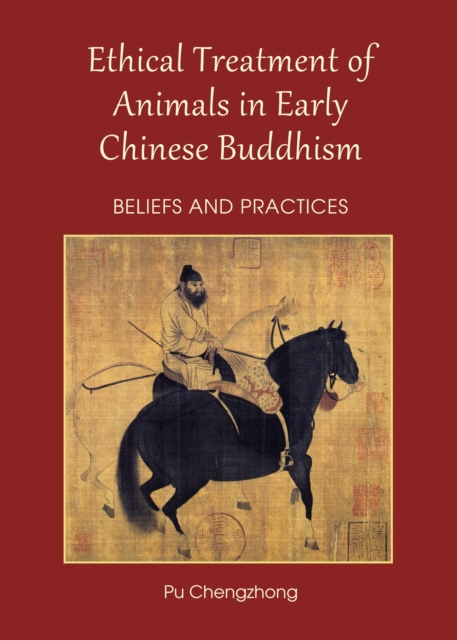
Ethical Treatment of Animals in Early Chinese Buddhism
Through detailed discussions of several Buddhist and Chinese moral concepts and beliefs and accompanied by some edifying short stories, this book investigates three types of ethical treatment of animals in early Chinese Buddhism: the imperial bans on animal sacrifice; the early development of the two unique and living traditions of vegetarianism; and the freeing of animals. The book presents a demonstration of the early Chinese acceptance of Indian Buddhism, providing the reader with a better.
eBook

Empire of religion : imperialism and comparative religion
How is knowledge about religion and religions produced, and how is that knowledge authenticated and circulated? David Chidester seeks to answer these questions in Empire of Religion, documenting and analyzing the emergence of a science of comparative religion in Great Britain during the second half of the nineteenth century and its complex relations to the colonial situation in southern Africa. In the process, Chidester provides a counterhistory of the academic study of religion, an alternative to standard accounts that have failed to link the field of comparative religion with either the power relations or the historical contingencies of the imperial project. In developing a material history of the study of religion, Chidester documents the importance of African religion, the persistence of the divide between savagery and civilization, and the salience of mediations—imperial, colonial, and indigenous—in which knowledge about religions was produced. He then identifies the recurrence of these mediations in a number of case studies, including Friedrich Max Müller's dependence on colonial experts, H. Rider Haggard and John Buchan's fictional accounts of African religion, and W. E. B. Du Bois's studies of African religion. By reclaiming these theorists for this history, Chidester shows that race, rather than theology, was formative in the emerging study of religion in Europe and North America. Sure to be controversial, Empire of Religion is a major contribution to the field of comparative religious studies.
eBook
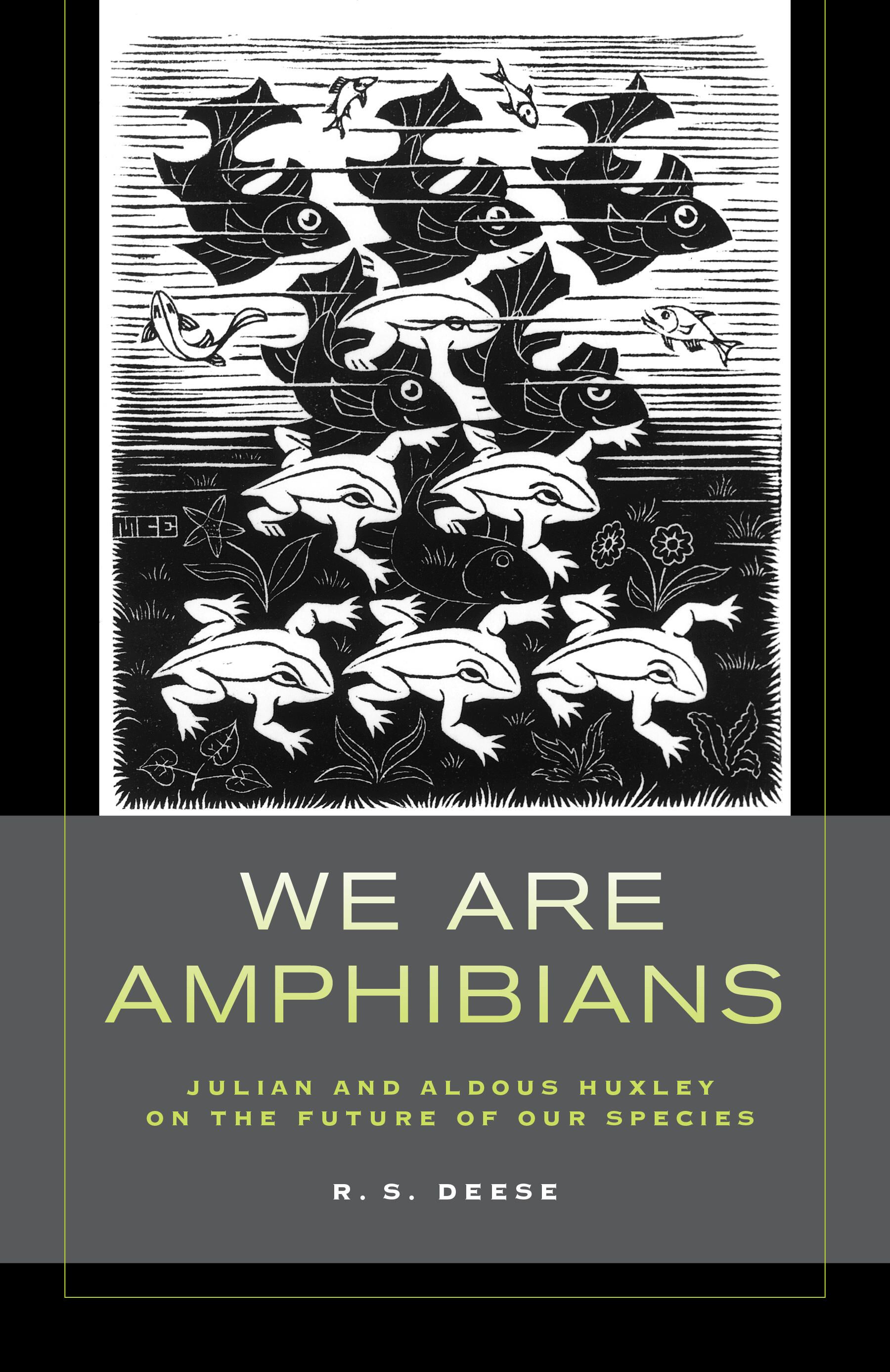
We are amphibians
We Are Amphibians tells the fascinating story of two brothers who changed the way we think about the future of our species. As a pioneering biologist and conservationist, Julian Huxley helped advance the \"modern synthesis\" in evolutionary biology and played a pivotal role in founding UNESCO and the World Wildlife Fund. His argument that we must accept responsibility for our future evolution as a species has attracted a growing number of scientists and intellectuals who embrace the concept of Transhumanism that he first outlined in the 1950s. Although Aldous Huxley is most widely known for his dystopian novel Brave New World, his writings on religion, ecology, and human consciousness were powerful catalysts for the environmental and human potential movements that grew rapidly in the second half of the twentieth century. While they often disagreed about the role of science and technology in human progress, Julian and Aldous Huxley both believed that the future of our species depends on a saner set of relations with each other and with our environment. Their common concern for ecology has given their ideas about the future of Homo sapiens an enduring resonance in the twenty-first century. The amphibian metaphor that both brothers used to describe humanity highlights not only the complexity and mutability of our species but also our ecologically precarious situation.
eBook

KTUNAXA NATION V. BRITISH COLUMBIA: A HISTORICAL AND CRITICAL ANALYSIS OF CANADIAN ABORIGINAL LAW
Aboriginal law is a developing and emerging area of the law in Canada. In fact, Aboriginal rights were not constitutionally protected until the ratification of the Canadian Constitution in 1982. What followed was a series of precedent-setting cases that clarified what rights meant under Section 35 of the Constitution, how Aboriginal title and rights could be established, and what duty the federal government had to the First Nations when trying to infringe on those rights. In 2017, the Canadian Supreme Court heard Ktunaxa Nation v. British Columbia, which was the first case to interpret Aboriginal rights under Section 2(a) religious freedoms claims of the Canadian Charter of Freedom and Rights. There, the Canadian Supreme Court decided that the Ktunaxa Nation did not have religious freedom claim under Section 2(a) over their traditional territory. The decision allowed Glacier Resorts Ltd. and the province of British Columbia to begin building a year-long ski resort that would destroy sacred Ktunaxa land and drive away the grizzly bear population-which played a significant role in the Ktunaxas religious beliefs. Given that the Ktunaxa brought a religious freedom claim under Section 2(a) of the Canadian Charter of Rights and Freedoms, their argument was not able to withstand scrutiny in Court. This demonstrated that Aboriginal peoples are instead more likely to succeed with claims under Section 35 of the Constitution. As such, instead of looking at Ktunaxa Nation v. British Columbia as another precedent-setting case, this case is arguably of little precedential value given the limited record that was available when the Supreme Court of Canadian heard the case.
Journal Article