
Catalogue Search | MBRL


Are you sure you want to remove the book from the shelf?

{{itemTitle}}
24,049
result(s) for
"Animals in literature."
Sort by:

The bedside book of beasts : a wildlife miscellany
The complex connection between the hunter and the hunted has defined animal life on Earth throughout its long history. Gibson gathers works of art and literature that capture the power, grace, and inventiveness of both predators and their natural prey.
Book

A Handbook of Animals in Old English Texts
A Handbook of Animals in Old English Texts is the definitive handbook for students, scholars, and observers of the non-human in early medieval England. In this interdisciplinary compendium to the animal inhabitants of medieval Britain, Preston documents each creature mentioned in the Old English literary textual canon and correlates its standard literary interpretation with relevant historical, archaeological, and ecological studies. Beyond its usefulness as a reference work, Preston's text challenges the reader to move beyond a literary analysis of the figural beast to one that leaves space for the actual animal.
eBook


The Counterhuman Imaginary
The Counterhuman Imaginary
proposes that alongside the historical, social, and
institutional structures of human reality that seem to be the sole
subject of the literary text, an other-than-human world is
everywhere in evidence. Laura Brown finds that within
eighteenth-century British literature, the human cultural imaginary
can be seen, equally, as a counterhuman imaginary-an alternative
realm whose scope and terms exceed human understanding or
order.
Through close readings of works by Daniel Defoe, Jonathan Swift,
and Alexander Pope, along with lapdog lyrics, circulation
narratives that give agency to inanimate objects like coins and
carriages, and poetry about the Lisbon earthquake of 1755, Brown
traces the ways presence and power of the nonhuman-weather, natural
disasters, animals, even the concept of love-not only influence
human creativity, subjectivity, and history but are inseparable
from them. Traversing literary theory, animal studies, new
materialism, ecocriticism, and affect theory, The Counterhuman
Imaginary offers an original repudiation of the centrality of
the human to advance an integrative new methodology for reading
chaos, fluidity, force, and impossibility in literary culture.
eBook


A Handbook of Animals in Old English Texts
A Handbook of Animals in Old English Texts is the definitive handbook for students, scholars, and observers of the non-human in early medieval England. In this interdisciplinary compendium to the animal inhabitants of medieval Britain, Preston documents each creature mentioned in the Old English literary textual canon and correlates its standard literary interpretation with relevant historical, archaeological, and ecological studies. Beyond its usefulness as a reference work, Preston’s text challenges the reader to move beyond a literary analysis of the figural beast to one that leaves space for the actual animal.
eBook

Origami land and sea animals
\"A symbol key and a description of materials introduce readers to origami before they dive into step-by-step instructions illustrated with full-color diagrams to create animals from land and sea\"--Amazon.com.
Book
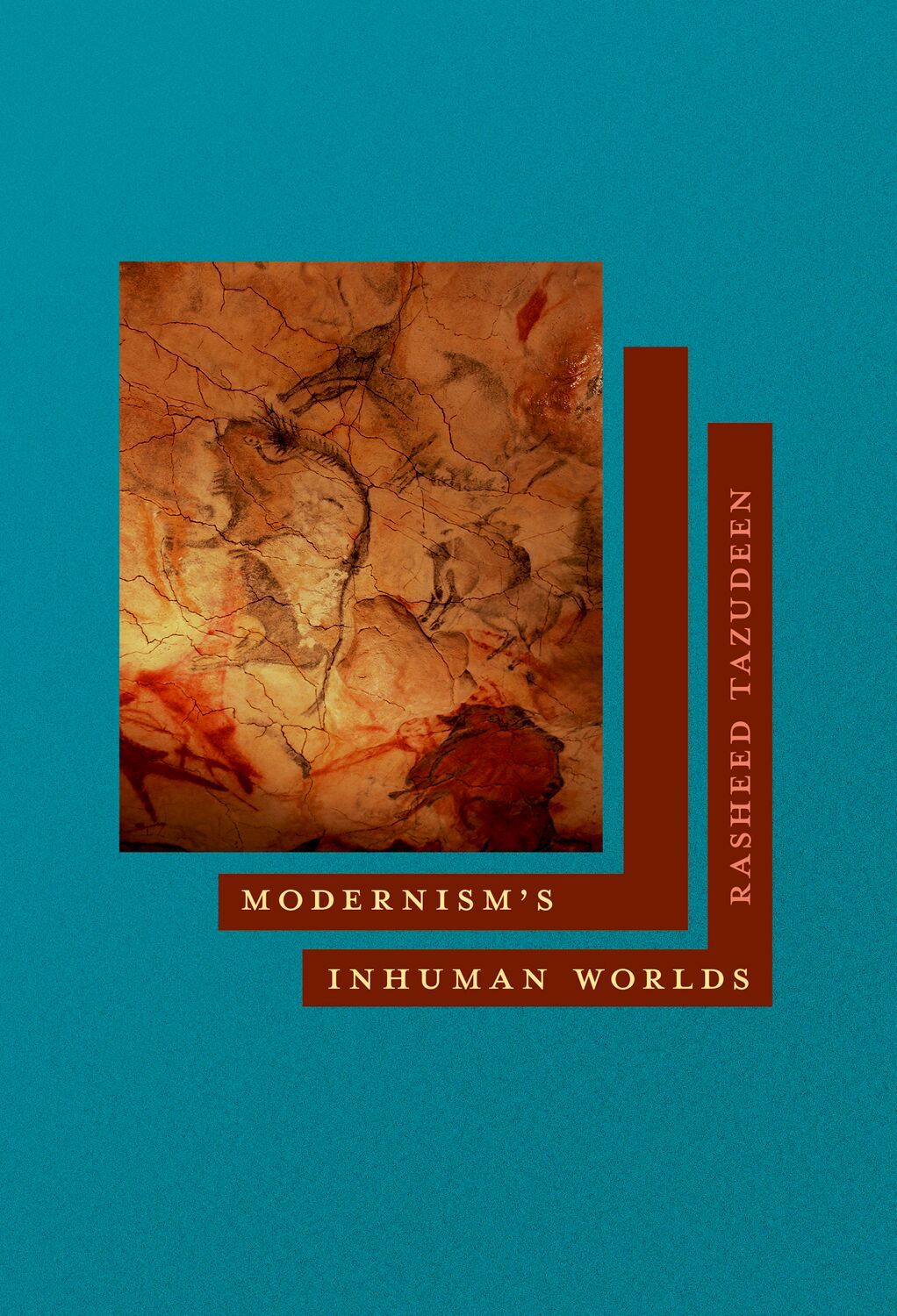
Modernism's Inhuman Worlds
Modernism's Inhuman Worlds
explores the centrality of ecological precarity, species
indeterminacy, planetary change, and the specter of extinction to
modernist and contemporary metamodernist literatures.
Modernist ecologies, Rasheed Tazudeen argues, emerge in response to
the enigma of how to imagine inhuman being-including soils,
forests, oceans, and the earth itself-through languages and
epistemologies that have only ever been humanist. How might
(meta)modernist aesthetics help us to imagine (with) inhuman
worlds, including the worlds still to be made on the other side of
mass extinction?
Through innovative readings of canonical and emergent modernist
and metamodernist works, Tazudeen theorizes inhuman modernism as a
call toward further receptivity to the worlds, beings, and
relations that tend to go unthought within Western humanist
epistemologies. Modernist engagements with the figures of enigma,
riddle, and metaphor, according to the book's central argument,
offer a means toward what Franz Kafka calls an \"otherwise\"
speaking, based on language's obliqueness to inhuman and planetary
being. Drawing on ecocriticism, decolonial and feminist science
studies, postcolonial theory, inhuman geography, and sound studies,
Tazudeen analyzes an inhuman modernist lineage-spanning from
Darwin, Carroll, and Flaubert, through Joyce, Kafka, and Woolf, to
contemporary poetic works-as both part of a collaborative
rethinking of modernism's planetary and inhuman aesthetics, as well
as occasions for imagining new modes of livingness for the
extinctions to come.
eBook


Animal Encounters
Traces of the living animal run across the entire corpus of medieval writing and reveal how pervasively animals mattered in medieval thought and practice. In fascinating scenes of cross-species encounters, a raven offers St. Cuthbert a lump of lard that waterproofs his visitors' boots for a whole year, a scholar finds inspiration for his studies in his cat's perfect focus on killing mice, and a dispossessed knight wins back his heritage only to give it up again in order to save the life of his warhorse. Readers have often taken such encounters to be merely figurative or fanciful, but Susan Crane discovers that these scenes of interaction are firmly grounded in the intimate cohabitation with animals that characterized every medieval milieu from palace to village. The animal encounters of medieval literature reveal their full meaning only when we recover the living animal's place within the written animal.The grip of a certain humanism was strong in medieval Britain, as it is today: the humanism that conceives animals in diametrical opposition to humankind. Yet medieval writing was far from univocal in this regard. Latin and vernacular works abound in other ways of thinking about animals that invite the saint, the scholar, and the knight to explore how bodies and minds interpenetrate across species lines. Crane brings these other ways of thinking to light in her readings of the beast fable, the hunting treatise, the saint's life, the bestiary, and other genres. Her substantial contribution to the field of animal studies investigates how animals and people interact in culture making, how conceiving the animal is integral to conceiving the human, and how cross-species encounters transform both their animal and their human participants.
eBook