
Catalogue Search | MBRL


Are you sure you want to remove the book from the shelf?

{{itemTitle}}
54,598
result(s) for
"Animated films"
Sort by:

Special Affects
The emergence of these media enables new modes of perception that create 'special' sensations of wonder, astonishment, marvel and the fantastic. Such affections subsequently become mined by consumer industries for profit, thereby explaining the connection between media and consumerism that today seems inherent to the culture industry. Such modes and their affections are also translated into ideology, as American culture seeks to make sense of the sociocultural changes accompanying these new media, particularly as specific versions of American Dream narratives. Special Affects is the first extended exploration of the connection between media and consumerism, and the first book to extensively apply Deleuzian film theory to animation. Its exploration of the connection between the animated form and consumerism, and its re-examination of twentieth-century animation from the perspective of affect, makes this an engaging and essential read for film-philosophy scholars and students.
eBook
Sammy 2 : 20.000 laughs under the sea
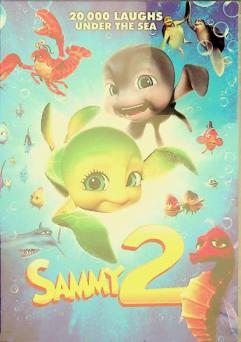
Sammy and Ray are supervising their new offspring, when seagulls attack them and both Sammy and Ray and two of their grandchildren Ella and Ricky are captured on trawler. While Ella and Ricky are separated and sent to the seabed, Sammy and Ray are taken to an aquarium with Lulu, a lobster with dissociative identity disorder and Jimbo a bug-eyed blobfish. Escape plans are run and tried by the leading seahorse Big D. Ella and Ricky set out with Annabel and Margaret, the pink octopus mother and daughter in order to rescue their grandfathers, getting chased by a pair of barracudas when they get there. After much communication trouble, Ella and Ricky interpret from Sammy that in order to escape the aquarium several squids expel ink into the ventilation system, while all the aquarium inhabitants play dead. Before initiating the escape plan, Sammy and Ray get the tyrannical Big D out of the way. The reluctant aquarium manager opens the emergency doors allowing all sea creatures out to freedom.
DVD

The Idea of Nature in Disney Animation
In the second edition of The Idea of Nature in Disney Animation, David Whitley updates his 2008 book to reflect recent developments in Disney and Disney-Pixar animation such as the apocalyptic tale of earth's failed ecosystem, WALL-E. As Whitley has shown, and Disney's newest films continue to demonstrate, the messages animated films convey about the natural world are of crucial importance to their child viewers. Beginning with Snow White, Whitley examines a wide range of Disney's feature animations, in which images of wild nature are central to the narrative. He challenges the notion that the sentimentality of the Disney aesthetic, an oft-criticized aspect of such films as Bambi, The Jungle Book, Pocahontas, Beauty and the Beast, and Finding Nemo, necessarily prevents audiences from developing a critical awareness of contested environmental issues. On the contrary, even as the films communicate the central ideologies of the times in which they were produced, they also express the ambiguities and tensions that underlie these dominant values. In distinguishing among the effects produced by each film and revealing the diverse ways in which images of nature are mediated, Whitley urges us towards a more complex interpretation of the classic Disney canon and makes an important contribution to our understanding of the role popular art plays in shaping the emotions and ideas that are central to contemporary experience.
eBook


The Animated Bestiary
Cartoonists and animators have given animals human characteristics for so long that audiences are now accustomed to seeing Bugs Bunny singing opera and Mickey Mouse walking his dog Pluto.
The Animated Bestiary critically evaluates the depiction of animals in cartoons and animation more generally. Paul Wells argues that artists use animals to engage with issues that would be more difficult to address directly because of political, religious, or social taboos. Consequently, and principally through anthropomorphism, animation uses animals to play out a performance of gender, sex and sexuality, racial and national traits, and shifting identity, often challenging how we think about ourselves.
Wells draws on a wide range of examples, from the original King Kongto Nick Park's Chicken Run to Disney cartoonsùsuch as Tarzan, The Jungle Book, and Brother Bearùto reflect on people by looking at the ways in which they respond to animals in cartoons and films.
eBook

Animation in the Middle East
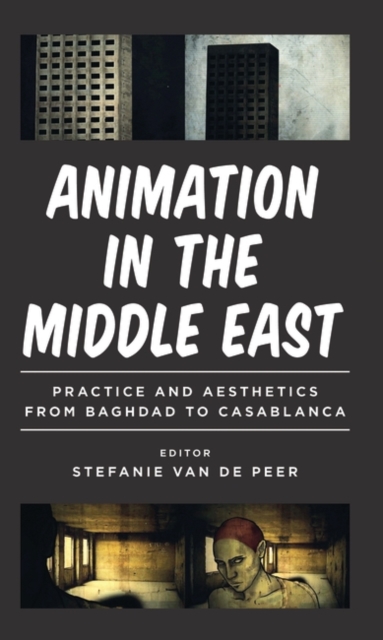
The internationally acclaimed films Persepolis and Waltz with Bashir only hinted at the vibrant animation culture that exists within the Middle East and North Africa. In spite of censorship, oppression and war, animation studios have thrived in recent years – in Egypt, Iran, Iraq, Lebanon, Morocco, Palestine, Syria and Turkey – giving rise to a whole new generation of entrepreneurs and artists. The success of animation in the Middle East is in part a product of a changing cultural climate, which is increasingly calling for art that reflects politics. Equally, the professionalization and popularization of film festivals and the emergence of animation studios and private initiatives are the results of a growing consumer culture, in which family-friendly entertainment is big business. Animation in the Middle East uncovers the history and politics that have defined the practice and study of animation in the Middle East, and explores the innovative visions of contemporary animators in the region.
eBook


Anime’s Media Mix
In Anime’s Media Mix, Marc Steinberg convincingly shows that anime is far more than a style of Japanese animation. Engaging with film, animation, and media studies, as well as analyses of consumer culture and theories of capitalism, Steinberg offers the first sustained study of the Japanese mode of convergence that informs global media practices to this day.
eBook