
Catalogue Search | MBRL


Are you sure you want to remove the book from the shelf?

{{itemTitle}}
8,014
result(s) for
"Animation art"
Sort by:
Sensations of history : animation and new media art
\"In Sensations of History, James J. Hodge argues that animation in new media art transforms historical experience in the digital age. Combining close textual analysis of experimental new media artworks with discussion of key phenomenological texts, Sensations of History argues for the broad critical significance of animation as we shift from analog to digital technologies. Hodge looks closely at animation aesthetics, which allow for a clear grasp of the ways digital technologies transform our sense of historical experience\"-- Provided by publisher.
Book

Funny pictures
This collection of essays explores the link between comedy and animation in studio-era cartoons, from filmdom's earliest days through the twentieth century. Written by a who's who of animation authorities, Funny Pictures offers a stimulating range of views on why animation became associated with comedy so early and so indelibly, and illustrates how animation and humor came together at a pivotal stage in the development of the motion picture industry. To examine some of the central assumptions about comedy and cartoons and to explore the key factors that promoted their fusion, the book analyzes many of the key filmic texts from the studio years that exemplify animated comedy. Funny Pictures also looks ahead to show how this vital American entertainment tradition still thrives today in works ranging from The Simpsons to the output of Pixar.
eBook

Space claymation
Begins with an introduction to Claymation and the tools and techniques necessary to completing the project. Readers will learn both armature and subtractive sculpting techniques, which are applicable to many different sculpting projects. Readers will also build their own set and make props to bring their movie together. The last step is learning about lighting and cameras so readers can make their Claymation space adventure a reality.
Book

The Anime Paradox
Founded on richly stylized expression, Anime has developed into an art with a high degree of sophistication that is comparable to that of the traditional theatrical forms of Noh, Bunraku, and Kabuki. By analyzing Anime through the lens of traditional Japanese theater, the patterns and practices in Anime can be mapped out. In The Anime Paradox, Stevie Suan utilizes this framework to reveal Anime's distinct form, examining and delineating the particular formal qualities of Anime's structure, conventions, aesthetics, and modes of viewing. However, the comparison works both ways-just as Japanese theater can give us analytical insights into Anime, Anime can enrich our understanding of Japanese classical theater.
eBook


New Media Technology in Digital Animation Art Teaching Experimental Exploration: Impact Analysis and Future Prospects
In the digital age, the traditional teaching of digital animation art can't meet industry talent needs. This study aims to explore new media technology's role in it. Using a comparative experiment on two parallel classes, we measured students' abilities with pre - and post - tests and collected feedback via questionnaires. The results show that the experimental group with new media - integrated teaching outperformed the control group in all aspects. This implies that new media technology can modernize teaching. Educational institutions should invest in technology, and teachers should upgrade skills. The research provides a basis for digital animation art education innovation.
Journal Article

Digital mayhem: 3D landscape techniques : where inspiration, techniques and digital art meet
\"The secrets to creating stunning landscapes are at your fingertips with Digital Mayhem 3D Landscapes Techniques. Compiled by Duncan Evans, launch Editor of 3D Artist Magazine, Digital Mayhem features a variety of beautiful art from some of the finest digital artists working today. Inspiration and technique meet here as you learn how to create every type of landscape from harsh desert savannahs to icy tundra. Using a blend of showcase images, step-by-step and long-form tutorials, you will be guided through the featured artist's process so you can incorporate their techniques and workflow into your own projects. Not just another button-pushing manual or coffee table book, Digital Mayhem will help develop your critical eye for composition, choice of camera lens, lighting, rendering, and post production, allowing you to work more intuitively. With insight from some of the best digital artists in the world, Digital Mayhem will have you creating your own masterpiece in no time! - Unique coverage on a variety of software allows you to hone your skills across different platforms. - Illustrious and colorful artwork coupled with artist insight will both inspire and inform your creative decisions. - Comprehensive companion website offers additional resources for you to further expand your skillset\"-- Provided by publisher.
Book

Examining Young Children’s Computational Thinking through Animation Art
Educators and researchers are becoming interested in cultivating computational thinking (CT). However, in the Hong Kong context, CT-related studies regarding young children are rarely found. The present study aimed to use an unplugged digital arts activity to examine the CT concepts that children performed and document their CT developmental trajectories. Constructionism theory highlights the importance of children engaging in hands-on activities and developing independent thinking skills. Meanwhile, social constructivism theory emphasizes the role of teachers as scaffolders, supporting children in their learning processes. A sample of children (
N
= 27, aged 3–6) was recruited from a nursery school in Hong Kong to participate in an animation art workshop. A total of 540 min of video data was recorded and collected for content analysis. The teaching team (
N
= 4) for this workshop were invited to write up their reflective journals, capturing their observations of the scaffolding strategies employed and their perspectives on how children at various levels demonstrated their understanding of CT concepts throughout the entire process. Within an analytical framework based on powerful ideas, the findings from the observations and field notes revealed that the children’s CT concepts and practices could be linked with the CT conceptual framework. In this study, older children showed a sophisticated competency and a more complicated mind structure in terms of the CT concept. Our findings highlight the importance of designing an age-appropriate curriculum for nurturing the computational thinking of young children through animation art.
Journal Article

CyberArts 2019 : Prix Ars Electronica, S+T+ARTS Prize'19
Founded in 1987, the Prix Ars Electronica is the most time-honored media arts competition in the world. With numerous illustrations and texts by the artists and members of the jury, this book presents the award-winning works of the 2018 competition.
Book
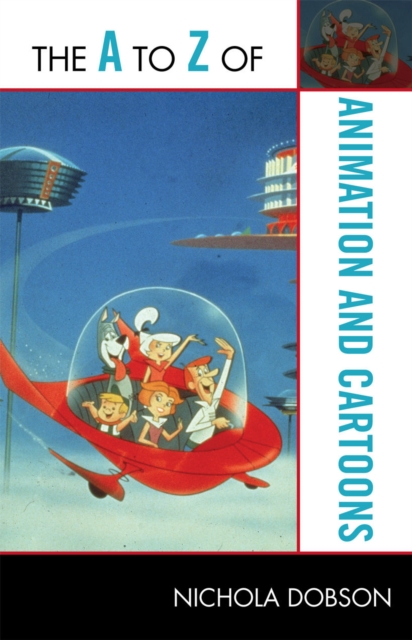
The A to Z of animation and cartoons
Animation was once a relatively simple matter, using fairly primitive means to produce rather short films of subjects that were generally comedic and often quite childish. However, things have changed, and they continue changing at a maddening pace. One new technique after another has made it easier, faster, and above all cheaper to produce the material, which has taken on an increasing variety of forms. The A to Z of Animation and Cartoons is an introduction to all aspects of animation history and its development as a technology and industry beyond the familiar cartoons from the Disney and Warner Bros. Studios. This is done through a chronology, an introductory essay, photos, a bibliography, and over 200 cross-referenced dictionary entries on animators, directors, studios, techniques, films, and some of the best-known characters.
eBook