
Catalogue Search | MBRL


Are you sure you want to remove the book from the shelf?

{{itemTitle}}
13
result(s) for
"Anthropology-Statistical methods"
Sort by:

Methods in human growth research
This volume is a review of up-to-date methods used in human growth research.
Book
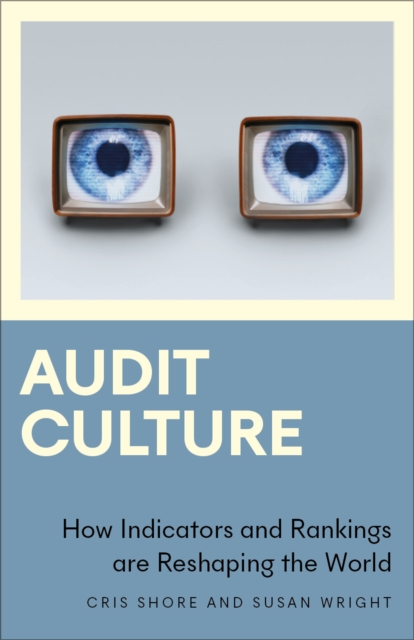
Audit Culture
All aspects of our work and private lives are increasingly measured and managed. But how has this 'audit culture' arisen and what kind of a world is it producing?
Cris Shore and Susan Wright provide a timely account of the rise of the new industries of accounting, enumeration and ranking from an anthropological perspective, drawing on political economy, ethnographic observation and genealogical excavation.
Audit Culture is the first book to systematically document and analyse these phenomena and their implications for democracy.
The book explores how audit culture operates across a wide range of fields, including health, higher education, NGOs, finance, the automobile industry and the military. The authors build a powerful critique of contemporary public sector management in an age of neoliberal market-making, privatisation and outsourcing. They conclude by offering a raft of suggested actions to reverse its damaging effects on communities, reclaim professional autonomy, and restore the democratic accountability that audit culture is systematically undermining.
eBook

Indigenous Statistics
In the first book ever published on Indigenous quantitative methodologies, Maggie Walter and Chris Andersen open up a major new approach to research across the disciplines and applied fields. While qualitative methods have been rigorously critiqued and reformulated, the population statistics relied on by virtually all research on Indigenous peoples continue to be taken for granted as straightforward, transparent numbers. This book dismantles that persistent positivism with a forceful critique, then fills the void with a new paradigm for Indigenous quantitative methods, using concrete examples of research projects from First World Indigenous peoples in the United States, Australia, and Canada. Concise and accessible, it is an ideal supplementary text as well as a core component of the methodological toolkit for anyone conducting Indigenous research or using Indigenous population statistics.
eBook

DSM-5 : handbook on the cultural formulation interview
Clinicians will, of course, find the DSM-5® Handbook of the Cultural Formulation Interview indispensable, but administrators, policy makers, advocates, and other practitioners who work collaboratively to engage patients in the mental health care process will also value its clarity and comprehensiveness.
eBook

Predictive analytics : the power to predict who will click, buy, lie, or die
\"Mesmerizing & fascinating...\" —The Seattle Post-Intelligencer \"The Freakonomics of big data.\" —Stein Kretsinger, founding executive of Advertising.com Award-winning | Used by over 30 universities | Translated into 9 languages An introduction for everyone. In this rich, fascinating — surprisingly accessible — introduction, leading expert Eric Siegel reveals how predictive analytics (aka machine learning) works, and how it affects everyone every day. Rather than a \"how to\" for hands-on techies, the book serves lay readers and experts alike by covering new case studies and the latest state-of-the-art techniques. Prediction is booming. It reinvents industries and runs the world. Companies, governments, law enforcement, hospitals, and universities are seizing upon the power. These institutions predict whether you're going to click, buy, lie, or die. Why? For good reason: predicting human behavior combats risk, boosts sales, fortifies healthcare, streamlines manufacturing, conquers spam, optimizes social networks, toughens crime fighting, and wins elections. How? Prediction is powered by the world's most potent, flourishing unnatural resource: data. Accumulated in large part as the by-product of routine tasks, data is the unsalted, flavorless residue deposited en masse as organizations churn away. Surprise! This heap of refuse is a gold mine. Big data embodies an extraordinary wealth of experience from which to learn. Predictive analytics (aka machine learning) unleashes the power of data. With this technology, the computer literally learns from data how to predict the future behavior of individuals. Perfect prediction is not possible, but putting odds on the future drives millions of decisions more effectively, determining whom to call, mail, investigate, incarcerate, set up on a date, or medicate. In this lucid, captivating introduction — now in its Revised and Updated edition — former Columbia University professor and Predictive Analytics World founder Eric Siegel reveals the power and perils of prediction: * What type of mortgage risk Chase Bank predicted before the recession. * Predicting which people will drop out of school, cancel a subscription, or get divorced before they even know it themselves. * Why early retirement predicts a shorter life expectancy and vegetarians miss fewer flights. * Five reasons why organizations predict death — including one health insurance company. * How U.S. Bank and Obama for America calculated the way to most strongly persuade each individual. * Why the NSA wants all your data: machine learning supercomputers to fight terrorism. * How IBM's Watson computer used predictive modeling to answer questions and beat the human champs on TV's Jeopardy! * How companies ascertain untold, private truths — how Target figures out you're pregnant and Hewlett-Packard deduces you're about to quit your job. * How judges and parole boards rely on crime-predicting computers to decide how long convicts remain in prison. * 182 examples from Airbnb, the BBC, Citibank, ConEd, Facebook, Ford, Google, the IRS, LinkedIn, Match.com, MTV, Netflix, PayPal, Pfizer, Spotify, Uber, UPS, Wikipedia, and more. How does predictive analytics work? This jam-packed book satisfies by demystifying the intriguing science under the hood. For future hands-on practitioners pursuing a career in the field, it sets a strong foundation, delivers the prerequisite knowledge, and whets your appetite for more. A truly omnipresent science, predictive analytics constantly affects our daily lives. Whether you are a consumer of it — or consumed by it — get a handle on the power of Predictive Analytics.
eBook

Microsimulation and Population Dynamics
This book is a practical, step-by-step introduction to microsimulation in demography.It shows how to use Modgen, a powerful and free microsimulation platform built by Statistics Canada.The authors' hands-on explanation of model development will help readers make their own.
eBook
Rule by numbers
This book examines aspects of the production of statistical knowledge as part of colonial governance in India using Foucault's ideas of \"governmentality.\" The modern state is distinctive for its bureaucratic organization, official procedures, and accountability that in the colonial context of governing at a distance instituted a vast system of.
eBook
An introduction to medical statistics
An Introduction to Medical Statistics, fourth edition, is a 'must-have' textbook. Written in an easy-to-understand style and packed with real life examples, the text clearly explains the common statistical methods seen in published research and guidelines, as well as how to interpret and analyse statistics for clinical practice.
eBook

Non-Heart-Beating Organ Transplantation
Non-heart-beating donors (individuals whose deaths are determined by cessation of heart and respiratory function rather than loss of whole brain function) could potentially be of major importance in reducing the gap between the demand for and available supply of organs for transplantation. Prompted by questions concerning the medical management of such donors-specifically, whether interventions undertaken to enhance the supply and quality of potentially transplantable organs (i.e. the use of anticoagulants and vasodilators) were in the best interests of the donor patient-the U.S. Department of Health and Human Services asked the Institute of Medicine to examine from scientific and ethical points of view \"alternative medical approaches that can be used to maximize the availability of organs from [a] donor [in an end-of-life situation] without violating prevailing ethical norms...\"
This book examines transplantation supply and demand, historical and modern conceptions of non-heart-beating donors, and organ procurement organizations and transplant program policies, and contains recommendations concerning the principles and ethical issues surrounding the topic.
eBook

Making choices in health : WHO guide to cost-effectiveness analysis
Several guidelines on cost-effectiveness analysis (CEA) already exist. There are two reasons for producing another set. The first is that traditional or ''incremental'' CEA ignores the question of whether the current mix of interventions represents an efficient use of resources. Secondly, the resources required to evaluate the large number of interventions required to use CEA to identify opportunities to enhance efficiency are prohibitive. The approach of Generalized CEA proposed in this Guide seeks to provide analysts with a method of assessing whether the current as well as proposed mix of interventions is efficient. It also seeks to maximize the generalizability of results across settings. The Guide, in Part I, begins with a brief description of Generalized CEA and how it relates to the two questions raised above. It then considers issues relating to study design, estimating costs, assessing health effects, discounting, uncertainty and sensitivity analysis, and reporting results. Detailed discussions of selected technical issues and applications are provided in a series of background papers, originally published in journals, but included in this book for easy reference in Part II. The Guide and these papers are written in the context of the work of WHO-CHOICE: CHOosing Interventions that are Cost-Effective. WHO-CHOICE is assembling regional databases on the costs, impact on population health and cost-effectiveness of key health interventions using standardized methodology and tools. WHO-CHOICE tools on costing (CostIt©), population effectiveness modelling (PopMod©) and probabilistic uncertainty analysis (MCLeague©) are included in the accompanying compact disc.
eBook