
Catalogue Search | MBRL


Are you sure you want to remove the book from the shelf?

{{itemTitle}}
86
result(s) for
"Anti-apartheid activists."
Sort by:


Women, Activism and Apartheid South Africa: Using Play Texts to Document the Herstory of South Africa
This book investigates women's political activism and conflict in the struggle against apartheid in South Africa, using play texts, alongside interviews with female playwrights and women who worked within the theatre, to examine issues around domestic violence, racial abuse and women in detention without trial.
eBook
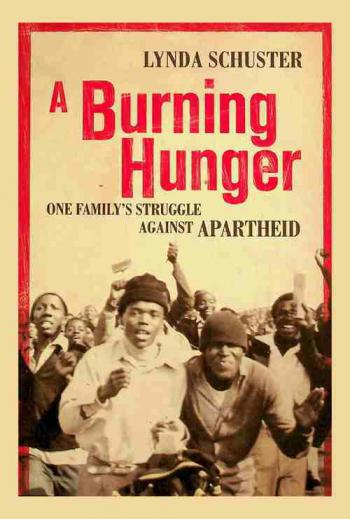
A burning hunger : one family's struggle against apartheid
This story of a remarkable family who embrace just about every facet of the liberation struggle follows mainly the four sons who all lived very different lives. Rocks was a high-ranked army officer, Tsieti went underground then into exile, Dee became a key figure on the Johannesburg council and Mpho established the Soweto Youth Congress.
Book

War in Worcester
The South African government gave no quarter to young people who joined the struggle against the apartheid state; indeed, it targeted them. Security forces meted out cruel treatment to youth who rebelled, incarcerated even the very young under dreadful conditions, and used torture frequently, sometimes over long periods of time. Little is known, however, from the perspective of young fighters themselves about the efforts they made to sustain the momentum of struggle, how that affected and was affected by their other social bonds, and what they achieved in terms of growth and paid in terms of harm. War in Worcester combines a study of the Truth and Reconciliation Commission (TRC)'s findings on the stand taken by South African youth with extended fieldwork undertaken with fourteen young men who, starting in their schooldays, were involved in the struggle in a small town in the Western Cape. Filling a gap in the ethnographic analysis of the role of youth in armed conflict, the book describes, from the perspective of the young fighters themselves, the tactics that young local leaders used and how the state retaliated, young peoples' experiences of pain and loss, the effect on fighters of the extensive use of informers by the state as a weapon of war, and the search for an ethic of survival. The testimony of these young fighters reveals some limitations of the processes used by the TRC in its search to document the truth. War in Worcester problematizes the use of the term \"victim\" for the political engagement of young people and calls for attention to patterns of documenting the past and thus to the nature of the archive in recording the character of political forces and the uses of violence. It encourages a fresh analysis of the kinds of revolt being enacted by the young elsewhere in the world, such as North Africa and the Middle East.
eBook


Ruth First and Joe Slovo in the War Against Apartheid
Ruth First and Joe Slovo, husband and wife, were leaders of the war to end apartheid in South Africa. Communists, scholars, parents, and uncompromising militants, they were the perfect enemies for the white police state. Together they were swept up in the growing resistance to apartheid, and together they experienced repression and exile. Their contributions to the liberation struggle, as individuals and as a couple, are undeniable. Ruth agitated tirelessly for the overthrow of apartheid, first in South Africa and then from abroad, and Joe directed much of the armed struggle carried out by the famous Umkhonto we Sizwe. Only one of them, however, would survive to see the fall of the old regime and the founding of a new, democratic South Africa. This book, the first extended biography of Ruth First and Joe Slovo, is a remarkable account of one couple and the revolutionary moment in which they lived. Alan Wieder's deeply researched work draws on the usual primary and secondary sources but also an extensive oral history that he has collected over many years. By weaving the documentary record together with personal interviews, Wieder portrays the complexities and contradictions of this extraordinary couple and their efforts to navigate a time of great tension, upheaval, and revolutionary hope.
eBook


You Strike a Woman, You Strike a Rock / Wathint' Abafazi, Wathint' Imbokotho
You Strike a Woman, You Strike a Rock / Wathint' Abafazi, Wathint' Imbokotho is a bristling example of protest theatre making during the height of apartheid. Created in ensemble fashion in 1986 by director Phyllis Klotz in collaboration with performers Thobeka Maqhutyana, Nomvula Qosha and Poppy Tsira, this play stands as a contemporary South African classic. The play focuses on three central characters: Sdudla, Mambhele and Mampompo living and working in a Cape Town township trying to eke out a living in a racially, socially and economically unequal world. There are few work opportunities and there is a great deal of red tape to be self-sufficient. Men are glaringly absent from this world – working as cheap migrant labour in urban areas. Women have to undertake great risk to see their husbands and to try keep a semblance of family cohesiveness. Helicopters fly above and state security police surveil the area. The play shows how these women work miracles to ensure the survival and well-being of their families at all cost. Following the famous 1956 slogan of the South African woman's march against apartheid laws, this latest publication in 2021 is a testament to the contemporariness of this play. Its themes around gender activism and the need for gender parity remains as true today as it did fifty years ago. Fresh and full of life, this is an important historical document and will be a landmark play for high schools and students of theatre.
eBook

Ruth First and Joe Slovo in the war against apartheid
\"Ruth First and Joe Slovo, husband and wife, were leaders of the war to end apartheid in South Africa. Communists, scholars, parents, and uncompromising militants, they were the perfect enemies for the white police state. Together they were swept up in the growing resistance to apartheid, and together they experienced repression and exile. Their contributions to the liberation struggle, as individuals and as a couple, are undeniable. Ruth agitated tirelessly for the overthrow of apartheid, first in South Africa and then from abroad, and Joe directed much of the armed struggle carried out by the famous Umkhonto we Sizwe. Only one of them, however, would survive to see the fall of the old regime and the founding of a new, democratic South Africa. This book, the first extended biography of Ruth First and Joe Slovo, is a remarkable account of one couple and the revolutionary moment in which they lived. Alan Wieder's heavily researched work draws on the usual primary and secondary sources but also an extensive oral history that he has collected over many years. By intertwining the documentary record with personal interviews, Wieder portrays the complexities and contradictions of this extraordinary couple and their efforts to navigate a time of great tension, upheaval, and revolutionary hope.\"--Publisher's website.
Book

Erika Sutter: Seen with Other Eyes
The Swiss ophthalmologist Erika Sutter was born in Basel in 1917. She spent 32 years working in Elim Hospital, founded by the Swiss Mission in an impoverished rural area in North-Eastern South Africa. Together with her African colleague and friend, Selina Maphorogo, she founded the Care Groups, village self-help groups working for better health in their communities. The movement is still active after more than 30 years, and now has around 2,000 members, mostly women, in over 200 villages. Erika Sutter has received numerous international honours and awards for her pioneering work, including the award “Woman of the Year” in 1984 from the South African newspaper “The Star”, and an honorary doctorate from the University of Basel. For the creation of this biography, Erika Sutter spent many hours with the author, her friend Gertrud Stiehle, telling the story of her long life – vividly, with a sharp eye for social issues, a hint of self-irony, and dry wit. Her account does not ignore events in the wider world. She experienced life on the Swiss-German border during the Second World War, and her years of working in South Africa were those when the apartheid policies of the South African Government were becoming more and more repressive, affecting many aspects of life in the country.
eBook