
Catalogue Search | MBRL


Are you sure you want to remove the book from the shelf?

{{itemTitle}}
160
result(s) for
"Antimalarials history"
Sort by:


The discovery of artemisinin (qinghaosu) and gifts from Chinese medicine
Tue describes working with investigators on the extraction and isolation of constitutents with possible antimalarial activities from Chinese herbal materials. During the first stage of their work, they investigated more than 2,000 Chinese herb preparations and identified 640 hits that had possible antimalarial activities. More than 380 extracts obtained from ~200 Chinese herbs were evaluated against a mouse model of malaria. The turning point came when an Artemisia annua L. extract showed a promising degree of inhibition against parasite growth.
Journal Article


Quinine, an old anti-malarial drug in a modern world: role in the treatment of malaria
Quinine remains an important anti-malarial drug almost 400 years after its effectiveness was first documented. However, its continued use is challenged by its poor tolerability, poor compliance with complex dosing regimens, and the availability of more efficacious anti-malarial drugs. This article reviews the historical role of quinine, considers its current usage and provides insight into its appropriate future use in the treatment of malaria. In light of recent research findings intravenous artesunate should be the first-line drug for severe malaria, with quinine as an alternative. The role of rectal quinine as pre-referral treatment for severe malaria has not been fully explored, but it remains a promising intervention. In pregnancy, quinine continues to play a critical role in the management of malaria, especially in the first trimester, and it will remain a mainstay of treatment until safer alternatives become available. For uncomplicated malaria, artemisinin-based combination therapy (ACT) offers a better option than quinine though the difficulty of maintaining a steady supply of ACT in resource-limited settings renders the rapid withdrawal of quinine for uncomplicated malaria cases risky. The best approach would be to identify solutions to ACT stock-outs, maintain quinine in case of ACT stock-outs, and evaluate strategies for improving quinine treatment outcomes by combining it with antibiotics. In HIV and TB infected populations, concerns about potential interactions between quinine and antiretroviral and anti-tuberculosis drugs exist, and these will need further research and pharmacovigilance.
Journal Article
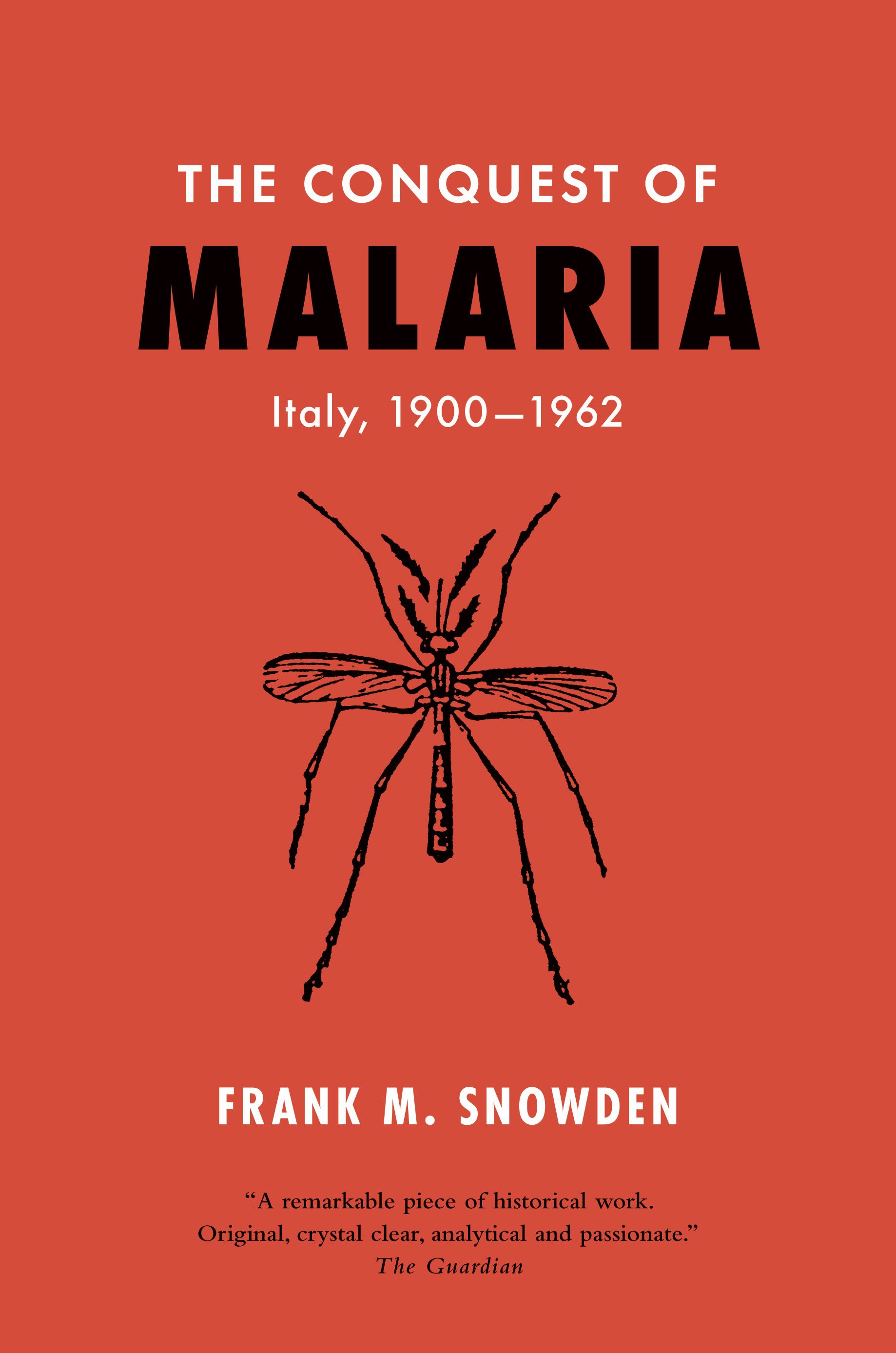
The Conquest of Malaria
At the outset of the twentieth century, malaria was Italy's major public health problem. It was the cause of low productivity, poverty, and economic backwardness, while it also stunted literacy, limited political participation, and undermined the army. In this book Frank Snowden recounts how Italy became the world center for the development of malariology as a medical discipline and launched the first national campaign to eradicate the disease.
Snowden traces the early advances, the setbacks of world wars and Fascist dictatorship, and the final victory against malaria after World War II. He shows how the medical and teaching professions helped educate people in their own self-defense and in the process expanded trade unionism, women's consciousness, and civil liberties. He also discusses the antimalarial effort under Mussolini's regime and reveals the shocking details of the German army's intentional release of malaria among Italian civilians-the first and only known example of bioterror in twentieth-century Europe. Comprehensive and enlightening, this history offers important lessons for today's global malaria emergency.
eBook

The Origins of Antimalarial-Drug Resistance
There is a tendency to view the development of antimalarial-drug resistance as an inevitable outcome of the drugs' widespread use. Yet resistance has been accelerated by the way the drugs are used and by the social and economic conditions in which they are used.
Drugs have been used to treat and prevent malaria for centuries. Bark from the cinchona tree, which contained an array of alkaloids with antimalarial properties, appeared in Western therapeutics in the 17th century. One of the alkaloids, quinine, was isolated in 1820 and became the drug of choice for treating malaria until World War II, when supplies of the drug for much of the world were cut off by the Japanese occupation of cinchona-growing regions in Southeast Asia. Efforts to create alternatives to quinine led to the search for synthetic antimalarial drugs. Chloroquine, first developed in the 1930s, became the . . .
Journal Article

War and Disease
In this historical study, Leo B. Slater shows the roots and branches of an enormous drug development project during World War II. Fighting around the globe, American soldiers were at high risk for contracting malaria, yet quinineùa natural cureùbecame harder to acquire.
eBook

Anti-parasite drugs sweep Nobel prize in medicine 2015
Chinese pharmacologist Youyou Tu developed key antimalarial drug artemisinin.
Journal Article

Synthetic Strategies for Peroxide Ring Construction in Artemisinin
The present review summarizes publications on the artemisinin peroxide fragment synthesis from 1983 to 2016. The data are classified according to the structures of a precursor used in the key peroxidation step of artemisinin peroxide cycle synthesis. The first part of the review comprises the construction of artemisinin peroxide fragment in total syntheses, in which peroxide artemisinin ring resulted from reactions of unsaturated keto derivatives with singlet oxygen or ozone. In the second part, the methods of artemisinin synthesis based on transformations of dihydroartemisinic acid are highlighted.
Journal Article

Cooperative development of antimicrobials: looking back to look ahead
In this Science and Society article, Carl Nathan reviews historical collaborations between industry and academic instiutions that developed antimicrobials, and discusses similar strategies that have recently emerged to tackle the crisis of antimicrobial resistance.
As foundations and governments mobilize to tackle antimicrobial resistance (AMR), several experiments in academic–industrial collaboration have emerged. Here, I examine two historical precedents, the Penicillin Project and the Malaria Project of the Second World War, and two contemporary examples, the Tuberculosis Drug Accelerator programme and the Tres Cantos Open Lab. These and related experiments suggest that different strategies can be effective in managing academic–industrial collaborations, and that such joint projects can prosper in both multisite and single-site forms, depending on the specific challenges and goals of each project. The success of these strategies and the crisis of AMR warrant additional investment in similar projects.
Journal Article