
Catalogue Search | MBRL


Are you sure you want to remove the book from the shelf?

{{itemTitle}}
37,843
result(s) for
"Antiquities"
Sort by:


The Hellenistic Far East
In the aftermath of Alexander the Great's conquests in the late fourth century B.C., Greek garrisons and settlements were established across Central Asia, through Bactria (modern-day Afghanistan) and into India. Over the next three hundred years, these settlements evolved into multiethnic, multilingual communities as much Greek as they were indigenous. To explore the lives and identities of the inhabitants of the Graeco-Bactrian and Indo-Greek kingdoms, Rachel Mairs marshals a variety of evidence, from archaeology, to coins, to documentary and historical texts. Looking particularly at the great city of Ai Khanoum, the only extensively excavated Hellenistic period urban site in Central Asia, Mairs explores how these ancient people lived, communicated, and understood themselves. Significant and original, The Hellenistic Far East will highlight Bactrian studies as an important part of our understanding of the ancient world.
eBook


Rome and environs
This superb guide brings the work of Filippo Coarelli, one of the most widely published and well-known scholars of Roman topography, archeology and art, to a broad English-language audience. Conveniently organized by walking tours and illustrated throughout with clear maps, drawings, and plans, Rome and Environs: An Archaeological Guide covers all of the major, and an unparalleled number of minor, ancient sites in the city, and, unlike most other guides of Rome, includes major and many minor sites within easy reach of the city, such as Ostia Antica, Palestrina, Tivoli, and the many areas of interest along the ancient Roman roads. An essential resource for tourists interested in a deeper understanding of Rome's classical remains, it is also the ideal book for students and scholars approaching the ancient history of one of the world's most fascinating cities. • Covers all the major sites including the Capitoline, the Roman Forum, the Imperial Fora, the Palatine Hill, the Valley of the Colosseum, the Esquiline, the Caelian, the Quirinal, and the Campus Martius. • Discusses important clusters of sites-one on the area surrounding Circus Maximus and the other in the vicinity of the Trastevere, including the Aventine and the Vatican. • Covers the history and development of the city walls and aqueducts. • Follows major highways leading outside of the city to important and fascinating sites in the periphery of Rome. • Features 189 maps, drawings, and diagrams, and an appendix on building materials and techniques. • Includes an updated and expanded bibliography for students and scholars of Ancient Rome.
eBook

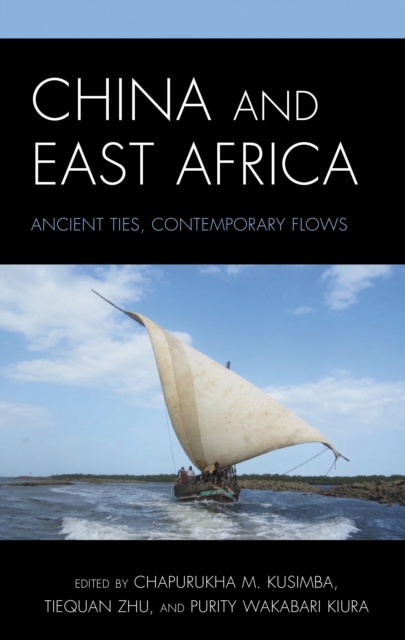
China and East Africa : ancient ties, contemporary flows
China and East Africa: Ancient Ties and Contemporary Flows marks the culmination of a new round of archaeological and historical research on the relations between China and Africa, from the origins to the present.Africa and Asia have always been in constant contact, through land and seas.
eBook

Social Identities in the Classic Maya Northern Lowlands
Social Identities in the Classic Maya Northern Lowlands plumbs the archaeological record for what it can reveal about the creation of personal and communal identities in the Maya world. Using new primary data from her excavations at the sites of Yaxuna, Chunchucmil, and Xuenkal, and new analysis of data from Dzibilchaltun in Yucatan, Mexico, Traci Ardren presents a series of case studies in how social identities were created, shared, and manipulated among the lowland Maya.Ardren argues that the interacting factors of gender, age, familial and community memories, and the experience of living in an urban setting were some of the key aspects of Maya identities. She demonstrates that domestic and civic spaces were shaped by gender-specific behaviors to communicate and reinforce gendered ideals. Ardren discusses how child burials disclose a sustained pattern of reverence for the potential of childhood and the power of certain children to mediate ancestral power. She shows how small shrines built a century after Yaxuna was largely abandoned indicate that its remaining residents used memory to reenvision their city during a time of cultural reinvention. And Ardren explains how Chunchucmil's physical layout of houses, plazas, and surrounding environment denotes that its occupants shared an urban identity centered in the movement of trade goods and economic exchange. Viewing this evidence through the lens of the social imaginary and other recent social theory, Ardren demonstrates that material culture and its circulations are an integral part of the discourse about social identity and group membership.
eBook

Exploring Ontologies of the Precontact Americas
Applying social theory and incorporating non-Western
perspectives in the interpretation of bioarchaeological
research
This volume demonstrates how researchers in bioarchaeology and
mortuary archaeology can work to better understand concepts of life
and death in past societies of the Indigenous Americas. Through
case studies that apply the \"ontological turn\" to human funerary
and skeletal remains, contributors set aside Western views of
reality, nature, and personhood to explore how people of various
cultures understood existence and the human body.
Contributors examine mortuary records from Inuit groups in
Labrador and Greenland, Hopewell culture in the Lower Illinois
River Valley, and Weeden Island and Puebloan traditions in the
United States Southeast and Southwest. They look at the Paquimé
community in Mexico, iconography of the Maya civilization, the
demographics of Inka populations, and an ancient village on the
Amazon River in Brazil. With attention to the viewpoints of these
cultures, these essays deconstruct the boundaries between human
remains and other interred artifacts, the living and the dead, and
other binaries rooted deeply in Western science.
Exploring Ontologies of the Precontact Americas reminds
readers that their own ontological perspectives affect how they
interpret the past. By considering diverse, non-Western worldviews
and engaging with novel social theories of the body, this volume
inspires new understandings of precontact societies.
Contributors: Gordon F. M. Rakita | Pamela
Geller | Jason L. King | Sarah Jackson | Jane Buikstra | Robert
Pickering | Peter Whitridge | John Krigbaum | Neill J. Wallis |
Adrianne Offenbecker | Avelino Gambim Júnior | Bethany L. Turner |
Mari Kleist | María Cecilia Lozada | Debra L. Martin | Kyle Waller
| James L. Fitzsimmons | J. Christina Freiberger
eBook