
Catalogue Search | MBRL


Are you sure you want to remove the book from the shelf?

{{itemTitle}}
2,194
result(s) for
"Antiquities Analysis."
Sort by:

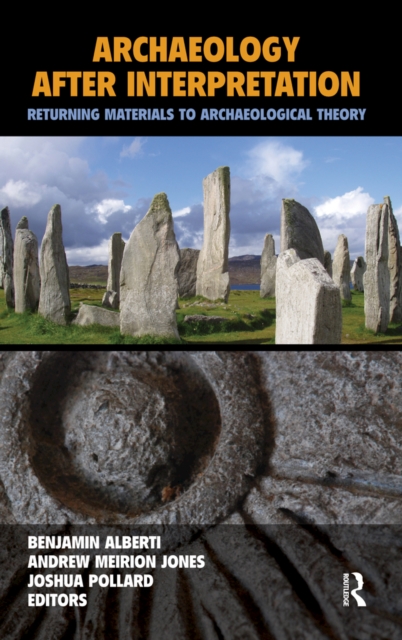
Archaeology After Interpretation
A new generation of archaeologists has thrown down a challenge to post-processual theory, arguing that characterizing material symbols as arbitrary overlooks the material character and significance of artifacts. This volume showcases the significant departure from previous symbolic approaches that is underway in the discipline. It brings together key scholars advancing a variety of cutting edge approaches, each emphasizing an understanding of artifacts and materials not in terms of symbols but relationally, as a set of associations that compose people's understanding of the world. Authors draw on a diversity of intellectual sources and case studies, paving a dynamic road ahead for archaeology as a discipline and theoretical approaches to material culture.
eBook

Lithic technologies in sedentary societies
\"Examining lithic technology in sedentary societies around the world and showcasing information that in-depth, cutting-edge, lithic analytical techniques provides. Highlighting important contributions to the field of lithics and how they can improve the study of sedentary Mesoamerican societies, as well as other ancient societies around the world\"--Provided by publisher.
Book

Marcadores Gráficos y Territorios Megalíticos en la Cuenca Interior Del Tajo
The aim of this work is to analyze Late Prehistoric graphical markers, comprising paintings, engravings, Megalithic elements, and other portable objects. The Tajo inner basin (Spain), was chosen for this study due to the lack of scholarship on the subject and the lack of geographical information available for the archaeological sites.
eBook


Handheld XRF for Art and Archaeology
Over the last decade the technique of X-ray fluorescence has evolved, from dependence on laboratory-based standalone units to field use of portable and lightweight handheld devices. These portable instruments have given researchers in art conservation and archaeology the opportunity to study a broad range of materials with greater accessibility and flexibility than ever before. In addition, the low relative cost of handheld XRF has led many museums, academic institutions, and cultural centres to invest in the devices for routine materials analysis purposes. Although these instruments often greatly simplify data collection, proper selection of analysis conditions and interpretation of the data still require an understanding of the principles of x-ray spectroscopy. These instruments are often marketed and used as ‘point and shoot' solutions; however, their inexpert use can easily generate deceptive or erroneous results. This volume focuses specifically on the applications, possibilities, and limitations of handheld XRF in art conservation and archaeology. The papers deal with experimental methodologies, protocols, and possibilities of handheld XRF analysis in dealing with the complexity of materials encountered in this research.
eBook


new instrument adapted to in situ Raman analysis of objects of art
The analysis of precious artefacts and antiquities demands care in order to minimise the risk of accidental damage during measurement. Mobile fibre-optic-based Raman instruments offer a means to avoid destructive sampling and eliminate the need to transport artefacts for spectrochemical analysis. In this work we present a new mobile instrument developed and optimised for the in situ Raman investigation of objects of art and antiquities. The instrument is controlled by a portable computer. Selected mounts cover many types of artefacts. Newly written software routines organise spectra together with measurement parameters and facilitate calibration of the instrument. The present paper describes this new Raman instrument and discusses some challenges in the transition from a laboratory environment to in situ investigations in museums.
Journal Article

Prehistoric adaptation in the American Southwest
This resource is about post-Pleistocene adaptive change among the aboriginal cultures of the mountains and deserts of Arizona and New Mexico.
Book

Prehistoric Mobility and Diet in the West Eurasian Steppes 3500 to 300 BC
Questions concerning mobility and migration as well as subsistence strategies of past societies have always been of major importance in archaeological research. The West Eurasian steppes in the Eneolithic, the Early Bronze and the Iron Age were largely inhabited by cultural communities believed to show an elevated level of spatial mobility, often linked to their subsistence economy. In this volume, questions concerning the mobility and potential migration as well as the diet and economy of the West Eurasian steppes communities during the 4th, the 3rd and the 1st Millennia BC are approached by applying isotope analysis, specifically 87Sr/86Sr, δ18O, δ15N and δ13C analyses. Adapting a combination of different isotopic systems to a study area of vast spatial and chronological dimension allowed a wide variety of questions to be answered and establishes the beginning of a database of biogeochemical data for the West Eurasian steppes. Besides the characterisation of mobility and subsistence patterns of the archaeological communities under discussion, attempts to identify possible Early Bronze Age migrations from the steppes to the steppe-like plains in parts of Eastern Europe were made, alongside an evaluation of the applicability of isotope analysis to this context.
eBook