
Catalogue Search | MBRL


Are you sure you want to remove the book from the shelf?

{{itemTitle}}
112
result(s) for
"Apache Indians, Wars"
Sort by:

Apache Chief Geronimo
\"Learn about this Apache warrior and why he lead thrilling fights against American and Mexican soldiers\"--Provided by publisher.
Book

A Fateful Day in 1698
In 1698, the Apache and their allies attacked a sleeping Sobaipuri-O’odham village on the San Pedro River at the northern edge of New Spain, now in southern Arizona. This book, about one of the most important Southwestern battles of the era in this region, reads like a mystery. At the same time, it addresses in a scholarly fashion the methodological question of how we can confidently infer anything reliable about the past.
Translations of original Spanish accounts by Father Kino and others convey important details about the battle, while the archaeological record and ethnographic and oral traditions provide important correctives to the historic account. A new battlefield signature of native American conflict is identified, and the fiery context of the battle provides unprecedented information about what the Sobaipuri grew and hunted in this out-of-the-way location, including the earliest known wheat.
That this tumultuous time was a period of flux is reflected in the defensive, communal, and ceremonial architecture of the O'odham, which accommodated Spanish tastes and techniques. Practices specific to the O’odham as they relate to the day’s events and to village life illuminate heretofore unexplained aspects of the battle. The book also records a visit by descendant O’odham, reinforcing the importance of identifying the historically documented location.
A Fateful Day in 1698 will be of significant interest to archaeologists and historians.
eBook

'I will not surrender the hair of a horse's tail' : the Victorio Campaign 1879
\"This volume covers the background to the Victorio Campaign of 1879-1881. In the early 1870s, a mixture of diplomacy and successful military campaigning by General George Crook led to the formation of several reservations for various Apache groups such as the Mescalero, Chiricahua and Western Apaches. Almost before the ink was dry on these treaties, an effort was made to rationalize this arrangement by placing the Apaches upon one reservation (the concentration policy). The first reservation to close was the Fort Bowie reservation, which belonged to the Chokonen (Central Chiricahua) Apaches. Some chose to resist, and this resistance - combined with the continued drive for concentration - brought about the closure of the Chihenne (Eastern Chiricahua) Apache reservation at Ojo Caliente, New Mexico, in 1877 and their removal to the San Carlos reservation in Arizona. The Chihennes were led by Victorio, Nana and Loco at this time, and they chose to accept the move, even though this was to the territory of the Western Apaches (with whom they often had a mutually hostile relationship). The land they were allocated was not healthy and a deadly feud between the Chihennes and the San Carlos Apaches quickly flared up; in September 1877, Victorio led a large portion of his people off San Carlos and tried to return to Ojo Caliente. Between 1877 and 1879, Victorio and his followers resisted their removal back to San Carlos - periodically fleeing and raiding mainly in Mexico to survive; they minimized hostile activity in the USA in order to keep alive their hopes of a return to Ojo Caliente. By August 1879, Victorio gave up hope that a return to Ojo Caliente was possible and declared war on the USA, as well as continuing their conflict with the Mexicans. Between September and December 1879, Victorio and his warriors - no more than 150 strong (and often as little as 50) - inflicted a number of defeats upon the Ninth Cavalry, US citizen volunteers and Mexican State troops. By the end of this volume, they had taken refuge - undefeated - in Northern Mexico and were poised to return to continue their battle with the USA for the return of their reservation. This research will outline the previously unreconstructed and sophisticated strategies and tactics utilized by Victorio, Nana and their followers to defeat every opponent sent against them.\"--Amazon.
Book
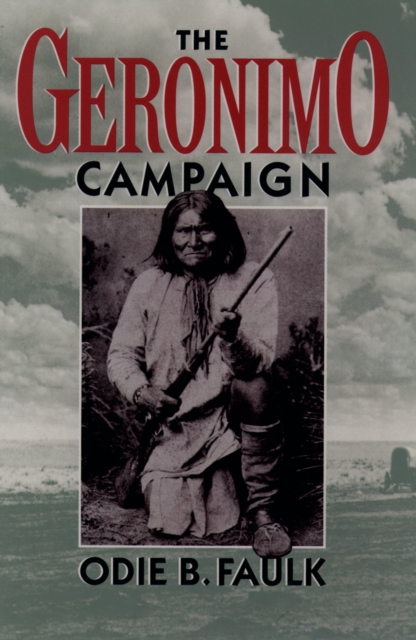
The Geronimo Campaign
On August 25 1886, the Apache chief, Geronimo, surrendered to the US army, ending a long and bloody struggle. This book draws on fresh evidence to examine the ironies, dangers, and vicissitudes of that campaign. Based on the papers collected by Lt. Charles B. Gatewood—the one white man Geronimo trusted—including depositions from old soldiers and scouts, official documents, articles, letters, and photographs, the book shows that it was essentially a war no one won—the Apaches (like the Sioux, Comanche, and Nez Perce before them), losing their land and lifestyle, the Americans losing all that the tribes might have contributed to the union and more than a measure of national self-respect. The author is especially concerned with the campaign's wider historical setting and significance, and with the sad record of betrayal of the Native American by the US Government.
eBook


Las Guerras Apaches
Las Guerras Apaches fueron el conflicto más largo librado por Estados Unidos, que se prolongó durante un cuarto de siglo y marcó la historia del suroeste americano y el norte de México. Una tierra de frontera inhóspita y desolada, infestada de bandoleros, donde cada planta tenía una púa, cada insecto un aguijón, cada pájaro una garra y cada reptil un colmillo: la Apachería. Durante más de dos décadas, los guerreros apaches, duros como su tierra, fogueados por siglos de lucha contra los españoles, pelearon contra los intentos mexicanos y estadounidenses por acabar con su forma de vida. Su conocimiento del terreno, su movilidad y una cultura guerrera que no conocía la misericordia, les convirtieron en un enemigo terrible y formidable. En Las Guerras Apaches. Polvo y sangre en la última frontera del salvaje Oeste , Paul Andrew Hutton relata este legendario conflicto, tan presente en el imaginario popular, tan pleno de heroísmo como de brutalidad, con un pulso que consigue trasladar la intensidad del drama y ponerse en la piel de ambos bandos, haciendo justicia a los nombres legendarios de Gerónimo, Mangas Coloradas, Cochise o Victorio. Como hilo vertebrador, Hutton revive la experiencia de individuos cuya vida discurrió a medio camino entre los dos mundos, como el legendario explorador y cazarrecompensas tuerto Micky Free o como Apache Kid, el último indio libre. Cuando el humo de la pólvora se disipó y Gerónimo se entregó, resignado a una vida en la reserva, para acabar siendo expuesto como una atracción en la Exposición Universal de San Luis en 1904, la mítica era del salvaje Oeste había terminado.
eBook

Cochise
\"Cochise...was a leader of a band of Chiricahua Apache in New Mexico and Arizona. His band raided Mexican settlements and, after the Mexican War (1846-1848), began fighting the United States Army.\" (World Book Student) Learn more about the Chiricahua Apache leader, Cochise.
Reference