
Catalogue Search | MBRL


Are you sure you want to remove the book from the shelf?

{{itemTitle}}
1,439
result(s) for
"Apologizing."
Sort by:

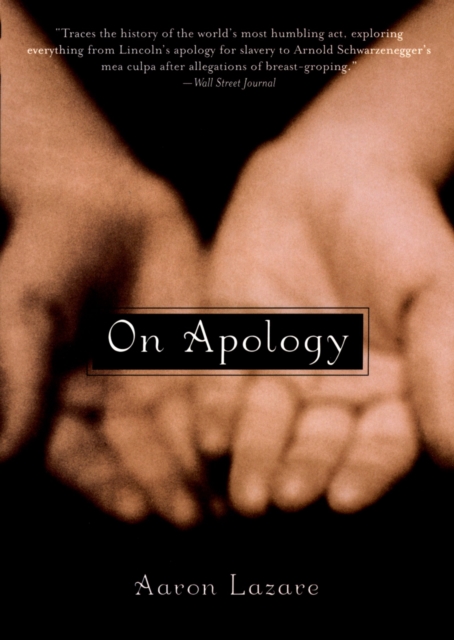
On apology
One of the most profound interactions that can occur between people, apologies have the power to heal humiliations, free the mind from deep-seated guilt and ultimately restore broken relationships. This is an analysis of this interaction, illuminating an often hidden corner of the human heart.
eBook

Devaluing public apologies in the age of social media : how polarization and cancel culture complicate the mea culpa
\"Devaluing Public Apologies in the Age of Social Media argues that apologies are losing their meaning because people treat them as strategical tools while ignoring their ethical implications. Recent apologies by celebrities, politicians, and brands are examined to show how apologies need to be rooted in values to be effective\"-- Provided by publisher.
BOOK


Sorry!
When Jack makes friends with Charlie, a trouble-maker, he learns the difference between an insincere apology and showing that you're truly sorry. Includes information for parents.
Book


Diverging Grammaticalization Patterns across Spanish Varieties: The Case of Iperdón/I in Mexican and Peninsular Spanish
This study investigates the contemporary grammaticalized uses of perdón (‘sorry’) in two varieties of Spanish, namely Mexican and Peninsular Spanish. Methodologically, the investigation is based on a taxonomy of offenses, organized around the concept of ‘face’ and based on spoken data of Spanish from Mexico and Spain. This taxonomy turns out to be a fruitful methodological tool for the analysis of apologetic markers: it does not only offer usage-based evidence for previous theorizing concerning the grammaticalization process of apologetic markers, but also leads to a refinement of these previous results from a contrastive point of view. Evidence from both corpora suggests a more advanced stage in the grammaticalization process of perdón in Mexican Spanish, where it can be used not only as a self-face-saving device geared towards the positive face of the speaker, but also in turn-taking contexts oriented towards the negative face of the interlocutor. Peninsular Spanish, on the other hand, resorts to a more varied gamut of apologetic markers in these contexts.
Journal Article