
Catalogue Search | MBRL


Are you sure you want to remove the book from the shelf?

{{itemTitle}}
1,438
result(s) for
"Apperception."
Sort by:

Psychoanalysis and projective methods in personality assessment : the French school
\"Unique synthesis from the French School of psychoanalytical projective methods. This unique book synthesizes the work of leading thinkers of the French School of psychoanalytical projective methods in personality assessment. The French School is a direct successor to Rorschach's and Murray's original approaches using the Rorschach Test and the Thematic Apperception Test (TAT). Underlying this method is the idea of the coexistence of conscious and unconscious processes, of opposite instinctual pairs, and of agents that are ruled by conflicts (Freud). Transitional activity is seen as part of an intermediate space, a mediator space, and bearer of messages between the subject and the clinician (Winnicott). This book brings to life the important contributions of the French School, firstly exploring its theories and methods and then its clinical applications. Detailed case studies from different stages of life examine the psychopathology of everyday life with its severe and disabling states of suffering. Contemporary advances in research and clinical work are presented, and the groundbreaking early work of Nina Rausch de Traubenberg, Vica Shentoub, and Rosine Debray are also critically reread and discussed. Clinical tools adapted for clinicians and researchers in the appendices include a useful schema to facilitate the interpretation of the Rorschach and TAT together, a list of latent solicitations for the TAT, and the current version of the TAT Scoring Grid. This book is essential reading for clinical psychologists, psychiatrists, psychotherapists, researchers, and students interested in applying psychoanalytical theory to projective methods.\"-- Provided by publisher.
Book

Consciousness and dreaming mind: mapping the uncharted territory of thinking in dreams
\"In this book, the author traces research into one of the most scientifically denied features of dreaming consciousness - the thinking abilities of non-lucid dreamers. Contrary to explanations provided by cognitive neuroscientists, notably that deactivation of the dorsolateral prefrontal cortex indicates that non-lucid dreamers are incapable of self-generated thought (including executive skills and metacognitive monitoring), the phenomenological findings presented here reveal the wide range of dreamers' sophisticated thought processes. Granted, these thought processes come to existence if and when dreamers find themselves in specific condition during which they realize that they might want to attempt to change their current experience\"--
eBook

The art of noticing : 131 ways to spark creativity, find inspiration, and discover joy in the everyday
\"A handsome, beautifully produced compilation of meditations and exercises to inspire us to find joy and expand the ways we engage with the people and places, the objects and tasks we encounter in our everyday lives. Long-time workplace advice columnist for The New York Times, Rob Walker, draws from his annual School for Visual Arts course and from interviews he conducted with men and women from a wide range of disciplines, has designed 131 exercises and meditations to encourage and guide us in rediscovering joy and creativity in our lives. ℗¿℗¿℗¿℗¿ In a world ruled by distraction and increasing demands on our attention, it's never been more important to notice what matters to you. To stay eager, to connect, to find interest in the everyday, to notice what others overlook, these are skills that are both vital and delightful--and this gorgeously illustrated volume can help you acquire and hone these very skills. The short, playful entries that make up The Art of Noticing include \"Look for Ghosts and Ruins,\" \"Look Slowly,\" \"Make It Art,\" \"Compose a Personal Plaque.\" Here is a book that will provide inspiration to everyone, from the artist or designer developing an aesthetic to the techie looking to disrupt a new market. But, it will be its own joyful reward for anyone, in any walk of life, who takes a chance at noticing\"-- Provided by publisher.
BOOK

Projective in Time: A Systematic Review on the Use of Construction Projective Techniques in the Digital Era—Beyond Inkblots
Background: Projective instruments have historically been used to explore unconscious dynamics and personality traits in children and adolescents. However, concerns about their psychometric properties have led to ongoing debates in clinical psychology. This review aims to critically reassess the use of construction projective techniques in clinical settings for individuals aged 4 to 18 years, also examining the available psychometric data reported in recent scientific literature, excluding the Rorschach Test due to its extensive coverage in existing literature. Methods: A systematic review was conducted following PRISMA guidelines. PubMed, Psychoanalytic Electronic Publishing (PEP), and the Cochrane Library were searched for studies published between 2010 and 2024. Inclusion criteria encompassed studies focusing on construction projective techniques administered to clinical and non-clinical samples aged 4 to 18 years. Results: From an initial pool of 641 articles, 25 met the inclusion criteria. These studies indicate that construction projective techniques remain valuable in accessing children’s and adolescents’ inner worlds, particularly in diagnostic and therapeutic contexts. However, 13 of the 25 analyzed studies lack detailed psychometric evaluations, and the overall methodological quality was medium-low (4.4/9). Recent adaptations of these techniques show promise in increasing their applicability and relevance. Conclusions: Constructive projective tests continue to offer unique insights into the psychological functioning of young individuals. While not definitive diagnostic tools, they serve as effective supplements in clinical assessments and therapeutic interventions when applied with awareness of their limitations.
Journal Article

Assessment of psychological defense mechanisms in women with somatoform disorder using Thematic Apperception Test-Based Measure
IntroductionMaladaptive defense mechanisms can play a role in maintaining the inadequate social and psychological adaptation of patients.ObjectivesThis study aims to establish if denial is one of the central psychological defense mechanisms in patients with somatoform disorder.Methods10 female patients at Moscow Clinical hospital №33 with somatoform disorder and panic attacks (aged 20 to 43) and 20 female participants of the control group (aged 19 to 35) were presented with 10 pictures of the Thematic Apperception Test. Pictures were previously annotated into 4 groups: neutral stimuli (2, 6GF), provoking self-blame / depression ideation stimuli (3GF,14, 15, 17GF), provoking aggression ideation stimuli (8ВМ, 18 GF, 9GF), provoking aggression/self-blame ideation stimuli (13 MF). We conducted content analyses of stories. Mann-Whitney U-test was used.ResultsTable 1 presents analyses categories, examples of stories, and group differences.Table 1CategoryExamplePatients,% of storiesControl group,% of storiesMann-Whitney U-testDenial of interpersonal/internal conflict«It is a beautiful day. The girl is enjoying the sunlight. Her life is going well» (17GF).90%47%*р<0,01Denial of aggressive ideation«She won`t smother her, she just wants to scare her a little» (18 GF).70%30%р<0,05Denial of depressive /self-blame ideation«Is she dead or not? I think, no. They were having sex and now they are sleepy» (13MF).* Several patients told more than 1 story to a picture.ConclusionsPatients with the somatoform disorder tended to use descriptions without interpersonal or internal conflicts and/or to deny any characters‘ negative intentions or the negative consequences of their actions.DisclosureNo significant relationships.
Journal Article

Continuity and Discontinuity between the Psychological World and the Biological World
In this commentary paper I try to make complementarily more discussion on two question. First, the target paper (Zagaria, Andò, & Zennaro, 2020) points out the lack of continuity in the concepts used in psychology. The authors aim for a rigorous definition which is necessary to rebuild mud figures of psychology, but is that the only direction? Second, the evolutionary psychology seems to allow for a diversity of methodologies, but is there any limitations and possibilities of approaching the origin of the mind from biologically based methods? To answer this question, I went back and examined Freud’s earlier studies and Vygotsky’s theoretical considerations from the history of psychology. As a result, it was pointed out that the shift from the biological world to the psychological world had a fundamental problem of conversion from quantity to quality. As a clue to its elucidation, I considered on the semiotic mediation, the psychological causality, and the work of apperception.
Journal Article

Consciousness Without the Infinite Regress
Unlike other social animals, humans have evolved far too much analytical intelligence to let us naturally agree with each other's actions. Nevertheless, in the short span of a few million years, we have become the most effectively cooperative species on the planet, and this book argues that this is owing to our consciousness. So far, consciousness has stubbornly defeated our attempts to explain it as a product of non-mental elements. The ultimate reason for this failure is that we are conscious of being conscious. As a result, all non-mental based explanations lead to endless chains of infinite regress. Therefore, this book proposes to drop the requirement of non-mental elements as explanations of consciousness for the time being, and instead base our explanations on elements that are already 'borderline-conscious'. Be they prime (single) or compound, all qualia form with lightning speed in our mind, and are always experienced as singular, unique, and personal. They play for our mind the same role that 'hashes' (short, standardized, unambiguous, and unique tokens of immensely large and complex 'originals') play for our modern information technology. Therefore, using concepts derived from Arthur Schopenhauer, Bertrand Russell, Glaucoma, Hash functions (SHA-2), and the logical connective 'XOR' (exclusive OR), this book defines consciousness as a super-compound quale, which combines all compound qualia that are present at every moment in everyone's mind.
eBook
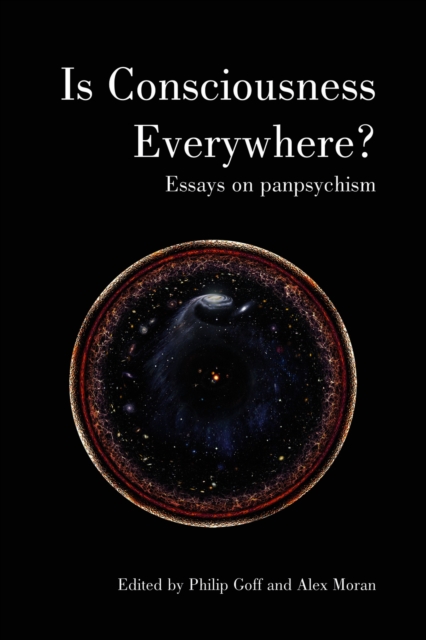
Is Consciousness Everywhere?
This volume, originally a special issue of the Journal of Consciousness Studies, uses the recent writings of Philip Goff as a jumping-off point for discussions of panpsychism - the idea that consciousness is a fundamental and pervasive aspect of our universe that cannot be understood in other, more basic, terms. The contributors to this book explore various issues of panpsychism from the perspectives of science, philosophy, and theology. Some papers focus on further motivating and developing the panpsychist position. Others explore various challenges that the panpsychist faces. Collectively, they shed new and important light not only on panpsychism, but on the fundamental question of the place of consciousness in nature more generally.
eBook

Imaginative elaboration in agenesis of the corpus callosum: topic modeling and perplexity
Previous studies have found deficits in imaginative elaboration and social inference to be associated with agenesis of the corpus callosum (ACC; Renteria-Vasquez et al., 2022; Turk et al., 2009). In the current study, Thematic Apperception Test (TAT) responses from a neurotypical control group and a group of individuals with ACC were used to further study the capacity for imaginative elaboration and story coherence.
Topic modeling was employed utilizing Latent Diritchlet Allocation to characterize the narrative responses to the pictures used in the TAT. A measure of the difference between models (perplexity) was used to compare the topics of the responses of individual participants to the common core model derived from the responses of the control group. Story coherence was tested using sentence-to-sentence Latent Semantic Analysis.
Group differences in perplexity were statistically significant overall, and for each card individually (
< .001). There were no differences between the groups in story coherence.
TAT narratives from persons with ACC were normally coherent, but more conventional (i.e., more similar to the core text) compared to those of neurotypical controls. Individuals with ACC can make conventional social inferences about socially ambiguous stimuli, but are restricted in their imaginative elaborations, resulting in less topical variability (lower perplexity values) compared to neurotypical controls.
Journal Article

Empathy, Phenomenological Reduction, and Reflexivity: Foundations of Phenomenological Research
Do our former experiences represent an obstacle to truly understanding another person? This study explores the phenomenological foundation that positions former experiences not as obstacles, but as essential preconditions for understanding the world and others. Drawing on Husserl’s theory of apperception, passive synthesis, intersubjectivity and empathy, I examine how past experiences inform both our present experiences and anticipated future, thereby enriching our perception and interpretation of others and helping us perceive exceedingly fine-grained patterns of meaning. Our past experiences do not rigidly determine our future actions but instead create a background of possibilities, like a horizon we carry with us, that can be continuously adjusted and fine-tuned as new situations arise. Husserl’s, and Stein’s theory of empathy and intersubjectivity further opens up the possibility for a direct perception of the other’s subjectivity. This is nuanced and enriched by Merleau-Ponty’s description of the intertwining or coupling of our constitutive consciousnesses, which illustrates not only how our embodied expressions convey emotions and intentions directly but also how we engage in a mutual embodied dialogue. The phenomenological reduction offers a method to ensure our openness towards others and the world, and to grasp how meanings are constituted and shared within our lifeworld.
Journal Article