
Catalogue Search | MBRL


Are you sure you want to remove the book from the shelf?

{{itemTitle}}
7
result(s) for
"Apprentissage automatique Sécurité Mesures."
Sort by:

AI, machine learning and deep learning : a security perspective
\"Today Artificial Intelligence (AI) and Machine/Deep Learning (ML/DL) have become the hottest areas in the information technology. In our society, there are so many intelligent devices that rely on AI/ML/DL algorithms/tools for smart operations. Although AI/ML/DL algorithms/tools have used in many Internet applications and electronic devices, they are also vulnerable to various attacks and threats. The AI parameters may be distorted by the internal attacker; the DL input samples may be polluted by adversaries; the ML model may be misled by changing the classification boundary, and many other attacks/threats. Those attacks make the AI products dangerous to use. While the above discussion focuses on the security issues in AI/ML/DL-based systems (i.e., securing the intelligent systems themselves), AI/ML/DL models/algorithms can be used for cyber security (i.e., use AI to achieve security). Since the AI/ML/DL security is a new emergent field, many researchers and industry people cannot obtain detailed, comprehensive understanding of this area. This book aims to provide a complete picture on the challenges and solutions to the security issues in various applications. It explains how different attacks can occur in advanced AI tools and the challenges of overcoming those attacks. Then many sets of promising solutions are described to achieve AI security and privacy in this book. The features of this book consist of 7 aspects: This is the first book to explain various practical attacks and countermeasures to AI systems; Both quantitative math models and practical security implementations are provided; It covers both \"securing the AI system itself\" and \"use AI to achieve security\"; It covers all the advanced AI attacks and threats with detailed attack models; It provides the multiple solution spaces to the security and privacy issues in AI tools; The differences among ML and DL security/privacy issues are explained. Many practical security applications are covered\"-- Provided by publisher.
Book
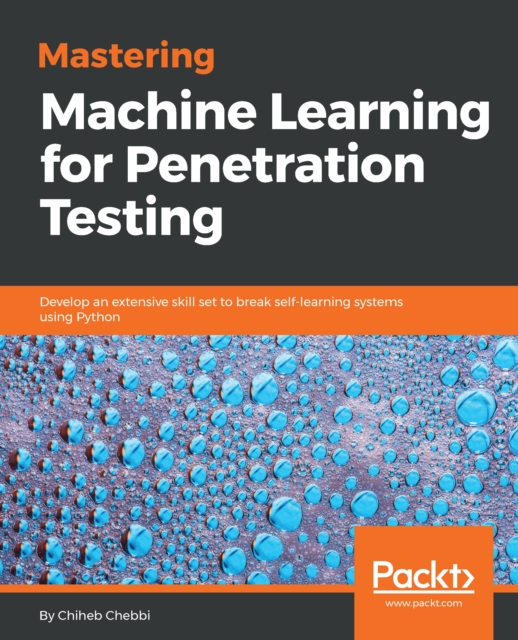
Mastering Machine Learning for Penetration Testing
We live in an era where cyber security plays an important role. As systems are getting smarter, we now see machine learning interrupting computer security. With the adoption of machine learning in upcoming security products, it's important for pentesters and security researchers to understand how these systems work, and to breach them for.
eBook

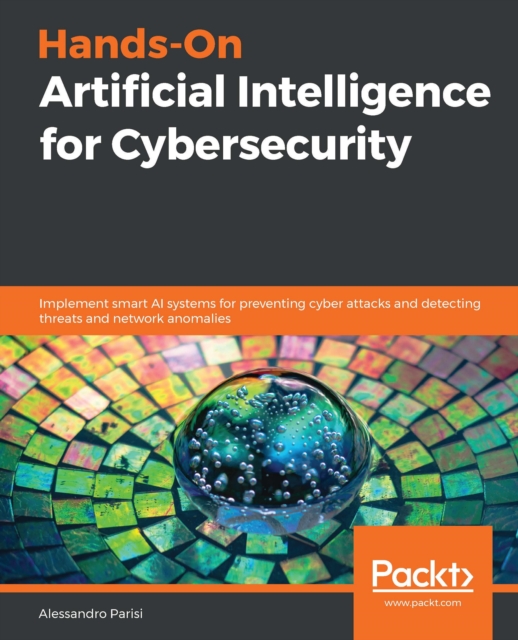
Hands-On Artificial Intelligence for Cybersecurity
If you wish to design smart, threat-proof cybersecurity systems using trending AI tools and techniques, then this book is for you. With this book, you will learn to develop intelligent systems that can detect suspicious patterns and attacks, thereby allowing you to protect your network and corporate assets.
eBook
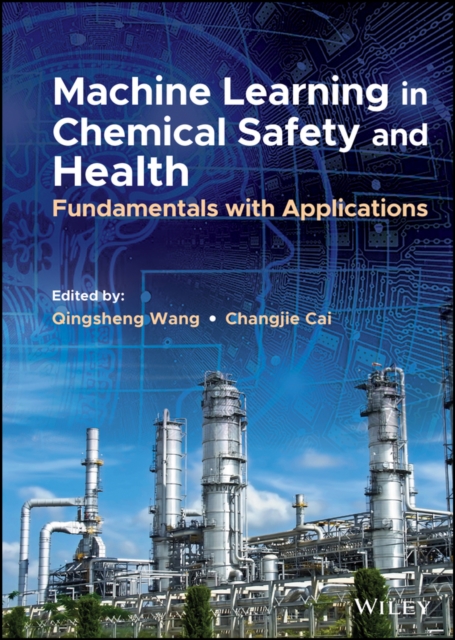
Machine Learning in Chemical Safety and Health
There is a growing interest in the application of machine learning algorithms in chemical safety and health-related model development, with applications in areas including property and toxicity prediction, consequence prediction, and fault detection. This book is the first to review the current status of machine learning implementation in chemical safety and health research and to provide guidance for implementing machine learning techniques and algorithms into chemical safety and health research.
Written by an international team of authors and edited by renowned experts in the areas of process safety and occupational and environmental health, sample topics covered within the work include:
An introduction to the fundamentals of machine learning, including regression, classification and cross-validation, and an overview of software and tools
Detailed reviews of various applications in the areas of chemical safety and health, including flammability prediction, consequence prediction, asset integrity management, predictive nanotoxicity and environmental exposure assessment, and more
Perspective on the possible future development of this field
This book serves as an essential guide on both the fundamentals and applications of machine learning for industry professionals and researchers in the fields of process safety, chemical safety, occupational and environmental health, and industrial hygiene.
eBook

Integrating Artificial Intelligence and Machine Learning with Blockchain Security
Due to its transparency and dependability in secure online transactions, blockchain technology has grown in prominence in recent years. Several industries, including those of finance, healthcare, energy and utilities, manufacturing, retail marketing, entertainment and media, supply chains, e-commerce, and e-business, among others, use blockchain technology.In order to enable intelligent decision-making to prevent security assaults, particularly in permission-less blockchain platforms, artificial intelligence (AI) techniques and machine learning (ML) algorithms are used. By exploring the numerous use cases and security methods used in each of them, this book offers insight on the application of AI and ML in blockchain security principles. The book argues that it is crucial to include artificial intelligence and machine learning techniques in blockchain technology in order to increase security.
eBook
SCADA Security - Machine Learning Concepts for Intrusion Detection and Prevention - SCADA-Based IDs Security
Cyber-attacks on SCADA systems-the control system architecture that uses computers, networked data communications, and graphical user interfaces for high-level process supervisory management-can lead to costly financial consequences or even result in loss of life. Minimizing potential risks and responding to malicious actions requires innovative approaches for monitoring SCADA systems and protecting them from targeted attacks. This book is designed to help security and networking professionals develop and deploy accurate and effective Intrusion Detection Systems (IDS) for SCADA systems that leverage autonomous machine learning. Providing expert insights, practical advice, and up-to-date coverage of developments in SCADA security, this authoritative guide presents a new approach for efficient unsupervised IDS driven by SCADA-specific data. Organized into eight in-depth chapters, the text first discusses how traditional IT attacks can also be possible against SCADA, and describes essential SCADA concepts, systems, architectures, and main components.
eBook