
Catalogue Search | MBRL


Are you sure you want to remove the book from the shelf?

{{itemTitle}}
3,279
result(s) for
"Aquaculture -- Environmental aspects"
Sort by:

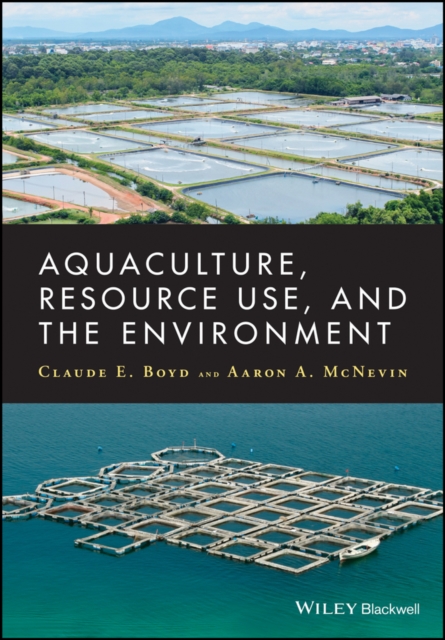
Aquaculture, Resource Use, and the Environment
Aquaculture, Resource Use, and the Environment places aquaculture within the larger context of global population growth, increased demand for sustainable, reliable sources of food, and the responsible use of natural resources.
eBook

The blue revolution : hunting, harvesting, and farming seafood in the information age
\"Overfishing. For the world's oceans, it's long been a worrisome problem with few answers. Many of the global fish stocks are at a dangerous tipping point, some spiraling toward extinction. But as older fishing fleets retire and new technologies develop, a better, more sustainable way to farm this popular protein has emerged to profoundly shift the balance. The Blue Revolution tells the story of the recent transformation of commercial fishing: an encouraging change from maximizing volume through unrestrained wild hunting to maximizing value through controlled harvesting and farming. Entrepreneurs applying newer, smarter technologies are modernizing fisheries in unprecedented ways. In many parts of the world, the seafood on our plates is increasingly the product of smart decisions about ecosystems, waste, efficiency, transparency, and quality.\"-- Amazon.
BOOK
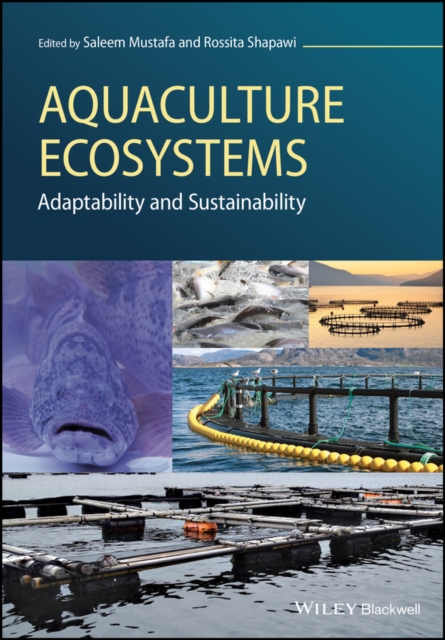
Aquaculture Ecosystems
Aquaculture Ecosystems contains a thorough and exciting synthesis of current information on aquaculture practices and substantial discussion of the way forward in transforming the aquaculture industry by improving its sustainability. This important book includes discussion of all the current major issues relating to aquaculture practices in relation to the ecology of their situations, environmental concerns, and details of how sustainability can be improved. Efforts have been made to include chapters that go beyond the stage of debate on old topics, providing conclusions to provide leads for action plans and practices addressing modern challenges such as global climate change. Commencing with a chapter covering concerns and solutions centred around seafood security, the following chapters cover the biology and behavior of aquatic animals and their selection for use in aquaculture systems, integrated multi-trophic aquaculture, nutrient inputs and pollution, biofouling, blue carbon stocks in coastal aquaculture, climate change adaptations and knowledge management in aquaculture. Written by internationally-recognized experts in aquaculture and ecology, and edited by Saleem Mustafa, well known for his work in aquatic sciences, the book provides a great deal of use and interest to all those involved in aquaculture planning and development, environmental sciences and aquatic ecology. All libraries in universities and research establishments where biological sciences and aquaculture are studied and taught should have copies of this vital reference on their shelves.
eBook

Confronting the blue revolution : industrial aquaculture and sustainability in the Global South
\"Uses the shrimp farming industry in Bangladesh and across the global South to demonstrate the social and environmental impact of industrialized aquaculture.\"--Page [i].
Book
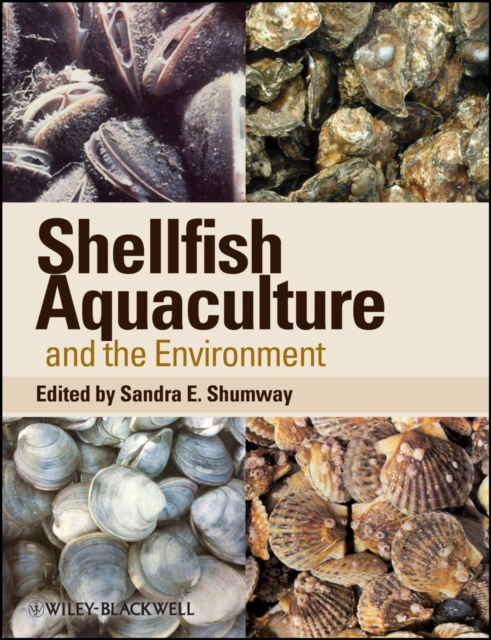
Shellfish aquaculture and the environment
Shellfish Aquaculture and the Environment focuses primarily on the issues surrounding environmental sustainability of shellfish aquaculture.The chapters in this book provide readers with the most current data available on topics such as resource enhancement and habitat restoration.
eBook

Mixing economic and administrative instruments: the case of shrimp aquaculture in Thailand
Economic instruments offer the potential to reach pre-determined environmental goals at a lower aggregate cost than less incentive-based measures, but administrative underpinnings crucial to the effective functioning of economic instruments may be lacking in developing countries. For this reason, pragmatic analysts and policymakers often advocate the use of so-called ‘mixed’ instruments that combine incentive mechanisms with improved administrative arrangements. This paper explores such possibilities with reference to intensive shrimp aquaculture, which dominates shrimp farming and is an important economic sector in Thailand. This activity has been cited as a major contributor to environmental degradation in Thailand and several other countries through destruction of mangrove forests, salinization of land, sludge disposal, and, in particular, water pollution. An analytical model is presented that highlights some of the key opportunities and limitations of mixed instruments applied to shrimp aquaculture. Mixed instruments are then proposed and evaluated.
Journal Article

Environmental Safeguards for Open-Ocean Aquaculture
The technology is in place for marine aquaculture development in the US, but growth remains curtailed by the lack of unpolluted sites for shellfish production, competing uses of coastal waters, environmental concerns, and low market prices for some major commodities, such as Atlantic salmon. Meanwhile, the demand for marine fish and shellfish continues to rise more rapidly than domestic production, adding to an increasing US seafood deficit. Here, Naylor argues that expanding aquaculture into federal waters should not be promoted without enforceable national guidelines for the protection of marine ecosystems and fisheries.
Journal Article

Recent Advances in Tilapia Production for Sustainable Developments in Indian Aquaculture and Its Economic Benefits
Tilapia is a widely cultured species native to Africa; these fish are prolific breeders and constitute an economically important fish species supplying higher-quality protein. To meet the global food demand and achieve the UN’s Sustainable Developmental Goals (SDG), the aquaculture industry has conceived of productive solutions with the potential for adaptability, palatability, and profitability. Tilapia may play a vital role with respect to the possibility for sustainability in the nutrition and aquaculture sectors. India contributes to the promotion of aquacultural practices through a structural framework focused on agricultural, environmental, geographical, and socio-economic factors that provide opportunities for tilapia farming. Globally, the Indian aquaculture sector is currently the second largest in terms of aquacultural production but is moving toward different species that meet SDG and facilitate international marketing opportunities. The farming of aquacultural species with innovative technology constitutes an efficient use of resources. Productive research on feeding, disease management, construction, and layout helps overcome the challenges faced in aquaculture. These focused and sustained factors of the aquaculture industry offer a latent contribution to global food security. This review reports on the state of the art, the challenges regarding tilapia aquaculture in India, and the Indian government’s schemes, missions, subsidies, projects and funding related to tilapia production.
Journal Article

Environmental performance of blue foods
Fish and other aquatic foods (blue foods) present an opportunity for more sustainable diets
1
,
2
. Yet comprehensive comparison has been limited due to sparse inclusion of blue foods in environmental impact studies
3
,
4
relative to the vast diversity of production
5
. Here we provide standardized estimates of greenhouse gas, nitrogen, phosphorus, freshwater and land stressors for species groups covering nearly three quarters of global production. We find that across all blue foods, farmed bivalves and seaweeds generate the lowest stressors. Capture fisheries predominantly generate greenhouse gas emissions, with small pelagic fishes generating lower emissions than all fed aquaculture, but flatfish and crustaceans generating the highest. Among farmed finfish and crustaceans, silver and bighead carps have the lowest greenhouse gas, nitrogen and phosphorus emissions, but highest water use, while farmed salmon and trout use the least land and water. Finally, we model intervention scenarios and find improving feed conversion ratios reduces stressors across all fed groups, increasing fish yield reduces land and water use by up to half, and optimizing gears reduces capture fishery emissions by more than half for some groups. Collectively, our analysis identifies high-performing blue foods, highlights opportunities to improve environmental performance, advances data-poor environmental assessments, and informs sustainable diets.
A range of environmental stressors are estimated for farmed and wild capture blue foods, including bivalves, seaweed, crustaceans and finfish, with the potential to inform more sustainable diets.
Journal Article