
Catalogue Search | MBRL


Are you sure you want to remove the book from the shelf?

{{itemTitle}}
55,780
result(s) for
"Aquatic resources"
Sort by:


Blending 2D topography images from the Surface Water and Ocean Topography
The Surface Water and Ocean Topography (SWOT) mission delivers unprecedented swath-altimetry products. Despite SWOT's 2D coverage and precision, its Level-2 ocean products suffer from the same limitations as their counterparts from nadir altimetry missions. To achieve the mission's primary science objectives, the space agencies generate Level-2 ocean products with SWOT alone. In contrast, some research domains and applications require consistent multi-mission observations, such as the Level-3 ocean products provided by the Data Unification and Altimeter Combination System (DUACS) for almost 3 decades and with 20 different satellites. In this paper, we describe how we extended the Level-3 algorithms to handle SWOT's unique swath-altimeter data. We also illustrate and discuss the benefits, relevance, and limitations of Level-3 swath-altimeter products for various research domains.
Journal Article
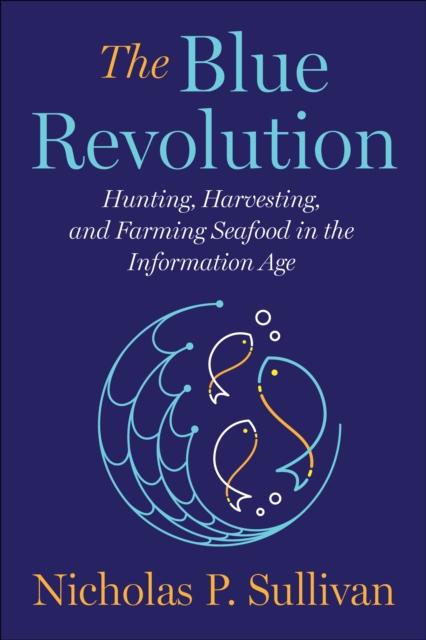
The Blue Revolution
\"Overfishing. For the world's oceans, it's long been a worrisome problem with few answers. Many of the global fish stocks are at a dangerous tipping point, some spiraling toward extinction. But as older fishing fleets retire and new technologies develop, a better, more sustainable way to farm this popular protein has emerged to profoundly shift the balance. The Blue Revolution tells the story of the recent transformation of commercial fishing: an encouraging change from maximizing volume through unrestrained wild hunting to maximizing value through controlled harvesting and farming. Entrepreneurs applying newer, smarter technologies are modernizing fisheries in unprecedented ways. In many parts of the world, the seafood on our plates is increasingly the product of smart decisions about ecosystems, waste, efficiency, transparency, and quality.\"
eBook

The Ocean Economy in 2030
This report explores the growth prospects for the ocean economy, its capacity for future employment creation and innovation, and its role in addressing global challenges. Special attention is devoted to the emerging ocean-based industries in light of their high growth and innovation potential, and contribution to addressing challenges such as energy security, environment, climate change and food security.The report examines the risks and uncertainties surrounding the future development of ocean industries, the innovations required in science and technology to support their progress, their potential contribution to green growth and some of the implications for ocean management. Finally, and looking across the future ocean economy as a whole, it explores possible avenues for action that could boost its long-term development prospects while managing the use of the ocean itself in responsible, sustainable ways. This book belongs to the OECD Report Series
eBook

Applying adaptive management and lessons learned from national assessments to address logistical challenges in the National Wetland Condition Assessment
The National Wetland Condition Assessment (NWCA) is one of a series of probability-based National Aquatic Resource Surveys (NARS) conducted by the U.S. Environmental Protection Agency (USEPA) to provide a comprehensive assessment of the condition of the Nation’s waters. Randomized design and standardized training and protocols allow USEPA to analyze data that are nationally consistent and regionally relevant. Each NARS assessment was preceded by careful consideration of key logistical elements that included pre-survey planning, training, sampling logistics, and laboratory analysis. Numerous state, tribal, and contractor crews were supported across the country for each assessment; sampling and sample analyses were tracked from initiation; laboratory analyses were completed at USEPA, state, regional, and contract laboratories; and the data analyses and reporting were completed by USEPA-led workgroups, states, and contractors. The complexity and difficulty of each step offered unique challenges and provided lessons learned for each of the NARS assessments. Major logistical elements for implementing large scale assessments that are constrained by sampling period and number and duration of visits are covered in this paper. These elements include sample transport, equipment and supplies, sampling and sample tracking, information management regional technical expertise, and a sound field training program. This paper describes how lessons from previous assessments were applied to the NWCA and how new challenges faced in the NWCA were addressed and carried forward into future surveys.
Journal Article

Completeness and coverage of open-access freshwater fish distribution data in the United States
Aim: Open-access databases provide unprecedented access to records of species occurrence, but their utility depends on how complete species inventories are at given surveying resolutions and how uniformly distributed surveys are in space and time. Our aims were to assess (1) the completeness of freshwater fish surveys across spatial scales and among habitats and (2) survey coverage along spatial and temporal gradients. Location: Contiguous United States. Methods: We compiled occurrence records of freshwater fish species from the Global Biodiversity Information Facility, the Multi-State Aquatic Resources Information Server and federally administered surveys. We evaluated survey completeness across seven spatial resolutions, and separately for lotie and lentie habitats using three thresholds of two survey completeness indices. We evaluated survey coverage from 1800 to 2016 and along climatic and local environmental gradients using histograms and Kolmogorov-Smirnov tests. Results: Over 21 million reliable abundance (>1.5 million incidence) records representing 892 species were available from 1800 to 2016. The proportion of catchments containing >1 record increased as spatial resolution coarsened, as did the proportion of surveyed catchments classified as well-surveyed. Records were distributed among 37,775 lotie reaches, but only 1,626 lentie water bodies. Thirteen percentage of surveyed lotie reaches and 33% of surveyed lentie water bodies were well-surveyed based on the most conservative completeness thresholds. Most well-surveyed lotie reaches (94%) and lentie water bodies (96%) were surveyed since 1980. Climates representative of the west and gulf coasts as well as headwater streams and small ponds were under-represented. Main conclusions: Contemporary surveys of freshwater fish communities are abundant and generally representative of environmental characteristics in the contiguous USA. Survey clustering within MARIS-participating states highlights the value of state agency data for biodiversity science and should encourage participation in this—and similar—data compilation endeavours. Future work should focus on surveying more lakes and reservoirs, compiling historical data and filling environmental gaps.
Journal Article

Aquatic invasive species: challenges for the future
Humans have effectively transported thousands of species around the globe and, with accelerated trade; the rate of introductions has increased over time. Aquatic ecosystems seem at particular risk from invasive species because of threats to biodiversity and human needs for water resources. Here, we review some known aspects of aquatic invasive species (AIS) and explore several new questions. We describe impacts of AIS, factors limiting their dispersal, and the role that humans play in transporting AIS. We also review the characteristics of species that should be the greatest threat for future invasions, including those that pave the way for invasions by other species (“invasional meltdown”). Susceptible aquatic communities, such as reservoirs, may serve as stepping stones for invasions of new landscapes. Some microbes disperse long distance, infect new hosts and grow in the external aquatic medium, a process that has consequences for human health. We also discuss the interaction between species invasions and other human impacts (climate change, landscape conversion), as well as the possible connection of invasions with regime shifts in lakes. Since many invaders become permanent features of the environment, we discuss how humans live with invasive species, and conclude with questions for future research.
Journal Article

Correction: Rosentreter et al. Partial Desalination of Saline Groundwater: Comparison of Nanofiltration, Reverse Osmosis and Membrane Capacitive Deionisation. Membranes 2021, 11, 126
There was an error in the original publication [...]
Journal Article