
Catalogue Search | MBRL


Are you sure you want to remove the book from the shelf?

{{itemTitle}}
171
result(s) for
"Arab Spring, 2010-"
Sort by:


A Spring Aborted
The Arab Spring uprisings were not about gender; these were uprisings demanding rights for all. Yet, they presented a rare opportunity for women to let themselves be heard. And, from being some of the most memorable and lasting leaders of these revolutionary protests, female activists were particularly targeted by many regimes.
eBook

The clothesline swing
\"The Clothesline Swing is a journey through the troublesome aftermath of the Arab Spring. A former Syrian refugee himself, Ramadan unveils an enthralling tale of courage that weaves through the mountains of Syria, the valleys of Lebanon, the encircling seas of Turkey, the heat of Egypt and finally, the hope of a new home in Canada. Inspired by Arabian Tales of One Thousand and One Nights, The Clothesline Swing tells the epic story of two lovers anchored to the memory of a dying Syria. One is a Hakawati, a storyteller, keeping life in forward motion by relaying remembered fables to his dying partner. Each night he weaves stories of his childhood in Damascus, of the cruelty he has endured for his sexuality, of leaving home, of war, of his fated meeting with his lover. Meanwhile Death himself, in his dark cloak, shares the house with the two men, eavesdropping on their secrets as he awaits their final undoing.\"-- Provided by publisher.
Book
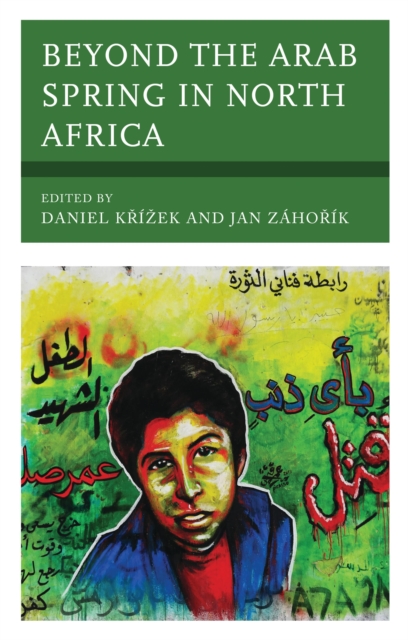
Beyond the Arab spring in North Africa
This book deals with the waves of revolutions in North Africa labelled as the Arab Spring. Each of the countries in the region was affected by the Arab Spring and has experienced specific processes and consequences. Due to the complexity of the phenomenon, any kind of comprehensive research and analyses need an interdisciplinary approach to deal with the Arab Spring from multiple perspectives. This volume brings together a group of scholars from various disciplines covering different aspects of the revolutionary changes in the North African countries. Beyond the Arab Spring in North Africa collects diverse studies with an emphasis on specificity. Chapters deal with a wide range of topics that include both minor as well as major themes. These include the formation of youth movement in Egypt long before the Arab Spring and their subsequent participation in the revolution, analysis of Tunisian women’s participation in Arab Spring events, spatial disparities in Tunisia and their impact on the revolution with special focus on Sidi Bouzid as one of the socio-economically weakest areas, rights and social status of sexual minorities in Tunisia, polemics over the role of New Media as both revolutionary and contra-revolutionary tools, broader discussion over the prospects for multilateral cooperation and regional integration in the studied area, reflection of the Arab Spring in the Czech media, impact of the work of ‘Ali ‘Abd al-Raziq on the debates over political secularism in Islamic society, as well as a general debate over democratization in North Africa, or Arab states as such. Beyond the Arab Spring in North Africa will find its readers in all relevant social sciences dealing in various contexts with the contemporary North Africa.
eBook

A rebel in Gaza : behind the lines of the Arab Spring : one woman's story
The Arab Spring and siege of Gaza told by young Palestinian journalist Asmaa al-Ghoul, human rights activist and peace-prize winner.
BOOK
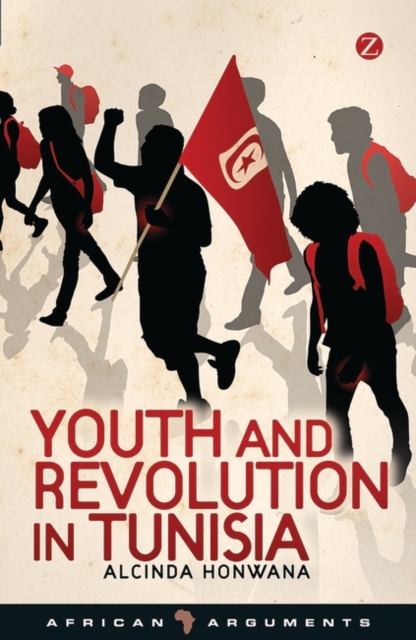
Youth and revolution in tunisia
The uprising in Tunisia has come to be seen as the first true revolution of the twenty-first century, one that kick-started the series of upheavals across the region now known as the Arab Spring. In this remarkable work, Alcinda Honwana goes beyond superficial accounts of what occurred to explore the defining role of the country's youth, and in particular the cyber activist. Drawing on fresh testimony from those who shaped events, the book describes in detail the experiences of young activists through the 29 days of the revolution and the challenges they encountered after the fall of the regime and the dismantling of the ruling party. Now, as old and newly established political forces are moving into the political void created by Ben Ali's departure, tensions between the older and younger generations are sharpening. An essential account of an event that has inspired the world, and its potential repercussions for the Middle East, Africa and beyond.
eBook


Turkey's Foreign Policy Towards the Middle East
This book investigates the effects of the Arab Spring on Turkish foreign policy using a multidimensional approach that draws on a wide range of disciplines from international relations to sociology and economics. The demands for democracy that began in Tunisia, when Mohamed Bouazizi set himself on fire in 2010, rapidly spread across the Arab Middle East and Northern Africa. In countries dominated by authoritarian regimes, a freedom and sovereignty movement led by middle-class urbanites changed the quality of politics in the region. The focus and dynamics of the Arab Spring varied across countries where large-scale demonstrations were held, such as Tunisia, Egypt, Libya, Yemen, Syria, Jordan and Bahrain. While protests in Jordan and Bahrain had few consequences, they brought about changes in governments in Tunisia, Egypt, Libya and Yemen. After the regime in Syria exerted all its strength to stay in power, the issue gained a regional, then international, dimension. The most bloody and complicated struggle caused by the wave of changes continues in Syria, with undoubtedly serious implications for Turkish foreign policy. As a counter-stance against the status quo in the Middle East, the Arab Spring has stimulated many discussions and this has led to the emergence of new regional actors.
eBook

Jordan and the Arab uprisings : regime survival and politics beyond the state
Drawing upon years of fieldwork and unique access to major political figures in Jordan, Curtis Ryan unravels the unusual case of Jordan during the Arab Spring, where the country managed to avoid political upheaval amidst both regional and internal unrest.
BOOK
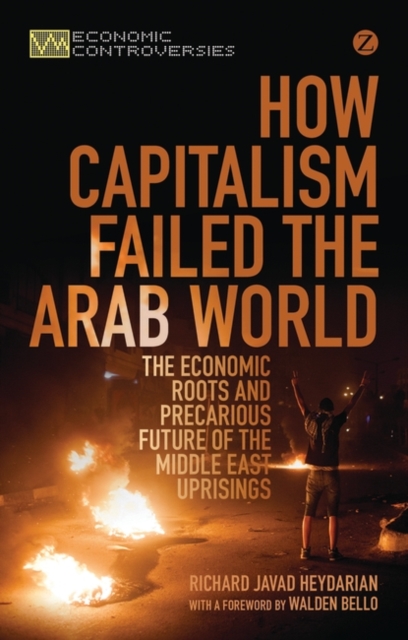
How capitalism failed the arab world
Economic liberalization has failed in the Arab world. Instead of precipitating democratic reform, it has over the last three decades resulted in greater poverty, inequality and unemployment. In How Capitalism Failed the Arab World, Richard Javad Heydarian shows how years of economic mismanagement, political autocracy and corruption have encouraged people to revolt, and how the initial optimism of the uprisings is now giving way to bitter power struggles and continued economic stagnation
eBook