
Catalogue Search | MBRL


Are you sure you want to remove the book from the shelf?

{{itemTitle}}
32
result(s) for
"Arab countries -- Kings and rulers"
Sort by:
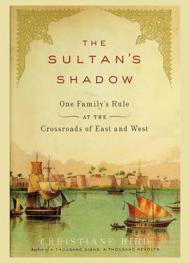
The Sultan's shadow : one family's rule at the crossroads of East and West
Oman's Sultan Said and his rebellious daughter Princess Salme--comes to life in this compelling narrative. Sultan Said and his descendants were shadowed and all but shattered by the rise and fall of East Africa's nineteenth-century slave trade.
Book

The Rise and Fall of Arab Presidents for Life
Monarchical presidential regimes in the Arab world looked as though they would last indefinitely—until events in Tunisia and Egypt made clear their time was up. This is the first book to lay bare the dynamics of a governmental system that largely defined the Arab Middle East in the twentieth century, and the popular opposition they engendered.
eBook

The Rise and Fall of Arab Presidents for Life
Monarchical presidential regimes in the Arab world looked as though they would last indefinitely--until events in Tunisia and Egypt made clear their time was up. This is the first book to lay bare the dynamics of a governmental system that largely defined the Arab Middle East in the twentieth century, and the popular opposition they engendered.
eBook


The Great Name
The titulary of the ancient Egyptian king was one of the symbols of authority he assumed at his coronation. At first consisting only of the Horus name, the titulary grew to include other phrases chosen to represent the king’s special relationship with the divine world. By the Middle Kingdom (late twenty-first century B.C.E.), the full fivefold titulary was clearly established, and kings henceforth used all five names regularly. This volume includes all rulers’ names from the so-called Dynasty 0 (ca. 3200 B.C.E.) to the last Ptolemaic ruler in the late first century B.C.E., offered in transliteration and English translation with an introduction and notes.
eBook

Royal Apologetic in the Ancient Near East
A fresh exploration of apologetic material that pushes beyond form criticism
Andrew Knapp applies modern genre theory to seven ancient Near Eastern royal apologies that served to defend the legitimacy of kings who came to power under irregular circumstances. Knapp examines texts and inscriptions related to Telipinu, Hattusili III, David, Solomon, Hazael, Esarhaddon, and Nabonidus to identify transhistorical common issues that unite each discourse.
Features:
Compares Hittite, Israelite, Aramean, Assyrian, and Babylonian apologiesExamination of apologetic as a mode instead of a genreCharts and illustrations
eBook

Parable and politics in early islamic history
The story of the succession to the Prophet Muhammad and the rise of the Rashidun Caliphate (632-661 AD) is familiar to historians from the political histories of medieval Islam, which treat it as a factual account. The story also informs the competing perspectives of Sunni and Shi'i Islam, which read into it the legitimacy of their claims. Yet while descriptive and varied, these approaches have long excluded a third reading, which views the conflict over the succession to the Prophet as a parable. From this vantage point, the motives, sayings, and actions of the protagonists reveal profound links to previous texts, not to mention a surprising irony regarding political and religious issues.
In a controversial break from previous historiography, Tayeb El-Hibri privileges the literary and artistic triumphs of the medieval Islamic chronicles and maps the origins of Islamic political and religious orthodoxy. Considering the patterns and themes of these unified narratives, including the problem of measuring personal qualification according to religious merit, nobility, and skills in government, El-Hibri offers an insightful critique of both early and contemporary Islam and the concerns of legitimacy shadowing various rulers. In building an argument for reading the texts as parabolic commentary, he also highlights the Islamic reinterpretation of biblical traditions, both by Qur'anic exegesis and historical composition.
eBook